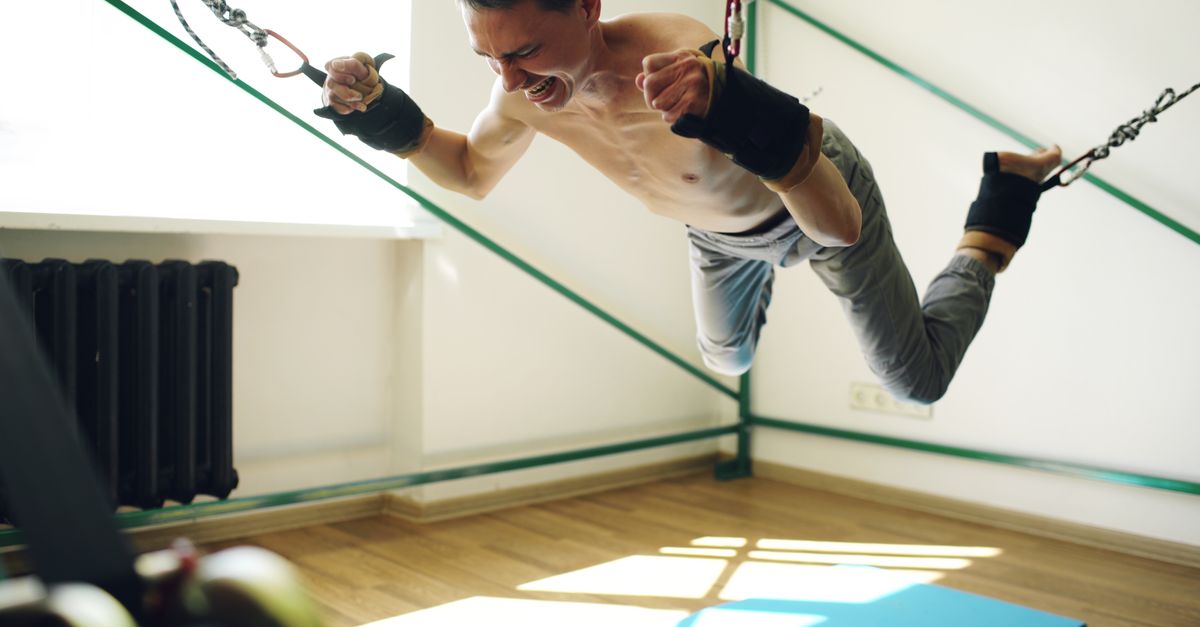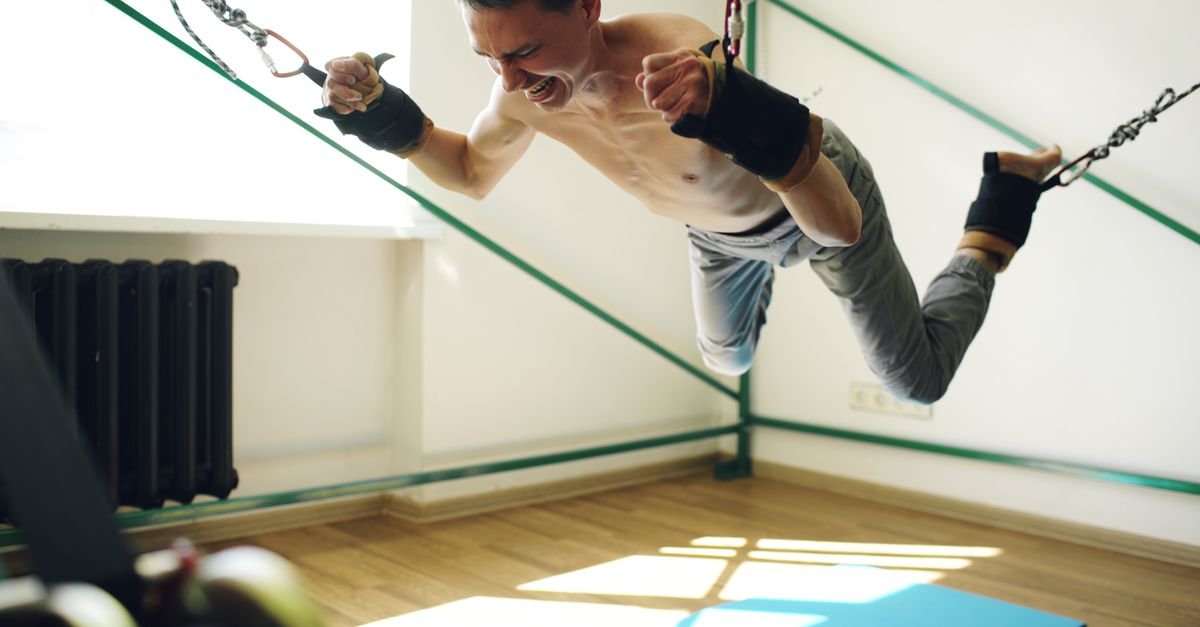
Suspension Exercises: How Body Angle Adds Effort
Table of Contents
- Introduction: The Secret Weapon Hiding in Your Straps
- What Are Suspension Exercises?
- The Physics Behind Suspension Training
- Why Body Angle Changes Everything
- The Angle Scale: From Easy to Brutal
- Key Suspension Exercises and How Angle Transforms Them
- The Stability Factor: Why Angles Add More Than Load
- How to Adjust Your Angle Safely
- Programming Angles for Progress
- Common Mistakes People Make With Body Angle
- Who Should Use Suspension Training?
- Equipment Tips for Angle-Based Training
- Conclusion: Small Angles, Big Gains
- FAQs
Introduction: The Secret Weapon Hiding in Your Straps
Ever wonder why the same suspension exercise that feels like a gentle warm-up one day can absolutely crush you the next? You didn’t add weight. You didn’t change the straps. So what happened?
Your body angle happened.
If you’ve spent any time around suspension trainers—TRX, gymnastic rings, or any strap-based system—you’ve probably heard someone say, “Just walk your feet forward.” That simple instruction hides a powerful training principle. Body angle is the dial that controls difficulty, and once you understand it, you unlock an entire universe of progression without ever touching a dumbbell.
In this article, we’re going to break down exactly how body angle adds effort during suspension exercises. We’ll talk physics, practical application, programming, and the mistakes that trip people up. By the end, you’ll know how to make any suspension movement easier, harder, or just right for your goals—simply by shifting your position.
What Are Suspension Exercises?
Suspension exercises are movements performed while your hands or feet are supported by straps, ropes, or rings anchored above you. The straps hang freely, which means they don’t offer a fixed base of support. Everything about your stability has to come from you.
Think of it like this: a push-up on the floor is like pushing against a brick wall. A suspension push-up is like pushing against a swinging door. Same motion, wildly different demand.
The instability forces your stabilizer muscles to work overtime. Your core lights up. Your shoulders fight for control. And the intensity? That’s where body angle comes in.
The Physics Behind Suspension Training
Let’s get nerdy for a second—but just a second. Understanding the mechanics makes everything click.
Gravity Never Takes a Day Off
Gravity is the invisible training partner in every suspension exercise. It pulls you toward the ground with a force equal to your body weight. When you’re standing upright, gravity pulls straight down through your spine, and your legs handle the load effortlessly.
But when you lean back into a row or lower into a push-up, gravity starts pulling you in a direction your muscles have to resist. The more your body tilts away from vertical, the more of your body weight gets loaded onto the working muscles.
Leverage: The Real Star of the Show
Here’s the key insight: muscles don’t care about how much weight you’re lifting. They care about torque—the rotational force at a joint. And torque depends on leverage.
Think of a seesaw. If you sit close to the fulcrum, you barely move. Sit at the far end, and suddenly you’re flying. Your body works the same way. When you change your angle relative to the anchor point, you change the length of the lever arm acting on your joints. A longer lever arm means more torque, and more torque means more effort.
That’s why walking your feet forward in a suspension row feels like someone secretly added a weighted vest. You didn’t lift more weight—you just gave gravity a longer lever.
Why Body Angle Changes Everything
Body angle is the single most versatile variable in suspension training. More than rep speed, more than grip width, more than tempo—angle is the master dial.
Here’s why: suspension straps are anchored at a fixed point. Your body hangs or leans from that point. The angle between your body and the floor determines what percentage of your body weight the working muscles must overcome.
At a steep angle (body nearly vertical), you’re supporting very little of your weight—maybe 10–20%. At a shallow angle (body nearly horizontal), you’re supporting nearly all of it. Some advanced positions even exceed body weight due to the mechanics of certain movements.
The beautiful part? You can adjust this in seconds. No plate changes, no pin adjustments. Just move your feet or hands.
The Angle Scale: From Easy to Brutal
Let’s map out the spectrum so you can visualize your progression.
Beginner Angles (0–30 Degrees)
At this range, your body is close to vertical. In a row, you’d be standing fairly upright, leaning back just slightly. In a push-up, your hands would be high and your body steeply inclined. Effort level is low—perfect for learning movement patterns, rehabbing injuries, or warming up.
Intermediate Angles (30–60 Degrees)
Now we’re cooking. Your body tilts further from vertical, and gravity starts demanding respect. This is the sweet spot for most training. You can accumulate quality volume here without frying your nervous system. Most people spend the bulk of their suspension training in this range.
Advanced Angles (60–90 Degrees)
Welcome to the pain cave. At these angles, your body approaches horizontal, and you’re loading the majority of your body weight onto the target muscles. Rows become humbling. Push-ups become tests of will. Planks turn into full-body shaking contests. This range builds serious strength and stability, but it demands respect and proper progression.
Key Suspension Exercises and How Angle Transforms Them
Suspension Rows
The row is the flagship suspension exercise, and angle changes it dramatically. Stand upright and lean back slightly—you’ve got a beginner row. Walk your feet forward until your body is at a 45-degree angle—now you’re in intermediate territory. Continue until your heels are the only thing touching the ground and your body is nearly parallel to the floor—that’s an advanced row that’ll humble most gym-goers.
The magic is that the movement pattern never changes. Your muscles just work harder as the angle flattens. It’s the same exercise, scaled infinitely.
Suspension Push-Ups
Suspension push-ups flip the script. Here, your hands are in the straps, and your feet are on the ground. The higher your hands relative to your feet, the easier the push-up. Lower your hands or elevate your feet, and the angle steepens toward horizontal—massive difficulty jump.
The instability adds another layer. Even at an easy angle, your shoulders and core fight to keep the straps steady. That’s free stability training you don’t get from floor push-ups.
Suspension Lunges and Split Squats
With your rear foot in the strap, lunges become a balance and strength challenge. The angle here refers to how far forward you step and how much you lean. A more upright torso keeps the load on the quads. Leaning forward shifts it to the glutes and hamstrings while increasing the demand on your stabilizers.
Suspension Planks and Fallouts
Planks in suspension are a different beast. Your feet hang in the straps, and your body must resist extension. The further you walk your hands out—creating a longer lever—the more brutal the exercise becomes. Fallouts take this to the extreme, extending your arms overhead while your core desperately fights to keep your spine neutral.
The Stability Factor: Why Angles Add More Than Load
Here’s something traditional weight training can’t replicate: suspension training adds a stability demand that increases with angle.
When you’re upright, the straps are relatively stable. As you flatten out, every tiny shift in your body position sends a ripple through the straps. Your deep stabilizers—the muscles you never see in the mirror—have to constantly adjust. This is why suspension training feels so much harder than the numbers suggest.
It’s like the difference between typing on a desk versus typing on a boat. Same task, wildly different challenge.
How to Adjust Your Angle Safely
Before you go chasing brutal angles, respect these guidelines:
- Adjust in small increments. Move a few inches at a time, not a few feet.
- Master the movement at an easy angle before progressing. Clean reps beat hard reps every time.
- Keep your body in a straight line from head to heels. Sagging hips mean you’ve gone too far.
- Control the eccentric (lowering) phase. If you’re dropping fast, your angle is too aggressive.
- Never sacrifice form for ego. Suspension training will humble you if you skip steps.
Programming Angles for Progress
How do you actually use angle changes in a training program? Here’s a simple framework:
Week 1–2: Establish your baseline. Find the angle where you can perform 3 sets of 10–12 clean reps. That’s your starting point.
Week 3–4: Increase angle slightly. Aim for 3 sets of 8–10 reps at the new angle.
Week 5–6: Push the angle further. Now you’re working in the 6–8 rep range.
Week 7–8: Either continue flattening the angle or add reps at your current angle before progressing again.
This approach—sometimes called “angle periodization”—gives you a clear, measurable progression path without ever needing to add external load.
Common Mistakes People Make With Body Angle
Let’s call out the biggest errors I see:
- Progressing too fast. Ego pushes people to extreme angles before they’re ready. The result? Sloppy reps and potential injury.
- Ignoring the core. If your hips sag or pike, you’re not actually training the target muscles effectively.
- Gripping too hard. Death-gripping the handles fatigues your forearms before your back or chest gets a workout.
- Forgetting to breathe. Holding your breath during hard angles spikes blood pressure and reduces performance.
- Neglecting the return. Walking back to an easier angle isn’t failure—it’s smart training.
Who Should Use Suspension Training?
Honestly? Almost everyone. Beginners love it because the easy angles are genuinely accessible. Athletes love it because the hard angles are brutally effective. Physical therapists love it because the instability challenges joint stability in a controlled way. Travelers love it because a suspension trainer fits in a carry-on.
If you can adjust your body angle, you can find an appropriate challenge. That’s the beauty of it.
Equipment Tips for Angle-Based Training
Not all suspension trainers are created equal. Look for these features:
- Adjustable straps: You need to change length easily to accommodate different angles and exercises.
- Comfortable handles: Your hands and feet will thank you.
- Sturdy anchor: A door anchor works for most home setups, but check the weight rating.
- Foot cradles: Essential if you want to do push-ups and planks with your feet suspended.
Conclusion: Small Angles, Big Gains
Body angle is the quiet superpower of suspension training. It lets you scale any exercise from beginner-friendly to elite-level without changing equipment or adding weight. By understanding the physics of leverage and gravity, you can train smarter, progress consistently, and keep your joints happy for years to come.
The next time you strap in, remember: you’re not just moving your body. You’re manipulating physics. A few inches forward or backward changes everything. Master the angle, and you master the exercise.
So go ahead—walk those feet forward. Your muscles are waiting.
FAQs
1. Is a steeper or flatter angle harder in suspension training?
Flatter angles (closer to horizontal) are harder because they increase the lever arm and force your muscles to resist more of your body weight. Steeper angles (closer to vertical) are easier.
2. How do I know when to progress to a harder angle?
When you can complete your target reps with perfect form—no sagging hips, no momentum, no shaking wildly—it’s time to flatten the angle slightly. Small jumps work best.
3. Can suspension training replace traditional weightlifting?
It can complement it beautifully, and for many people it’s sufficient on its own. However, if maximal strength or muscle size is your primary goal, external loading still has advantages.
4. What’s the best angle for beginners?
Start with your body around 20–30 degrees from vertical. You should feel the muscles working but be able to complete 10–12 clean reps without struggling.
5. Does body angle affect core activation?
Absolutely. As your body flattens toward horizontal, your core must work harder to maintain a neutral spine and resist unwanted movement. This is why suspension planks and fallouts are so effective.