Table of Contents
- A Beginner’s Guide to Landmine Exercises: Build Strength, Stability, and Confidence
- What Are Landmine Exercises?
- Why Beginners Should Try Landmine Exercises
- What You Need to Get Started
- How to Set Up a Landmine Safely
- 8 Beginner-Friendly Landmine Exercises
- How to Build a Beginner Landmine Workout
- Common Mistakes Beginners Make
- Programming Landmine Exercises
- Mobility, Recovery, and Injury Prevention
- Landmine Exercises for Specific Goals
- Frequently Asked Questions
- Conclusion: Your First Landmine Step
A Beginner’s Guide to Landmine Exercises: Build Strength, Stability, and Confidence
If you have ever walked into a gym and seen a barbell jammed into a corner with plates on one end, you have spotted a landmine setup. It looks simple, almost too simple. But that angled bar can unlock a whole new way to train. Landmine exercises are friendly to beginners, tough on muscles, and surprisingly kind to joints. They sit in that sweet spot between free weights and machines.
Maybe you have dodged barbell overhead presses because your shoulders complain. Maybe you want to train your core without doing endless sit-ups. Or maybe you just want a fresh way to build full-body strength without needing a spotter for every set. Landmine training can help. Let’s walk through what it is, why it works, and how to start without overthinking it.
What Are Landmine Exercises?
Landmine exercises are movements performed with a barbell anchored at one end. The other end is loaded with weight plates. Because one end stays fixed to the floor or a landmine attachment, the bar travels in an arc instead of a straight line. You can push it, pull it, row it, squat with it, or rotate it. The anchor acts like a hinge on a door. The bar swings, but it never runs away from you.
That arc changes everything. A traditional barbell press moves straight up and down. A landmine press moves up and forward at an angle. A traditional row pulls straight toward your torso. A landmine row pulls along a curved path. Those small differences make landmine exercises feel more natural for many people. They also reduce the demand on your wrists, shoulders, and lower back.
Why the Landmine Setup Works
The anchored end creates a lever. You control the free end, and the floor controls the other. That means you get the benefits of free-weight training—balance, coordination, core engagement—without the same level of instability. Think of it like learning to ride a bike with training wheels that still let you lean and steer. You are not locked into a machine. You are not fighting a wild barbell either.
Landmine exercises also let you shift between bilateral and unilateral work. You can use both hands, one hand, or alternate sides. That makes them great for fixing strength imbalances. If your left side is weaker than your right, landmine presses and rows will expose that fast. Then you can train the weak side with focused reps.
Landmine vs. Traditional Barbell Training
Traditional barbell training is fantastic. It builds raw strength, teaches heavy lifting, and gives you clear numbers to chase. But it can be unforgiving for beginners. A straight-bar bench press can irritate shoulders. A straight-bar row can strain the lower back. An overhead press demands mobility that many people do not have yet.
Landmine training is more forgiving. The angled path lets your shoulder blades move more freely. Your wrists stay in a neutral or semi-neutral position. Your torso can lean into the movement without the bar crashing down on you. Is landmine training a replacement for all barbell work? No. But it is an excellent bridge. It builds strength, confidence, and control before you tackle heavier straight-bar lifts.
Why Beginners Should Try Landmine Exercises
Beginner does not mean weak. It means you are learning. Landmine exercises give you a safe place to learn how to brace, push, pull, and hinge. They teach your body to work as one unit. And they do it without demanding perfect technique from day one.
Joint-Friendly Strength
Your shoulders love angles. A straight overhead press can pinch if your shoulder mobility is limited. A landmine press lets you press at an angle that matches your natural range. Your wrist stays neutral. Your elbow tucks closer to your body. Your shoulder blade can rotate upward without grinding. That does not mean landmine presses are risk-free. But for many beginners, they feel much smoother than a barbell overhead press.
The same goes for rows and squats. A landmine row keeps your torso more upright than a bent-over barbell row. That reduces lower-back fatigue. A landmine squat lets you hold the bar close to your chest, which helps you stay balanced. Your knees and hips still work hard, but your spine is not fighting to hold a heavy bar on your back.
Core Stability Without Crunching
Want a strong core without doing hundreds of crunches? Landmine exercises have you covered. Every time you press, row, squat, or rotate, your core has to resist movement. That is called anti-rotation and anti-extension. Your abs, obliques, and deep spinal muscles switch on to keep your ribs stacked over your hips.
The landmine rotation is a classic example. You hold the bar with both hands and rotate it from side to side. But the real work is not just twisting. It is stopping the twist at the end range. Your core controls the motion. That translates to better posture, fewer back aches, and more power in sports.
Easier Learning Curve
Let’s be honest: a barbell back squat is a skill. So is a conventional deadlift. Landmine variations simplify the setup. You do not need to load a bar on your back. You do not need to hinge over a bar on the floor. You just pick up the free end and move. That simplicity helps beginners focus on muscle tension instead of circus-level coordination.
Are landmine exercises easy? Not exactly. They still challenge your muscles. But they are easier to learn. That means you can start training hard sooner, with less risk of feeling lost.
What You Need to Get Started
You do not need a warehouse of gear. A few basic pieces will get you moving. The beauty of landmine training is that it scales from a single dumbbell in a corner to a full commercial gym setup.
Essential Equipment
- Barbell: An Olympic barbell works best. A shorter barbell can work if your space is tight.
- Weight plates: Start light. You can always add more. Bumper plates or iron plates both work.
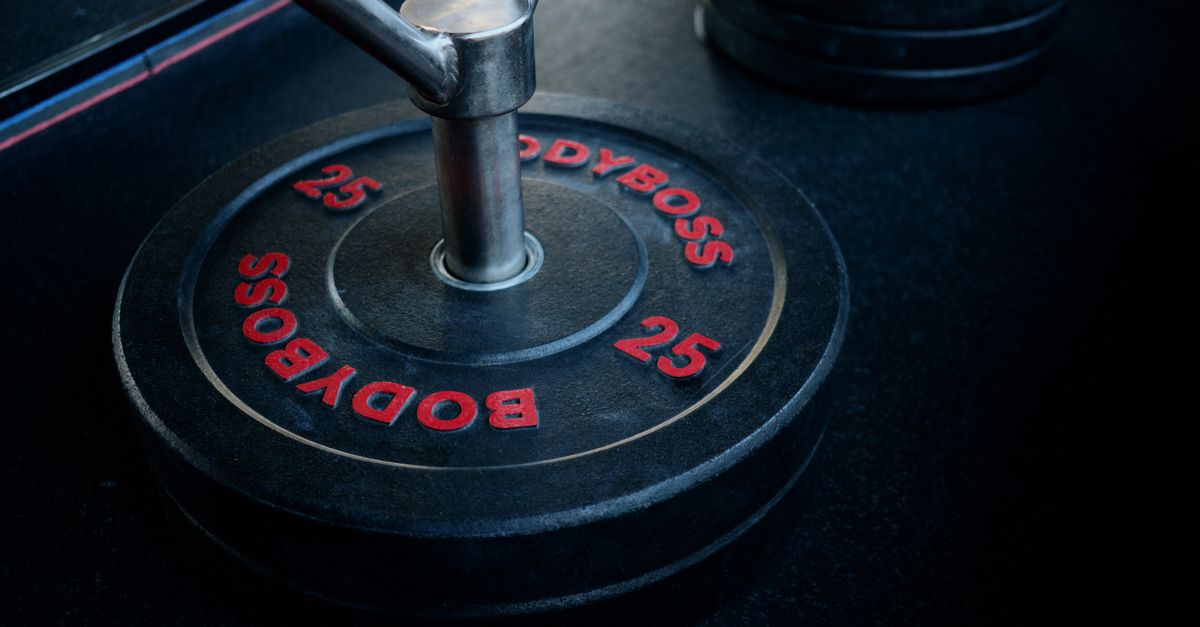
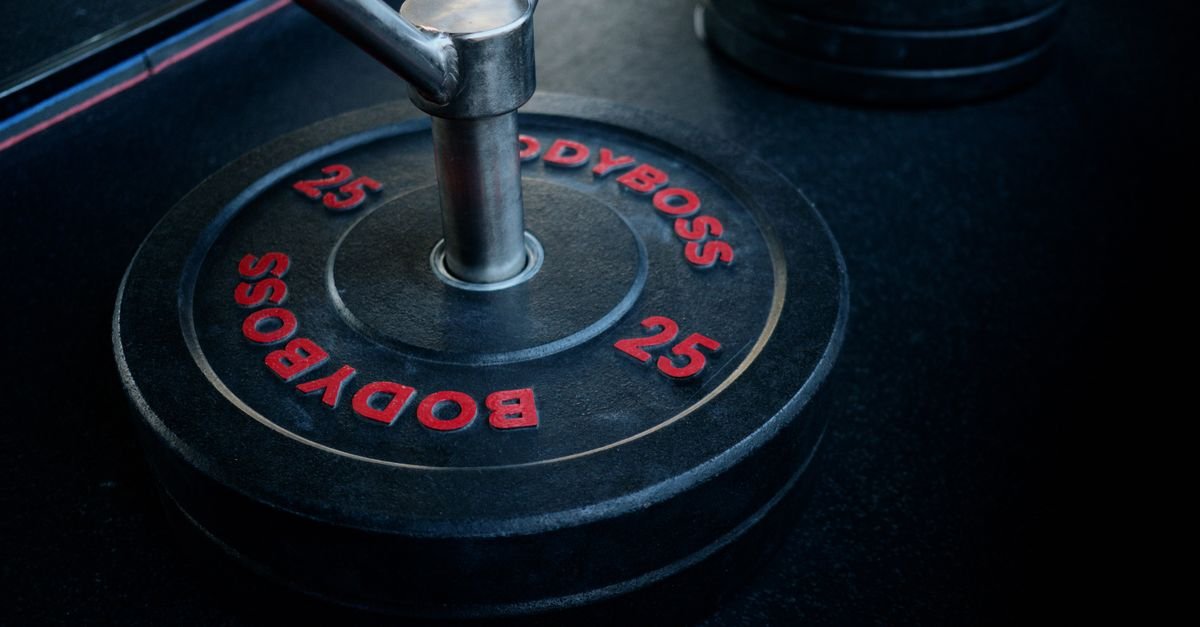
- Landmine attachment: This is a metal sleeve that holds the bar. It either bolts to the floor or fits into a rack.
- Collar: A strong collar keeps plates from sliding. Do not skip this.
- Open space: You need enough room for the bar to travel in an arc without hitting walls or people.
Home Gym Hacks for Landmine Training
No landmine attachment? No problem. You can wedge the end of a barbell into a heavy corner. Just make sure the corner is solid and the bar cannot slip. Some people use a thick towel to protect the wall. Others place the bar in a heavy dumbbell or a sandbag. That said, safety comes first. If the bar wobbles, stop. Buy a proper landmine attachment when you can. It is usually affordable and much safer.
You can also use a single dumbbell for many landmine-style movements. Hold one dumbbell with both hands and press or rotate. The angle is different, but the core and shoulder benefits remain. Think of it as landmine training’s cousin. It is not identical, but it still works.
How to Set Up a Landmine Safely
A safe setup takes one minute. A bad setup can ruin your workout or your wall. Let’s keep it simple.
Step-by-Step Setup
- Place your landmine attachment in a corner or on a stable base.
- Slide the barbell into the attachment. The sleeve should hold the bar securely.
- Load plates on the free end. Start with a 10-pound or 25-pound plate.
- Secure the plates with a collar. Give the bar a gentle wiggle. Nothing should slide.
- Stand facing the bar. Grab the free end with one hand or both hands.
- Step back until the bar is at the right height for your exercise.
Safety Checkpoints Before You Lift
- Is the anchored end locked in place?
- Are the plates tight against the collar?
- Is your path clear? You should be able to press or row without hitting anything.
- Are your feet stable? Wear shoes with grip.
- Can you control the bar for every rep? If not, reduce the weight.
One more thing: never let go of the bar while it is loaded. The free end will drop. That is loud at best and dangerous at worst. Always guide the bar down under control.
8 Beginner-Friendly Landmine Exercises
Now for the fun part. These eight exercises cover your upper body, lower body, and core. You can do them as a full workout or mix them into your current routine.
1. Landmine Press
Stand with the bar at chest height. Hold the free end with one hand. Your elbow should be tucked, not flared. Press the bar up and forward until your arm is straight. Lower it slowly. Keep your ribs down and your core tight. Do not lean back like you are trying to limbo under a pole. Switch sides. This is a fantastic shoulder and chest builder that feels much friendlier than a straight overhead press.
2. Landmine Row
Stand facing the bar. Hinge at your hips and grab the free end with one hand. Pull the bar toward your ribcage. Squeeze your shoulder blade. Lower it with control. Your torso should stay still. If your body twists, lighten the load. This exercise hits your lats, mid-back, and biceps. It also teaches you to brace while hinging, which is a skill that carries over to deadlifts.
3. Landmine Squat
Hold the free end of the bar at chest height with both hands. Stand with feet shoulder-width apart. Sit down and back like you are aiming for a chair. Keep your chest tall. Push through your whole foot to stand. The bar stays close to your body. This is a great way to learn squatting because the weight acts as a counterbalance. You are less likely to fall backward.
4. Landmine Romanian Deadlift
Face the bar and hold the free end with both hands. Soften your knees. Push your hips back as you lower the bar toward the floor. Stop when you feel a stretch in your hamstrings. Drive your hips forward to stand. Keep your back flat. Do not round your spine. This movement teaches the hip hinge, which is one of the most important patterns in strength training.
5. Landmine Rotation
Hold the bar with both hands at chest height. Stand with feet wider than shoulder-width. Rotate the bar to one side, then the other. The movement should come from your torso, not just your arms. Keep your hips fairly stable. Think of wringing out a wet towel. Your core controls the twist. Start light. This is not a race.
6. Landmine Reverse Lunge
Hold the bar at chest height. Step one foot back and lower your knee toward the floor. Keep your front shin vertical. Push through your front foot to return to standing. Alternate legs. The landmine helps you stay upright, which makes balancing easier. Your glutes and quads will still feel it the next day.
7. Landmine Thruster
This is a squat and press combined. Hold the bar at chest height. Squat down. As you stand up, press the bar forward and up. Lower the bar as you squat again. It sounds simple, but it gets your heart rate up fast. Use light weight until your timing feels smooth. Think of it as a full-body engine starter.
8. Landmine Curl
Face the bar and grab the free end with one hand, palm facing up. Curl the bar toward your shoulder. Lower it slowly. Keep your elbow close to your side. Do not swing your torso. This is a nice biceps finisher that feels different from a dumbbell curl because of the arc. It is also great for learning control.
How to Build a Beginner Landmine Workout
You can train landmine exercises two or three times per week. Start with two to three sets of eight to twelve reps. Rest sixty to ninety seconds between sets. Focus on smooth reps, not speed. If you can do more than fifteen easy reps, add a small plate. If your form breaks, stop the set.
Full-Body Sample Workout
- Landmine Squat: 3 sets of 10
- Landmine Press: 3 sets of 8 per side
- Landmine Row: 3 sets of 10 per side
- Landmine Rotation: 3 sets of 10 per side
- Landmine Romanian Deadlift: 3 sets of 12
Push Day Sample
- Landmine Press: 4 sets of 8 per side
- Landmine Thruster: 3 sets of 10
- Landmine Curl: 3 sets of 12 per side
- Push-up or dumbbell bench press: 3 sets of 10
Pull Day Sample
- Landmine Row: 4 sets of 10 per side
- Landmine Romanian Deadlift: 3 sets of 12
- Landmine Rotation: 3 sets of 12 per side
- Pull-up or lat pulldown: 3 sets of 8
Common Mistakes Beginners Make
Mistakes are normal. The goal is to catch them early. Here are the big three I see most often.
Using Too Much Weight Too Soon
Landmine exercises feel different from regular barbell lifts. Your body needs time to adapt. If you load the bar like you are training for a strongman contest, your form will crumble. Start with just the bar or a 10-pound plate. Master the arc. Then add weight in small jumps. Ego lifting is the fastest way to tweak your back or shoulder.
Losing Core Bracing
Your core is the link between your upper and lower body. If you let your ribs flare and your lower back arch, you lose power. Before every rep, take a breath into your belly. Brace like someone is about to poke your stomach. Then move. Exhale as you finish the hardest part. That simple habit will make every landmine exercise safer and stronger.
Letting the Bar Drift
The bar should travel in a controlled arc. If it swings away from your body, you are losing leverage. If it drifts side to side, your shoulder or knee may complain. Keep the bar close. Think of it as a dance partner. You lead, but you do not yank. Smooth and close beats fast and wild every time.
Programming Landmine Exercises
Programming is just a fancy word for planning. You do not need a complicated spreadsheet. You need a clear starting point and a way to progress.
Sets, Reps, and Frequency
For strength, use three to five sets of five to eight reps. For muscle growth, use three to four sets of eight to twelve reps. For endurance and conditioning, use two to three sets of twelve to twenty reps. Train landmine exercises two or three times per week. If you are sore for more than two days, reduce the volume. If you feel fresh and strong, you can add a set.
How to Progress Without Ego
Progression does not always mean adding weight. You can add reps. You can slow down the lowering phase. You can pause at the bottom. You can improve your range of motion. You can switch from two hands to one hand. All of these make the exercise harder without throwing more plates on the bar. When you can complete all sets and reps with perfect form, add the smallest plate you have. Then repeat.
Mobility, Recovery, and Injury Prevention
Landmine training is joint-friendly, but it is not magic. You still need to warm up. Spend five minutes moving your shoulders, hips, and spine. Arm circles, hip hinges, and gentle squats work well. After training, stretch your lats, chest, and hip flexors. Drink water. Sleep. Eat protein. Recovery is when your body actually builds strength.
If something hurts—not muscle burn, but sharp pain—stop. Pain is information. You can modify the exercise, reduce the range of motion, or try a different variation. A good coach or physical therapist can help you troubleshoot. Do not push through joint pain just because landmine exercises are usually safe.
Landmine Exercises for Specific Goals
Landmine training is versatile. You can bend it toward different goals depending on how you program it.
Muscle Building
To build muscle, focus on controlled reps and moderate weight. Choose landmine presses, rows, squats, and Romanian deadlifts. Aim for eight to twelve reps per set. Take each set close to failure, but not so close that your form falls apart. Add a little weight when you can complete all reps with good technique.
Fat Loss and Conditioning
For fat loss, think circuits. Pair landmine thrusters with rows, rotations, and reverse lunges. Keep rest short. Do three or four rounds. You will be breathing hard, and your muscles will be working. Landmine circuits are great because they are easy on the joints but still demanding on the heart and lungs.
Athletic Performance
Athletes love landmine rotations and presses because they train rotational power and overhead stability. Rotational power matters in baseball, golf, tennis, boxing, and many other sports. Landmine presses build shoulder strength without wrecking the joint. Add them to your warm-up or accessory work. You will feel more connected from hips to hands.
Frequently Asked Questions
Can beginners do landmine exercises?
Yes. Landmine exercises are actually a great choice for beginners. The fixed end makes the bar easier to control. The angled path is often more comfortable for shoulders and wrists. Just start light and focus on smooth reps.
How much weight should I start with?
Start with an empty barbell or a 10-pound plate. If that feels easy, add a 25-pound plate. The goal is to learn the movement, not to impress anyone. You can always add weight next week.
Are landmine exercises good for bad shoulders?
They can be. Many people with shoulder discomfort find landmine presses more comfortable than straight overhead presses. That said, “bad shoulders” can mean many things. Check with a doctor or physical therapist if you have pain. Start with a pain-free range of motion and progress slowly.
Can I do landmine exercises at home?
Absolutely. You can buy a landmine attachment for a rack or use a sturdy corner. Some people use a heavy dumbbell or sandbag as an anchor. Safety matters more than convenience. If the setup is not stable, do not use it.
How often should I train with a landmine?
Two or three times per week is plenty for most beginners. You can do full-body landmine workouts or mix a few exercises into your regular routine. Give your muscles at least one day of rest between hard sessions for the same body part.
Conclusion: Your First Landmine Step
Landmine exercises are not a gimmick. They are a smart, practical way to build strength, stability, and confidence. The anchored bar gives you a natural arc, which makes pressing, rowing, squatting, and rotating feel smoother. You do not need to be an elite athlete. You do not need a perfect gym. You just need a bar, a safe anchor, and a little patience.
Start with the basics: press, row, squat, and hinge. Keep the weight light. Focus on bracing your core and controlling the bar. Add reps or small plates only when your form stays solid. Before you know it, you will be moving better, feeling stronger, and wondering why you did not try landmine training sooner. Your first step is simple. Set up the bar, grab the free end, and go.