Table of Contents
- Pilates vs. Weight Training for Strength: Which Path Builds a Stronger You?
- Why Strength Matters More Than Ever
- What Is Pilates, Really?
- What Is Weight Training, Exactly?
- Pilates vs. Weight Training: The Strength Showdown
- Can Pilates Build Muscle and Strength?
- Can Weight Training Improve Core Strength and Flexibility?
- The Best of Both Worlds: Hybrid Training
- Who Should Choose Which?
- Common Myths About Pilates and Weight Training
- Final Verdict: Pilates vs. Weight Training for Strength
- FAQs About Pilates vs. Weight Training for Strength
Pilates vs. Weight Training for Strength: Which Path Builds a Stronger You?
You’ve probably seen the debate play out online. One camp swears by the burn of a Pilates reformer. The other lives for the clang of iron plates. Both promise strength, but they get there in very different ways. So, which one actually wins the strength game? The honest answer is: it depends on what you mean by strength, and what you want your body to do.
Let’s cut through the hype. Pilates and weight training are not enemies. They’re more like two tools in the same toolbox. A hammer and a screwdriver both build a house, but you wouldn’t use one for every single job. The same goes for building a strong body. One gives you raw power. The other gives you control, precision, and resilience. The magic happens when you understand what each one does best.
Why Strength Matters More Than Ever
Strength is no longer just a gym vanity metric. It’s your armor against aging, injury, and everyday fatigue. Want to carry groceries without feeling wrecked? Pick up your kid without throwing out your back? Climb stairs without gasping? That’s strength in action. It also supports your metabolism, bone density, and hormone health. In short, strength is the foundation of a capable life.
The Modern Strength Dilemma
Here’s the catch: modern life makes us weak. We sit for hours, stare at screens, and let chairs do the work of our core. Our bodies adapt to what we ask of them. If we ask for sitting and scrolling, we get tight hips, weak glutes, and a cranky lower back. Both Pilates and weight training fight back against that decline, but they attack the problem from different angles.
Pilates asks, “Can you control your body with precision?” Weight training asks, “Can you move something heavy without breaking?” Both questions matter. The one you prioritize depends on your goals, your history, and what makes you feel strong.
What Is Pilates, Really?
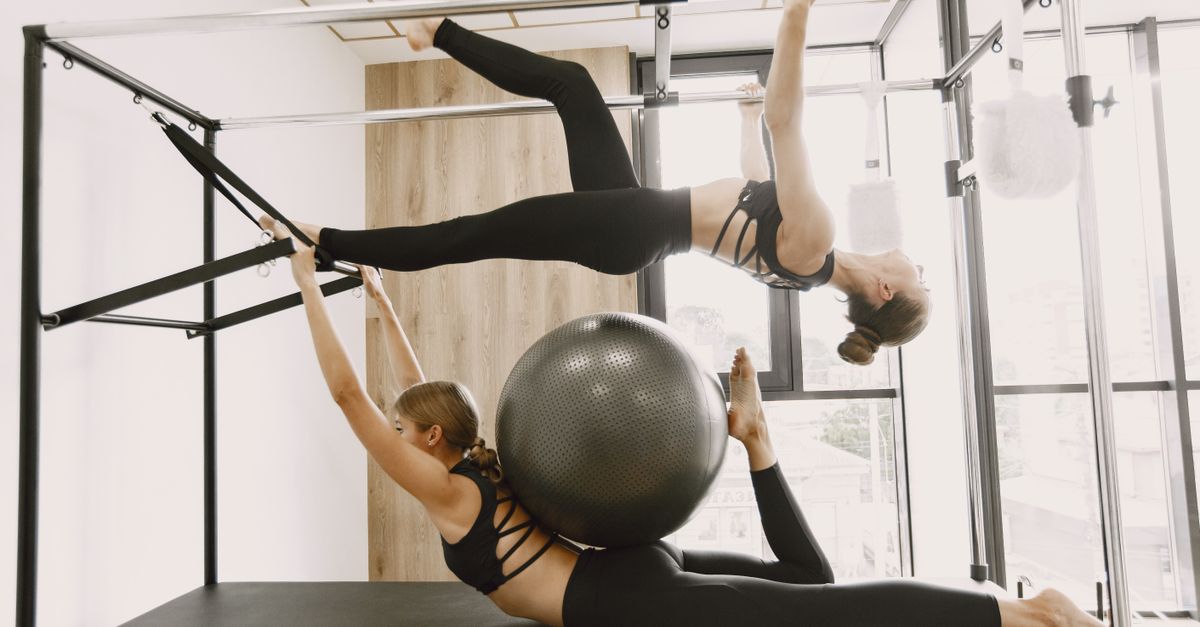
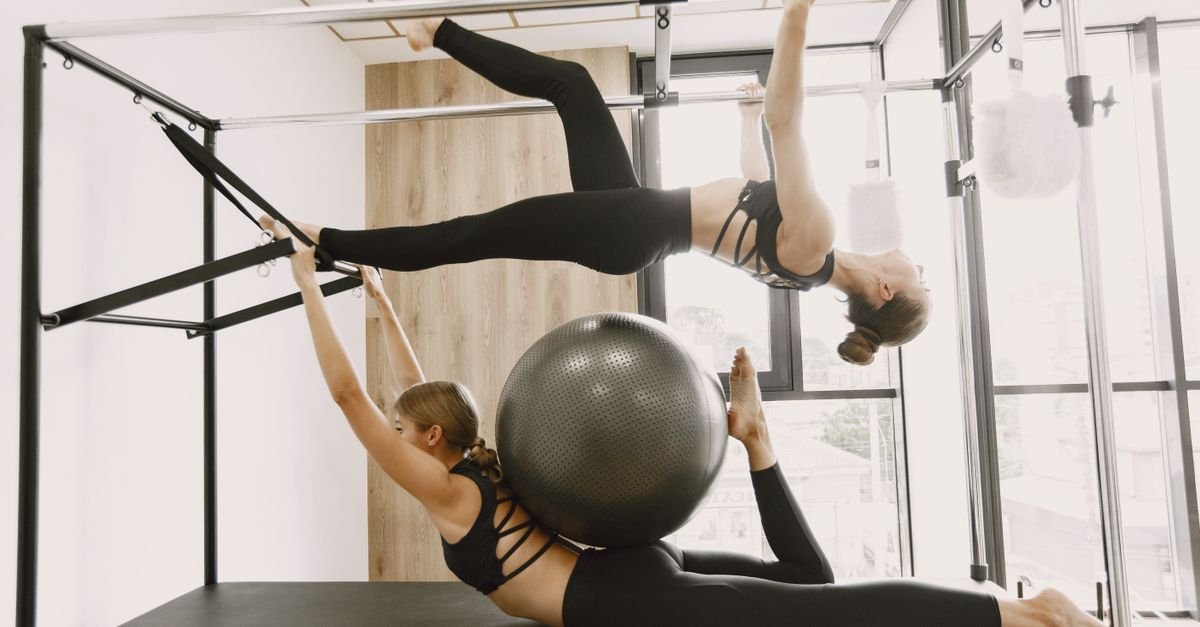
Pilates is a low-impact, mind-body method created by Joseph Pilates in the early 20th century. You’ll find it on a mat or on a reformer, a spring-loaded machine that looks like a bed with a sliding carriage. The exercises focus on breath, alignment, core control, and flowing movement. It’s not about lifting the heaviest thing in the room. It’s about moving with intention.
Think of Pilates as a language for your muscles. It teaches your deep core, pelvic floor, glutes, and back to work together. That coordination creates a stable center from which your arms and legs can move. When you watch someone do Pilates well, they look graceful and controlled. But don’t let the calm vibe fool you. It can be brutally hard in a quiet, shaking kind of way.
Core Control and Mind-Muscle Connection
Pilates puts the core front and center. Not just the six-pack abs you see in mirrors, but the deep stabilizers that wrap around your spine like a corset. Exercises like the hundred, teaser, and leg circles force you to brace, breathe, and move without losing alignment. You learn to find your pelvic floor and transverse abdominis, muscles many people never consciously feel.
That mind-muscle connection is a big deal. If you can’t feel a muscle, you can’t effectively train it. Pilates turns on the lights in your body’s control room. You start noticing when your ribs flare, when your lower back arches, and when your glutes go silent. That awareness carries into everything else you do.
The Pilates Principles That Build Strength
Classical Pilates rests on principles like centering, concentration, control, precision, breath, and flow. These aren’t fluffy buzzwords. They’re training variables. When you concentrate on a movement, you recruit more muscle fibers. When you control the tempo, you increase time under tension. When you breathe properly, you stabilize your spine and improve endurance. Precision and flow turn isolated moves into full-body coordination.
So yes, Pilates builds strength. But it’s a different flavor: muscular endurance, postural strength, and joint stability. It’s the strength that helps you hold a plank for two minutes or stand tall after a long day. It’s not the strength that lets you deadlift a small car.
What Is Weight Training, Exactly?
Weight training is any resistance exercise where you challenge your muscles with an external load. That load could be a barbell, dumbbell, kettlebell, machine, resistance band, or even your own body weight in a push-up. The goal is simple: apply stress, recover, and watch your body adapt by getting stronger, leaner, and more muscular.
Unlike Pilates, weight training is all about progressive overload. You don’t just do the same routine forever. You add weight, reps, sets, or reduce rest to keep challenging your muscles. That’s how you build maximal strength and muscle size. It’s also how you strengthen bones and connective tissue.
Progressive Overload: The Engine of Muscle Growth
Imagine your muscles as a factory. If you ask the factory to produce the same order every day, it won’t expand. But if you increase the order little by little, the factory adds machines and workers. That’s progressive overload. Lift a bit more weight next week. Do one more rep. Slow down the lowering phase. Your body responds by building bigger, stronger muscle fibers.
Pilates can use overload too, especially with springs and props. But the loads are usually lighter. That’s great for endurance and control. It’s less effective for maximal strength. If your goal is to lift heavy furniture or crush a powerlifting meet, you need heavier resistance than most Pilates classes provide.
Free Weights vs. Machines for Strength
Free weights like barbells and dumbbells force your stabilizer muscles to work overtime. They mimic real-life movements and teach your core to brace. Machines, on the other hand, guide your movement and isolate specific muscles. They’re safer for beginners and great for hypertrophy. Both have a place. A smart program uses both.
The key point? Weight training gives you a direct path to getting stronger. You can measure it. You can add five pounds. You can see the numbers go up. That feedback loop is powerful, and it’s why so many people fall in love with lifting.
Pilates vs. Weight Training: The Strength Showdown
Now let’s put them head-to-head. But remember: this isn’t a cage match. It’s more like comparing a sports car to a mountain bike. Both are impressive. They just shine on different terrain.
Muscle Activation and Recruitment
Weight training creates high mechanical tension and muscle damage, especially when you lift heavy or train close to failure. That tension is the primary driver of muscle growth and maximal strength. Pilates creates high activation in the core and stabilizers, often with very precise, slow movements. Studies show Pilates can activate the transverse abdominis and obliques effectively.
But activation isn’t the same as load. You can activate a muscle with a light movement, yet still not build maximal strength. To get truly strong, you need progressively heavier loads. Pilates wins for control and endurance. Weight training wins for raw power and size.
Hypertrophy vs. Functional Strength
Hypertrophy is muscle growth. If you want bigger arms, thicker legs, or a more sculpted back, weight training is the clear winner. It’s the most efficient way to add lean mass. Functional strength is your ability to move well in daily life and sport. Pilates can improve that by teaching your core and stabilizers to fire at the right time.
However, functional strength also requires load. Picking up a heavy suitcase is a functional task. If you’ve only trained with light springs, that suitcase might still feel like a boulder. The best functional strength comes from lifting heavy things while maintaining good alignment. That’s where both methods shake hands.
Core Strength and Stability
Pilates is the undisputed champion of deep core endurance and motor control. It teaches you to breathe behind a braced core, which protects your spine. But weight training also builds a serious core. Squats, deadlifts, overhead presses, and loaded carries force your midsection to stabilize under heavy load. A heavy deadlift is a core exercise whether you call it one or not.
If your core collapses under a barbell, you leak power and risk injury. Pilates can fix that leak. It’s like adding precision tuning to a powerful engine. Weight training builds the engine. Pilates makes sure the steering works.
Bone Density and Joint Health
Bone density is a silent hero of strength. Weight-bearing exercise with progressive load tells your bones to stay dense. That’s critical for preventing osteoporosis, especially as you age. Weight training excels here. Heavy squats, deadlifts, and presses send a strong signal to your skeleton.
Pilates is low-impact and joint-friendly. It can improve joint stability and reduce pain, but it may not load your bones enough to build density unless you use significant resistance. For bone health, lift weights. For joint comfort and control, add Pilates.
Mobility, Flexibility, and Injury Risk
Pilates improves flexibility, mobility, and body awareness. It’s often used in rehabilitation because it’s gentle and precise. Weight training can also improve mobility when you train through a full range of motion. But many lifters neglect mobility work, leading to stiff shoulders and tight hips.
Injury risk comes down to programming and form. Ego lifting with poor technique will hurt you. Mindless Pilates with bad alignment can also cause issues. Both methods, done well, reduce injury risk. The smartest approach is to use Pilates to improve movement quality and weight training to build robust, load-tolerant tissues.
Can Pilates Build Muscle and Strength?
Yes, but with caveats. Pilates can absolutely make you stronger than you are now. It can build muscular endurance, improve posture, and strengthen your core. Many people feel noticeably stronger after a few months of consistent practice. But the type and amount of strength depend on how you practice.
When Pilates Is Enough
Pilates might be enough if your goals are low-impact strength, better posture, injury rehab, or core endurance. If you’re a beginner, older adult, or someone recovering from back pain, Pilates can be a perfect starting point. A challenging reformer class with springs can add resistance and make your muscles work hard.
For daily life, Pilates strength can be plenty. You’ll feel more stable, balanced, and aware. You’ll move with less effort. But if you want to deadlift twice your body weight, Pilates alone won’t get you there.
When Pilates Falls Short
Pilates falls short for maximal strength, visible hypertrophy, and bone density. The loads are usually too light and the rep ranges too high to drive significant muscle growth. You can add props and resistance, but you’ll hit a ceiling. If your goal is to be as strong as possible, you need heavy progressive overload.
Think of it this way: Pilates teaches your muscles to work together beautifully. Weight training gives them a reason to grow bigger and stronger. You need both the symphony and the instruments.
Can Weight Training Improve Core Strength and Flexibility?
Absolutely. A common myth is that lifting makes you stiff and bulky. In reality, a well-designed weight training program can improve core strength, mobility, and overall athleticism. Compound lifts like squats and deadlifts demand full-body tension. They teach you to brace your core under load, which translates to better stability in every other activity.
The Surprising Benefits of Lifting
Lifting through a full range of motion can improve flexibility. Goblet squats, Romanian deadlifts, and overhead presses take your joints through their natural ranges. Loaded stretching can even increase mobility faster than static stretching alone. Plus, lifting boosts bone density, metabolism, and confidence.
Your core gets a serious workout too. Every time you hold a heavy barbell on your back, your abs, obliques, and deep spinal stabilizers fire to keep you upright. Loaded carries like farmer’s walks are basically dynamic planks. So yes, weight training builds core strength, but it does so in a different way than Pilates.
Where Weight Training Needs Pilates
Weight training can leave gaps. Many lifters struggle with breath control, pelvic alignment, and deep core activation. They may use their lower back to compensate for weak glutes. They may hold their breath and lose rib positioning. Pilates fills those gaps beautifully.
If you have back pain, poor posture, or limited mobility, Pilates can teach you how to move before you load. It’s like learning to drive a car before entering a race. Once you have control, you can add speed and weight safely.
The Best of Both Worlds: Hybrid Training
Why choose one when you can have both? A hybrid approach gives you the raw strength of weight training and the control, mobility, and core endurance of Pilates. This isn’t a compromise. It’s a superpower. You become strong and resilient, powerful and precise.
How to Combine Pilates and Weight Training
Start with your priority. If strength is your main goal, lift weights two to four times per week. Add one or two Pilates sessions for recovery, mobility, and core work. If Pilates is your priority, do it two to three times per week and add one or two full-body strength sessions.
Timing matters. Do your heavy lifting first if you want to maximize strength. Pilates can be a warm-up, a cooldown, or an active recovery day. Just don’t do an exhausting Pilates class right before a heavy squat session. You want your core fresh for big lifts.
Sample Weekly Hybrid Schedule
- Monday: Full-body weight training (squat, press, row)
- Tuesday: Pilates mat or reformer class
- Wednesday: Lower-body weight training (deadlift, lunge, carry)
- Thursday: Rest, walk, or gentle mobility
- Friday: Upper-body weight training (bench, pull-up, overhead press)
- Saturday: Pilates or yoga for recovery
- Sunday: Rest
Adjust the volume based on your energy, schedule, and goals. The best program is the one you can stick with. Even one Pilates session and two strength sessions per week can transform your body and how you feel.
Who Should Choose Which?
There’s no universal answer. Your body, history, and goals should drive the decision. Let’s break it down.
Choose Pilates If…
You want a low-impact workout that improves core strength, posture, flexibility, and body awareness. You’re recovering from an injury, dealing with back pain, or looking for a gentle but challenging way to move. You don’t have access to heavy equipment or you prefer a mind-body approach. You want to feel long, lean, and controlled.
Choose Weight Training If…
You want to build maximal strength, add visible muscle, increase bone density, and boost your metabolism. You enjoy measurable progress and the feeling of lifting something heavy. You want to improve athletic performance, prevent age-related muscle loss, and build a powerful physique. You’re ready to learn proper form and progressive overload.
Choose Both If…
You want the best of everything. You want to be strong enough to lift heavy and controlled enough to move beautifully. You want a body that performs well and feels good. You want to reduce injury risk while still pushing your limits. Most people fall into this category once they understand the benefits of each method.
Common Myths About Pilates and Weight Training
Let’s bust a few myths that keep people stuck in one camp or the other.
Myth: Pilates Doesn’t Build Real Strength
False. Pilates builds real strength—just a different kind. It strengthens your core, stabilizers, and muscular endurance. It can make daily life easier and improve your performance in other sports. But it won’t replace heavy lifting for maximal strength. Real strength comes in many forms.
Myth: Lifting Makes You Bulky
Most people don’t get bulky from lifting. Getting huge requires a calorie surplus, specific programming, genetics, and years of consistent heavy training. What most people get from weight training is a leaner, firmer, more toned body. You won’t accidentally turn into a bodybuilder.
Myth: You Have to Pick One Forever
You don’t. Your body thrives on variety. You can periodize your training: focus on strength for a few months, then add more Pilates for a season. Or do both every week. The idea that you must choose one forever is outdated and limiting.
Final Verdict: Pilates vs. Weight Training for Strength
If you define strength as the ability to lift heavy things, weight training wins. It’s the most efficient way to build maximal strength, muscle size, and bone density. If you define strength as moving well, controlling your core, and preventing injury, Pilates wins. It’s the master of precision, stability, and body awareness.
But why settle for one definition? The strongest, most resilient bodies combine both. Lift heavy to build power. Do Pilates to build control. Together, they create a body that can handle whatever life throws at it. So don’t ask which one is better. Ask how you can fit both into your week.
FAQs About Pilates vs. Weight Training for Strength
Is Pilates better than weight training for abs?
Pilates is excellent for deep core strength and endurance. It teaches you to activate your transverse abdominis and obliques with precision. Weight training also builds abs through heavy compound lifts and direct core work. For visible abs, nutrition and overall body fat matter most. For deep core control, Pilates has an edge.
Can I build visible muscle with Pilates alone?
You can build some muscle with Pilates, especially as a beginner or if you use resistance. But visible hypertrophy is limited because the loads are usually light. To build noticeable muscle size, you need progressive overload with heavier weights. Pilates can complement that, but it’s not the fastest route to muscle growth.
How often should I lift weights for strength?
For general strength, two to three full-body sessions per week is a great start. If you’re more advanced, you might train four to five times per week with a split routine. Focus on progressive overload, proper form, and recovery. Consistency matters more than frequency.
Does Pilates help with weight loss?
Pilates can support weight loss by burning calories and building muscular endurance, but it’s not the biggest calorie burner. Weight training and cardiovascular exercise usually burn more. The real key to weight loss is a sustainable calorie deficit. Pilates helps with body composition, posture, and core strength, which makes the journey feel better.
What should a beginner do first: Pilates or weights?
Start with whichever feels less intimidating and more sustainable. If you have back pain or poor core control, Pilates is a smart first step. If you want to build strength and muscle, begin with light weight training and learn proper form. Eventually, combining both is ideal. You don’t have to be perfect—just start moving.