Table of Contents
- Exercise for People With Limited Floor Space
- Why Limited Floor Space Doesn’t Have to Limit Your Fitness
- How to Assess Your Available Space Before You Start
- Essential Equipment for Small-Space Workouts
- The Small-Space Workout Formula
- 10 Effective Exercises You Can Do in a Tiny Area
- How to Build a 20-Minute Full-Body Routine
- Cardio in a Postage-Stamp Space
- Mobility and Stretching When You’re Short on Room
- Strength Training With Minimal Equipment in Small Spaces
- How to Avoid Bumping Walls, Furniture, and Neighbors
- Making Small-Space Exercise a Daily Habit
- Common Mistakes to Avoid
- Conclusion: Your Space Is Enough
- FAQs About Exercise for People With Limited Floor Space
Exercise for People With Limited Floor Space
You don’t need a giant gym, a spare room, or a warehouse-sized living room to get fit. All you need is enough room to move safely, a little creativity, and a plan that respects your square footage. Think of your workout space like a Swiss Army knife: small, yes, but surprisingly capable when you know how to use it.
Exercise for people with limited floor space is not about doing less. It’s about doing smart. You can build strength, raise your heart rate, improve mobility, and stay consistent even if your “gym” is a patch of carpet between the couch and the coffee table. Let’s break it down step by step.
Why Limited Floor Space Doesn’t Have to Limit Your Fitness
Your body doesn’t care how many square feet you have. It cares about movement quality, effort, and consistency. A tiny workout zone can still deliver a serious training stimulus if you choose the right exercises and organize your sessions well. The real question isn’t “Do I have enough room?” It’s “How can I use the room I have?”
Small-space workouts also come with hidden benefits. You become more intentional. You stop wasting time wandering around a gym. You learn to use bodyweight, tempo, and resistance bands to create challenge. That kind of efficiency can make your routine easier to stick with, which is often the biggest win of all.
The Real Challenge Is Movement, Not Square Footage
A lot of people assume they need space for long lunges, wide squats, and sprint-style cardio. But you can adjust your stance, shorten your range, change your tempo, and use isometric holds to make an exercise harder without taking up more room. A narrow stance squat can be just as demanding as a wide one. A slow push-up can torch your arms and chest in a space no bigger than a yoga mat.
Think of it like cooking in a small kitchen. You don’t need every gadget on the counter. You need a few reliable tools and a clear system. Your body is the main tool. The room is just the countertop.
How to Assess Your Available Space Before You Start
Before you roll out a mat or start swinging a resistance band, take a quick look around. Measure your space with your body, not just a tape measure. You want enough room to stand tall, extend your arms, and shift your weight without knocking over a lamp or clipping a doorframe.
Clear a safe zone. Move fragile items, tuck away cords, and make sure pets and kids know when you’re training. A clean, open patch of floor is more motivating than a cluttered one. You don’t need perfect. You need functional.
The Arm-Span Test
Stand in the middle of your chosen area and stretch your arms out to the sides. Can you move them forward, overhead, and across your body without touching anything? Next, take a small step forward and backward. Can you hinge at the hips and reach toward the floor? If yes, you have enough space for a surprisingly effective workout.
If your arm span hits a wall, don’t panic. You can angle your body, use single-arm exercises, or choose movements that stay close to your center. Small spaces reward controlled movement.
Quick Room Reset Checklist
- Clear a patch of floor roughly the size of a yoga mat.
- Move breakables and electronics out of the swing zone.
- Check for slippery rugs, loose cords, and sharp corners.
- Set a water bottle within reach but outside your movement path.
- Open a window if possible for airflow.
Essential Equipment for Small-Space Workouts
You can get a great workout with zero equipment, but a few small tools can add variety and progress. The key is to choose gear that stores easily and doesn’t turn your living room into an obstacle course. Think “one drawer, one basket, one corner” rather than “home gym explosion.”
Gear That Earns Its Keep
Resistance bands are the MVP of small-space training. They’re light, portable, and shockingly versatile. A loop band can add tension to squats and glute bridges. A long tube band with handles can turn a doorway into a cable machine. A set of sliders or a pair of socks on a smooth floor can make core and leg exercises more challenging without adding bulk.
A yoga mat gives you cushion and grip, but it’s optional if your floor is comfortable. A small step or sturdy chair can support mobility work, incline push-ups, and seated exercises. A pair of light dumbbells or a kettlebell is useful if you have the space to store them safely, but they aren’t mandatory.
What You Can Skip
Skip bulky machines, giant stability balls if storage is tight, and any gadget that promises magic without effort. You don’t need a full rack of weights or a treadmill that doubles as a coat rack. Focus on tools that make movement more interesting, not tools that make your room harder to live in.
The Small-Space Workout Formula
A balanced routine doesn’t need complicated choreography. Use a simple formula: push, pull, squat, hinge, carry, and core. You can hit all of these patterns with bodyweight, bands, or a single dumbbell. The movements might look different in a tight space, but the training effect is still there.
For example, a push might be a narrow push-up or a band chest press. A pull could be a band row anchored to a door. A squat could be a close-stance squat or a chair-assisted squat. A hinge could be a hip bridge or a banded good morning. A carry could be a slow march holding a weight close to your chest. Core work could be a dead bug or a plank with limited reach.
Push, Pull, Squat, Hinge, Carry, and Core
This formula keeps your workouts balanced and prevents you from doing the same three exercises forever. You don’t need to train every pattern every day. Choose two or three patterns per session and rotate them through the week. Your body loves variety, and your small space can handle it.
Want a quick rule? Pick one lower-body movement, one upper-body movement, one core movement, and one cardio burst. That’s a full-body session in a nutshell. Add a warm-up and a short cool-down, and you’re done.
How to Scale Without Noise and Clutter
Make exercises harder by slowing down, pausing at the hardest point, adding a band, or increasing reps. Make them easier by reducing range, using a chair for support, or switching to a seated version. You can also change the tempo: a three-second lower and a one-second rise can turn a simple squat into a challenge.
Noise control matters in apartments. Choose controlled movements over jumping. Put a rug or mat under your feet. Avoid dropping weights. If you use bands, check anchors twice before you pull. Safety and consideration go hand in hand.
10 Effective Exercises You Can Do in a Tiny Area
Here’s a practical list you can use right away. Most of these exercises need only a mat-sized space. Adjust the reps and tempo to match your fitness level.
Bodyweight Strength Moves
- Close-stance squat: Stand with feet hip-width or slightly narrower, sit down and stand up with control.
- Incline push-up: Place hands on a sturdy counter or chair, lower your chest, and press back up.
- Reverse lunge to balance: Step back, lower your knee, and return to standing without moving forward much.
- Glute bridge: Lie on your back, feet close to your hips, lift your pelvis, and squeeze your glutes.
- Dead bug: Lie on your back and extend opposite arm and leg while keeping your lower back stable.
- Wall sit: Slide down a wall until your thighs are parallel to the floor and hold.
- Band row: Anchor a band to a door or sturdy post and pull toward your ribs.
- Banded squat: Loop a band above your knees and press outward as you squat.
- Farmer carry in place: Hold a weight close to your chest and march slowly.
- Plank shoulder tap: Start in a plank and tap one shoulder at a time without rocking your hips.
Low-Impact Cardio Options
You can raise your heart rate without jumping. Try fast marching, step touches, shadow boxing, low-impact skaters without the jump, or a seated cardio circuit. Add arm movements and change the tempo every minute. If you want more intensity, make your movements bigger and faster while keeping your feet quiet.
How to Build a 20-Minute Full-Body Routine
Twenty minutes is enough time to train if you stay focused. Warm up for three minutes, do a circuit for twelve to fifteen minutes, and cool down for two to three minutes. Keep transitions short. Set a timer. Put your phone on airplane mode if notifications distract you.
Use a circuit format: perform each exercise for 40 seconds, rest for 20 seconds, and move to the next. Complete three rounds. If that feels too hard, do 30 seconds of work and 30 seconds of rest. If it feels too easy, slow down your reps or add a band.
Sample Circuit A: Strength Focus
- Close-stance squat
- Incline push-up
- Band row
- Glute bridge
- Dead bug
Sample Circuit B: Cardio and Mobility Focus
- Fast march in place
- Step touch with arm reach
- Chair-assisted reverse lunge
- Standing cross-body punches
- Wall slide to overhead reach
Cardio in a Postage-Stamp Space
Cardio doesn’t have to mean running laps. You can get breathless by moving your arms, changing levels, and using interval timing. Imagine your workout is a playlist: you don’t need one long song. You need a few short tracks that keep you moving.
Try 30 seconds of fast marching, 30 seconds of step touches, 30 seconds of shadow boxing, and 30 seconds of low-impact skaters. Repeat that sequence four times. You’ll feel your heart rate rise without needing a runway.
Quiet Cardio for Apartments
Quiet cardio is your friend when neighbors live below you. Keep your feet close to the floor. Avoid jumping jacks and high-impact plyometrics. Use slow, controlled strength movements with short rest periods to keep your heart rate up. Add upper-body movement to increase demand without noise.
Low-Impact Intervals That Still Work
Try this simple interval: march fast for 40 seconds, rest for 20, then do standing knee drives for 40, rest for 20, then shadow box for 40, rest for 20. Repeat three times. You’ll sweat, breathe harder, and keep the noise down.
Mobility and Stretching When You’re Short on Room
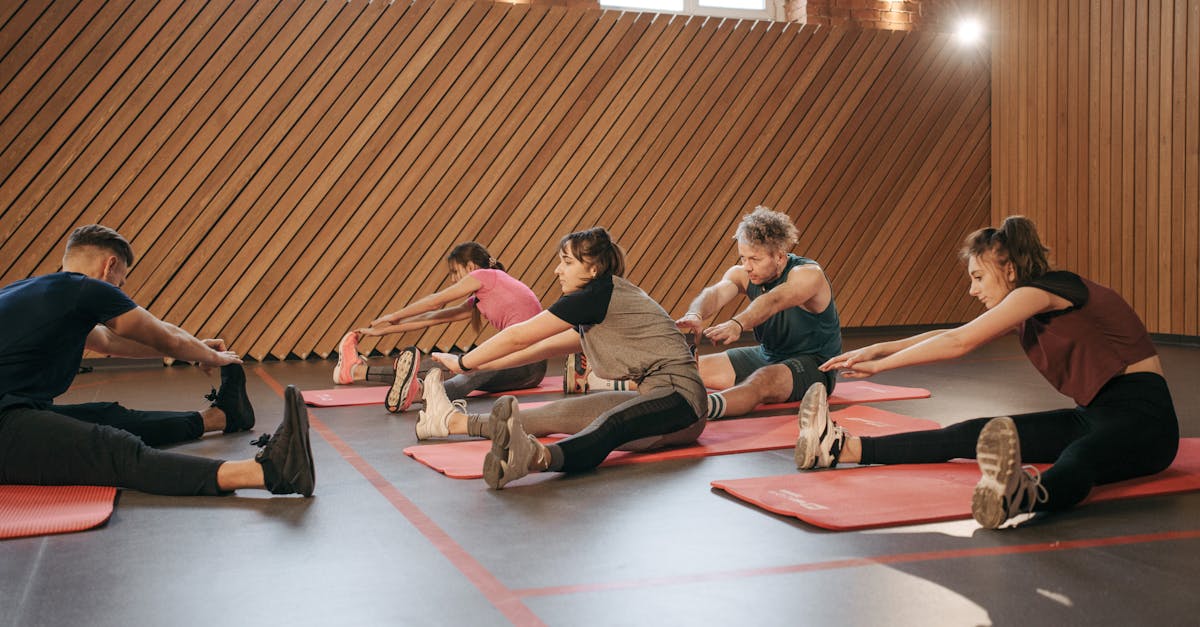
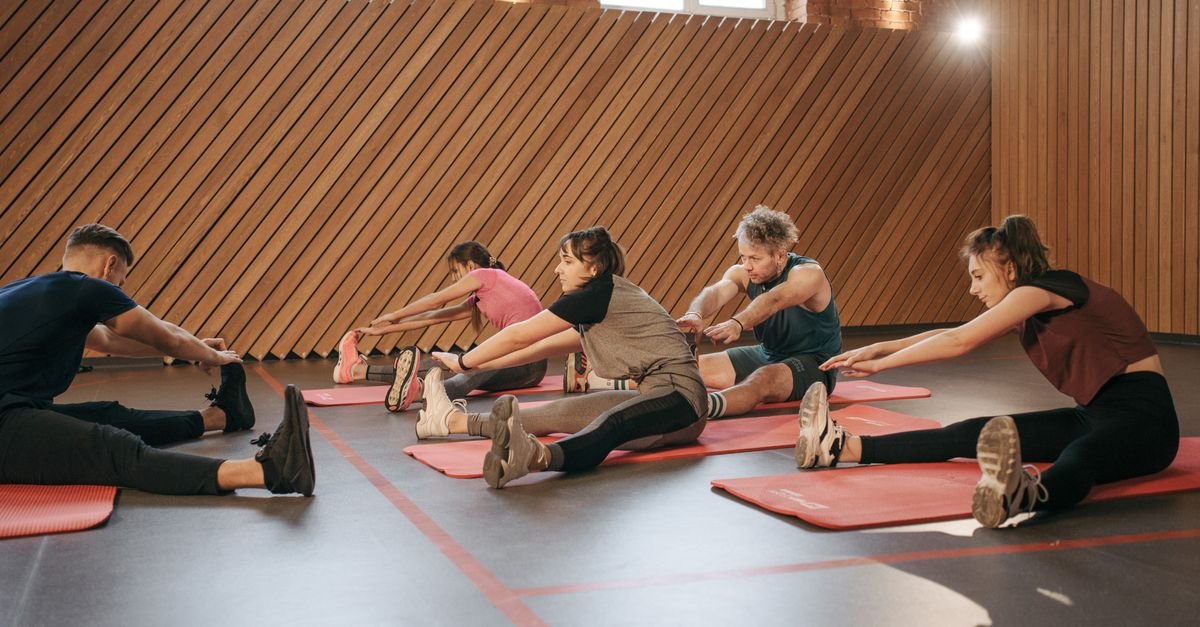
Mobility work is especially valuable in small spaces because it helps you move better in tight quarters. You don’t need to sprawl across the floor. You can improve hip, shoulder, and spine movement while standing, using a wall, or sitting on a chair.
Floor-Free Mobility Drills
- Standing hip circles
- Shoulder rolls and arm swings
- Spine twists with arms crossed
- Standing hamstring sweeps
- Wall slides for shoulder mobility
Wall and Chair Stretches
Use a wall for chest openers, calf stretches, and supported shoulder stretches. Use a chair for seated spinal twists, hip flexor stretches, and gentle neck mobility. Move slowly. Breathe. You’re not trying to win a flexibility contest; you’re trying to feel better in your body.
Strength Training With Minimal Equipment in Small Spaces
Strength training is about tension, not tons of iron. You can build muscle with bodyweight leverage, bands, and tempo. If you have one dumbbell, you can do unilateral work that challenges your core and balance. If you have none, your body still provides plenty of resistance.
Resistance Bands Are Your Best Friend
Bands let you train pulling movements, which are hard to do with bodyweight alone in a small room. Anchor a band to a closed door, a sturdy post, or a heavy piece of furniture. Check the anchor before every set. Use smooth tension and avoid snapping the band.
You can do rows, chest presses, lateral raises, bicep curls, triceps extensions, and glute kickbacks. One band can cover your whole body if you choose the right exercises.
Dumbbell Moves Without the Wide Stance
Use a narrow stance for squats and deadlifts. Keep the weight close to your body. Try single-arm rows with one hand on a chair for support. Do overhead presses from a kneeling or seated position if the ceiling is low. Remember: control beats ego. You don’t need to swing a heavy weight to get stronger.
How to Avoid Bumping Walls, Furniture, and Neighbors
Safety in a small space comes down to awareness. Know where your arms, feet, and equipment are at all times. Move furniture if needed. Use a mirror if you have one, or film yourself from the side to check your form. If an exercise feels cramped, modify it instead of forcing it.
Movement Cues That Keep You Safe
Keep your ribs stacked over your hips. Breathe out on effort. Move with control rather than momentum. If you’re using a band, make sure it’s secure and not frayed. If you’re doing floor work, keep your neck relaxed and your lower back supported.
Noise-Control Tips for Apartment Workouts
Use a thick mat or rug. Wear supportive shoes if your joints need them, or go barefoot if you prefer. Avoid dropping weights. Choose controlled cardio over jumping. If you’re worried about noise, talk to your neighbor before you start a new routine. A little communication goes a long way.
Making Small-Space Exercise a Daily Habit
Consistency beats intensity. A short workout you actually do is better than a perfect plan you skip. Make your space visible and your routine simple. Leave your mat out if it doesn’t clutter the room. Put your bands in a basket where you can see them. Lower the friction, and you’ll raise your follow-through.
Habit Stacking for Busy People
Attach your workout to something you already do. After you brush your teeth, do five minutes of mobility. After you make coffee, do a ten-minute circuit. Before you shower, knock out a quick strength session. The goal is to make movement automatic, not dramatic.
Track Progress Without a Gym
Write down your reps, time, or how an exercise felt. Take a photo every few weeks if you like visual feedback. Notice whether daily tasks feel easier. Can you climb stairs without getting winded? Can you carry groceries more comfortably? Those are real wins. You don’t need a fancy app to prove you’re getting stronger.
Common Mistakes to Avoid
Small-space training goes wrong when people overcomplicate it. You don’t need ten pieces of equipment or a perfect studio. You need a clear area, a simple plan, and a willingness to adjust. Keep your expectations realistic and your movements controlled.
Overcomplicating Your Setup
If your gear takes five minutes to set up, you’ll skip the workout. Keep it simple. One band, one mat, one clear space. That’s enough for most sessions. Complexity is the enemy of consistency.
Skipping Warm-Ups Because You’re Short on Time
A three-minute warm-up is not a waste of time. It’s insurance. March in place, roll your shoulders, do a few bodyweight squats, and gently twist your spine. You’ll move better and reduce your risk of tweaks and strains.
Conclusion: Your Space Is Enough
Your floor space may be limited, but your fitness potential is not. With a clear patch of floor, a few smart exercises, and a routine that fits your life, you can build strength, improve your cardio, and feel better in your body. You don’t need to wait for a bigger room or a better gym. Use what you have, adjust when needed, and keep showing up. Small space, big effort, real results.
FAQs About Exercise for People With Limited Floor Space
Can I get a good workout in a 5×5-foot area?
Yes. A 5×5-foot area is enough for many bodyweight exercises, band work, and low-impact cardio. You can do squats, push-ups, rows, glute bridges, planks, marching, and shadow boxing. The key is to choose movements that stay close to your body and adjust your range of motion to fit the space safely.
What’s the best cardio exercise for a small apartment?
Fast marching, step touches, shadow boxing, low-impact skaters, and standing knee drives are excellent choices. They raise your heart rate without requiring jumping or lots of room. Use intervals to increase intensity, and add arm movements to make the workout more demanding.
Do I need a mat for small-space workouts?
Not always, but a mat can make floor exercises more comfortable and reduce noise. If you have sensitive knees or a hard floor, a thin exercise mat or a folded blanket can help. For standing exercises, comfortable shoes or bare feet may be enough.
How can I strength train without heavy weights in a small room?
Use bodyweight leverage, resistance bands, tempo, and unilateral movements. Slow down your reps, pause at the hardest point, and try single-arm or single-leg variations. A band anchored to a door can add pulling and pressing resistance without taking up much space.
How do I stop worrying about noise during workouts?
Choose low-impact movements, use a thick mat or rug, and avoid dropping weights. Keep your feet close to the floor and focus on controlled tempo. If you live above someone, try quiet cardio and strength circuits instead of jumping exercises. A quick chat with your neighbor can also ease a lot of worry.