Table of Contents
- Can Hula Hooping Give You a Cardio Workout?
- Introduction: The Hoop That Makes You Huff
- What Counts as a Cardio Workout?
- Heart Rate Zones and the Talk Test
- Why Continuous Movement Matters
- How Hula Hooping Works Your Body
- The Core Is the Star
- Legs, Glutes, and Hips Join the Party
- Arms and Shoulders: The Supporting Cast
- The Science Behind Hula Hooping and Cardio
- Study Findings You Can Trust
- How Many Calories Can You Burn?
- Intensity: Is It Moderate or Vigorous?
- Benefits Beyond Cardio
- Core Strength and Balance
- Coordination and Brain-Body Connection
- Mood Boost and Stress Relief
- Who Should Try Hula Hooping?
- Beginners and Busy People
- Athletes and Cross-Trainers
- Older Adults and Joint-Friendly Fitness
- How to Start a Hula Hoop Cardio Workout
- Pick the Right Hoop
- Master the Basic Stance
- Build a Simple Routine
- Add Intervals for More Burn
- Common Mistakes That Kill the Workout
- Using a Tiny Hoop Too Soon
- Standing Still and Spinning Only Your Hips
- Holding Your Breath
- Sample 20-Minute Hula Hoop Cardio Session
- Warm-Up
- Main Set
- Cool-Down
- Hula Hooping vs. Other Cardio
- Running and Walking
- Dancing and Aerobics
- Cycling and Elliptical
- Can You Lose Weight with Hula Hooping?
- Safety Tips and Modifications
- Protect Your Back
- Watch Your Surroundings
- Modify for Knees and Hips
- Conclusion: Grab a Hoop and Get Your Heart Pumping
- FAQs
- Is hula hooping as good as running?
- How long should I hula hoop for cardio?
- Can hula hooping replace the gym?
- Does hula hooping tone your stomach?
- What if I can’t keep the hoop up?
Can Hula Hooping Give You a Cardio Workout?
Yes, hula hooping can absolutely give you a cardio workout. I know it looks like a playful childhood toy, but pick up a weighted hoop, start swinging your hips, and within a few minutes you’ll feel your heart pounding and your shirt getting damp. It’s not a magic trick. It’s continuous movement, and that’s the heart of cardio.
If you’ve ever wondered whether those viral hula hoop workouts are legit or just social media fluff, you’re in the right place. Let’s break down the science, the sweat, and the strategy behind using a hoop to improve your cardiovascular fitness.
Introduction: The Hoop That Makes You Huff
Think of your cardiovascular system like a delivery service. Every time you move, your heart pumps oxygen-rich blood to your muscles. The harder and longer you move, the more deliveries your body needs to make. Hula hooping forces your core, hips, legs, and even your arms to keep adjusting, balancing, and pushing. That constant motion raises your heart rate.
Is it exactly like running a marathon? No. But does it count as cardio? Absolutely. The American Heart Association recommends at least 150 minutes of moderate-intensity aerobic activity per week. Hula hooping can fit into that recommendation nicely, especially if you keep the hoop moving and don’t treat it like a casual stroll.
So, can hula hooping give you a cardio workout? Short answer: yes. Long answer: yes, if you do it with enough intensity, duration, and consistency. Let’s dig deeper.
What Counts as a Cardio Workout?
Before we crown the hula hoop as the next treadmill killer, let’s define cardio. A cardio workout is any activity that raises your heart rate and breathing rate for a sustained period. Your heart works harder, your lungs expand, and your blood vessels deliver oxygen to working muscles. Over time, this improves your heart’s efficiency and your body’s ability to use oxygen.
You don’t need fancy equipment. Walking, dancing, swimming, cycling, and yes, hula hooping all count. The key is that you’re moving enough to challenge your system without completely burning out in 30 seconds.
Heart Rate Zones and the Talk Test
One simple way to know if hula hooping is cardio is the talk test. If you can sing a song while hooping, you’re probably not working hard enough. If you can speak in short sentences but not hold a long conversation, you’re likely in moderate-intensity territory. If you can only gasp one or two words, you’ve crossed into vigorous intensity.
You can also use a heart rate monitor. Moderate intensity is roughly 50% to 70% of your maximum heart rate. Vigorous intensity is about 70% to 85%. A good hula hoop session can bounce between these zones, especially when you add intervals, direction changes, and faster music.
Why Continuous Movement Matters
Here’s the catch: hula hooping only counts as cardio if you keep moving. Stopping every 20 seconds to chase the hoop across the room? That’s not a workout yet. That’s comedy. Once you can keep the hoop up for a few minutes at a time, your body shifts into aerobic mode. Your heart rate stays elevated, and your muscles keep demanding oxygen.
Think of it like a garden hose. If you turn the water on and off, the flow is choppy. If you leave it running, the pressure stays steady. Cardio works the same way. Sustained movement builds endurance.
How Hula Hooping Works Your Body
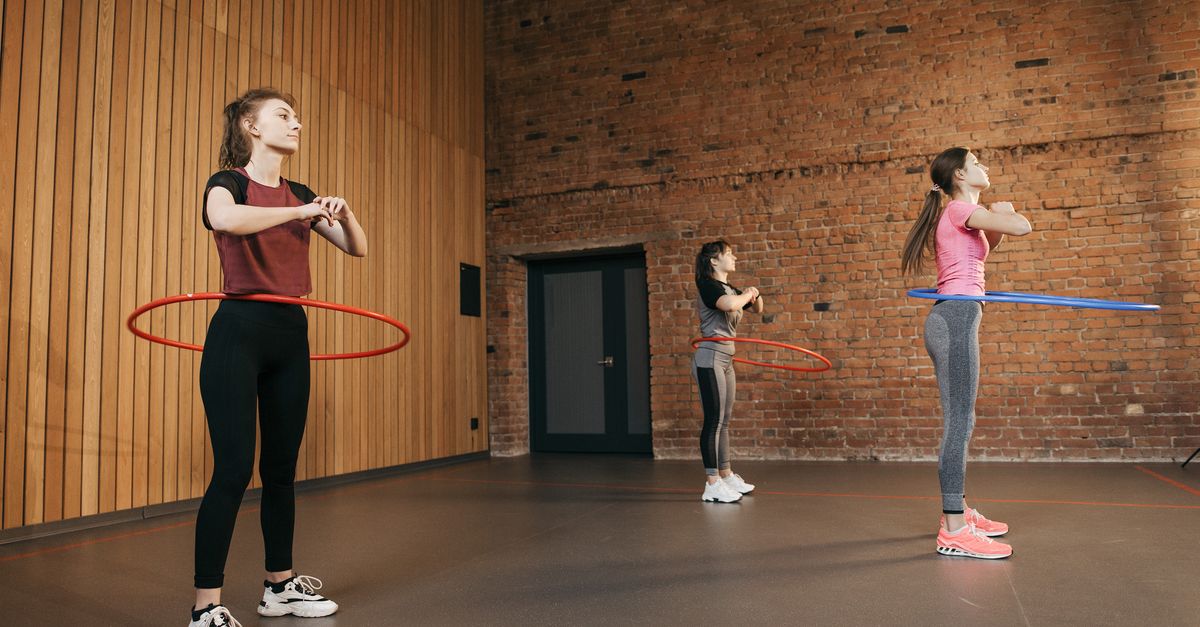
Hula hooping is sneaky. It looks like you’re just wiggling your hips, but your whole body is involved. The hoop demands constant micro-adjustments. Your core fires, your legs shift, and your arms often move to keep momentum. That full-body engagement is why it can feel so tiring so quickly.
The Core Is the Star
Your abdominal muscles, obliques, and lower back muscles are working overtime to keep the hoop spinning. Every rotation sends a little wobble through your torso, and your core has to correct it. That’s why hula hooping is famous for targeting the midsection. It’s not just a crunch in disguise, but it’s definitely a core workout.
Over time, that constant bracing can improve your posture and stability. A strong core helps you lift groceries, climb stairs, and avoid back pain. So even if you’re doing it for cardio, your abs get a bonus.
Legs, Glutes, and Hips Join the Party
Your hips and knees drive the movement. You’re not spinning like a top; you’re shifting weight from foot to foot and pushing your pelvis forward, back, and side to side. That means your glutes, quads, hamstrings, and calves are all active. If you hoop for 20 minutes, your legs will feel it.
Add a few steps or walk while hooping, and you crank up the leg involvement even more. Suddenly, it’s not just a core exercise. It’s a full lower-body cardio party.
Arms and Shoulders: The Supporting Cast
Your arms might not be the main event, but they’re not sitting back with popcorn either. You’ll use them to start the hoop, keep it spinning, and sometimes lift it overhead or pass it around your body. Those movements raise your heart rate and add a light upper-body challenge.
If you want more arm work, try hooping with your arms extended or add a smaller hoop for your hands. But even the basic spin keeps your shoulders engaged.
The Science Behind Hula Hooping and Cardio
Let’s get nerdy for a second. Researchers have actually studied hula hooping. In one small study, participants used a weighted hoop for 30 minutes and burned around 210 calories. Another study found that hula hooping raised heart rates to levels consistent with moderate-to-vigorous exercise. That’s real cardio, not just recess.
Of course, results vary. Your weight, fitness level, hoop size, and intensity all matter. But the overall message is clear: hula hooping can improve cardiovascular fitness when done regularly and vigorously enough.
Study Findings You Can Trust
A study published in the Journal of Strength and Conditioning Research looked at women using a weighted hula hoop. After six weeks, they showed improved core strength and aerobic fitness. Another study compared hula hooping to walking on a treadmill. The hoopers had similar heart rates and calorie burn when the intensity was matched.
Does that mean you should throw away your running shoes? Not necessarily. But it does mean you have options. If you hate running but love hooping, you can still train your heart.
How Many Calories Can You Burn?
Calorie burn depends on your body and effort. A 150-pound person might burn roughly 150 to 250 calories in 30 minutes of moderate hula hooping. Push harder, use a heavier hoop, or add intervals, and you could burn 300 or more. That’s comparable to a brisk walk or a light jog.
Remember, calorie burn isn’t the only measure of a good workout. Heart health, endurance, and mood matter too. But if weight management is your goal, hula hooping can help create a calorie deficit when paired with smart nutrition.
Intensity: Is It Moderate or Vigorous?
Hula hooping can be either. A slow, steady spin might feel like moderate intensity. A fast-paced session with music, direction changes, and squats can push you into vigorous territory. The beauty is that you control the dial. Want an easy day? Slow down. Want to sweat? Speed up and add moves.
Think of it like driving a car. You can cruise in third gear or floor it on the highway. Both get you somewhere, but one burns more fuel.
Benefits Beyond Cardio
Cardio is the headline, but hula hooping comes with a supporting cast of benefits. It improves balance, coordination, and body awareness. It’s also fun, which matters more than most people admit. If you enjoy a workout, you’re more likely to do it again tomorrow.
Core Strength and Balance
Every time the hoop wobbles, your core catches it. That’s balance training in disguise. Over time, you’ll notice better stability in your daily life. You might catch yourself standing taller or feeling more controlled during other activities.
Stronger abs and obliques also support your spine. That can reduce the risk of back pain and make lifting, twisting, and bending easier.
Coordination and Brain-Body Connection
Hula hooping requires timing. Your brain sends signals, your muscles respond, and your eyes track the hoop. That mind-body connection is like a workout for your nervous system. It can improve reaction time and proprioception, which is your sense of where your body is in space.
If you’ve ever tripped on a crack in the sidewalk, you know proprioception matters. Hooping helps sharpen it.
Mood Boost and Stress Relief
Any cardio workout releases endorphins, those feel-good chemicals that make you feel lighter after exercise. Hula hooping adds a playful element. It’s hard to be stressed when you’re laughing at yourself trying to keep a hoop around your waist.
The rhythmic motion can also be meditative. Once you find your groove, the world fades away. That’s a mental health win.
Who Should Try Hula Hooping?
Almost anyone can try hula hooping, but it’s especially great for certain groups. If you’re bored with traditional cardio, want a low-impact option, or need something you can do at home, the hoop is your friend.
Beginners and Busy People
New to exercise? Hula hooping is forgiving. You can start with a few minutes a day and build up. Busy schedule? A hoop takes up little space, and you can use it while watching TV or listening to a podcast. No commute to the gym required.
Athletes and Cross-Trainers
Even if you’re fit, hula hooping can challenge you. It works stabilizer muscles that running and cycling often miss. Add it as a warm-up, cool-down, or active recovery day. You might be surprised how sore your obliques get.
Older Adults and Joint-Friendly Fitness
High-impact activities like running can be hard on knees and hips. Hula hooping is low-impact. You keep one or both feet on the ground. As long as you have good balance and no serious back issues, it can be a safe way to raise your heart rate. Talk to your doctor if you’re unsure.
How to Start a Hula Hoop Cardio Workout
Ready to give it a spin? Good. Here’s how to go from awkward beginner to smooth hooper without throwing your hoop out the window.
Pick the Right Hoop
A cheap, lightweight kid’s hoop will frustrate you. It’s too small and too light for most adults. Choose a larger, heavier hoop, often called a fitness hoop or weighted hoop. A good starter hoop is usually 36 to 42 inches in diameter and weighs 1 to 3 pounds.
Heavier isn’t always better. A 5-pound hoop can bruise your hips. Start moderate and adjust.
Master the Basic Stance
Stand with feet shoulder-width apart. Place the hoop around your waist. Give it a strong spin. Then shift your weight from one foot to the other, pushing your hips forward and back. Don’t spin your whole body. Think of drawing a small circle with your belly button.
Keep your chest up and breathe. The hoop will drop. Pick it up and try again. Muscle memory takes a few sessions.
Build a Simple Routine
Start with 5 minutes of hooping. Rest when needed. Do that three times a week. Once you can hoop for 10 minutes without stopping, add more time. Aim for 20 to 30 minutes per session to hit cardio territory.
Use music with a steady beat. It helps you keep rhythm and makes the time fly.
Add Intervals for More Burn
Intervals are simple: hoop fast for 30 seconds, then slow for 30 seconds. Repeat. Or switch directions every minute. You can also add squats while hooping, lift one knee, or walk in a circle. These changes spike your heart rate and challenge your coordination.
Intervals are like adding hills to a walk. Same activity, bigger challenge.
Common Mistakes That Kill the Workout
Even with good intentions, a few habits can turn a great cardio session into a frustrating stop-start mess. Avoid these.
Using a Tiny Hoop Too Soon
Small hoops are for advanced tricks. They spin faster and demand more precision. If you’re new, a small hoop will spend more time on the floor than around your waist. Start big and heavy.
Standing Still and Spinning Only Your Hips
If your feet are glued to the floor and your hips are doing all the work, you’ll tire out fast. Instead, shift your weight and let your whole body participate. Small steps and knee bends keep the hoop up and your heart rate higher.
Holding Your Breath
When you concentrate, it’s easy to hold your breath. Don’t. Breathe steadily. If you’re gasping, slow down. Your muscles need oxygen, and so does your brain.
Sample 20-Minute Hula Hoop Cardio Session
Here’s a simple workout you can try today. No fancy equipment, just a hoop, water, and some good music.
Warm-Up
- March in place for 2 minutes.
- Do 10 hip circles each direction.
- Gently swing the hoop around your waist for 1 minute, not worrying about drops.
Main Set
- Hoop at a steady pace for 3 minutes.
- Rest 30 seconds.
- Hoop fast for 1 minute, slow for 1 minute. Repeat twice.
- Switch directions and hoop for 3 minutes.
- Add squats while hooping for 1 minute.
- Rest 1 minute.
- Final push: hoop as fast as you can for 2 minutes.
Cool-Down
- Slowly hoop for 2 minutes.
- Stretch your hips, shoulders, and lower back.
- Take deep breaths and drink water.
Hula Hooping vs. Other Cardio
How does hooping stack up against the classics? Let’s compare.
Running and Walking
Running burns more calories per minute for most people, but it’s higher impact. Walking is lower intensity. Hula hooping sits somewhere in between. It’s low-impact like walking but can feel more engaging because of the coordination challenge.
Dancing and Aerobics
Dancing and hula hooping are cousins. Both use music, rhythm, and full-body movement. Dancing might be easier on your hips if you’re prone to bruising. Hooping adds a core and balance challenge that dance classes may not target as directly.
Cycling and Elliptical
Cycling and elliptical machines are excellent for low-impact cardio. They’re also more repetitive. Hula hooping requires more mental engagement, which can make the time pass faster. If you get bored on machines, grab a hoop.
Can You Lose Weight with Hula Hooping?
Yes, you can lose weight with hula hooping if you create a calorie deficit. That means you burn more calories than you eat. Hula hooping can help you burn extra calories, but it won’t melt belly fat on its own. No exercise does that.
Pair regular hooping with a balanced diet, strength training, and good sleep. The weight loss may be slower than you want, but it’ll be more sustainable. And remember, even if the scale doesn’t move, your heart and core are getting stronger.
Safety Tips and Modifications
Hula hooping is generally safe, but a few precautions keep you in the game.
Protect Your Back
If you have a history of back pain, start slowly. Keep your movements small and controlled. A heavy hoop can strain your lower back if you’re not careful. Consult a physical therapist or doctor if you’re unsure.
Watch Your Surroundings
Clear the area. You don’t want to knock over a lamp or hit your pet. Give yourself at least 4 to 5 feet of space in every direction. A mirror can help you check your form.
Modify for Knees and Hips
If your knees or hips bother you, try hooping with a smaller range of motion. You can also hoop around your arms or do seated hooping with a light hoop. Listen to your body. Pain is not a badge of honor.
Conclusion: Grab a Hoop and Get Your Heart Pumping
Can hula hooping give you a cardio workout? Without a doubt. It raises your heart rate, challenges your muscles, and can be as easy or as intense as you make it. You don’t need a gym membership, fancy machines, or perfect coordination. You just need a hoop and a few minutes to start.
The best cardio is the one you’ll actually do. If running feels like punishment and the elliptical bores you to tears, hula hooping might be your answer. It’s playful, portable, and surprisingly effective. So pick up a hoop, turn on your favorite song, and give it a spin. Your heart will thank you.
FAQs
Is hula hooping as good as running?
Not exactly. Running generally burns more calories per minute and builds leg endurance faster. But hula hooping can still improve cardiovascular fitness, especially if you work at a moderate-to-vigorous pace. Think of it as a different tool in your cardio toolbox.
How long should I hula hoop for cardio?
Aim for at least 20 to 30 minutes per session, three to five times a week. If you’re new, start with 5 to 10 minutes and build up. The key is consistency, not perfection.
Can hula hooping replace the gym?
It can replace some cardio, but it won’t replace strength training entirely. Hula hooping works your core and lower body, but you still need resistance training for overall muscle strength and bone health. Use it as part of a balanced routine.
Does hula hooping tone your stomach?
It strengthens your core muscles, which can improve posture and make your midsection look firmer. But you can’t spot-reduce fat. To see visible abs, you need to reduce overall body fat through diet and exercise.
What if I can’t keep the hoop up?
Everyone drops the hoop at first. Use a larger, heavier hoop. Practice for 5 minutes a day. Try shifting your weight instead of spinning your whole body. Give it a week, and you’ll be surprised by your progress.