Table of Contents
- Introduction: The Age-Old Gym Debate
- What Do We Mean by Bodyweight Training?
- What Do We Mean by Weight Training?
- The Core Difference: Resistance Is Resistance
- How Your Muscles Actually Change
- Strength Gains: Can Bodyweight Build Serious Strength?
- Muscle Growth: Can You Build Muscle With Bodyweight Only?
- Fat Loss and Conditioning: Which Burns More?
- Mobility, Joint Health, and Injury Risk
- Skill, Coordination, and Mind-Muscle Connection
- Equipment, Convenience, and Cost
- Time Efficiency and Workout Density
- Who Should Choose Bodyweight?
- Who Should Choose Weights?
- Can You Combine Both? The Hybrid Approach
- Common Myths About Bodyweight vs. Weights
- How to Decide Based on Your Goals
- Sample Weekly Routines: Bodyweight vs. Weights
- Tracking Progress Without a Mirror
- Conclusion: The Best Resistance Is the One You’ll Actually Do
- FAQs
Bodyweight vs. Weights: What Changes?
Introduction: The Age-Old Gym Debate
You have probably heard it a hundred times. One friend swears by push-ups, pull-ups, and deep squats. Another friend lives in the free-weight section and treats dumbbells like sacred objects. So which one is better? Bodyweight vs. weights — what actually changes when you strip away the hype?
Here is the honest answer: both can build muscle, strength, and confidence. The real differences show up in how you progress, how you feel, how convenient the training is, and what skills you develop along the way. It is less about “magic exercises” and more about matching the tool to your goal.
Let us break it down without the fitness-industry drama.
What Do We Mean by Bodyweight Training?
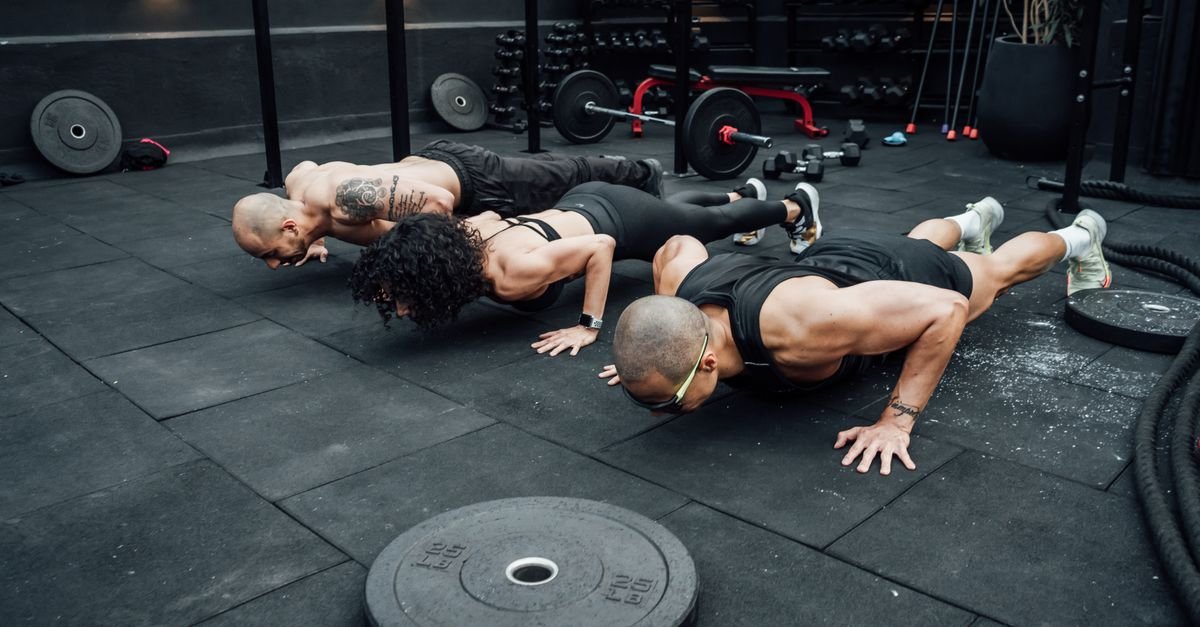
Bodyweight training uses your own mass as resistance. Think push-ups, squats, lunges, planks, pull-ups, dips, and hundreds of variations. You might add a bar, rings, or a bench, but the main load is you.
It is the oldest gym in the world. Your body is the equipment. That sounds simple, but it can get brutally hard. Try a one-arm push-up or a pistol squat and tell me bodyweight is easy. I will wait.
Bodyweight training often emphasizes control, mobility, and relative strength. That means how strong you are compared to your own body weight. If you can move your body through space with grace and power, that strength travels with you everywhere.
What Do We Mean by Weight Training?
Weight training uses external resistance. That could be barbells, dumbbells, kettlebells, machines, cables, sandbags, or resistance bands. You can add small jumps in load — five pounds, ten pounds, a plate — and keep pushing.
This is where exercises like bench presses, deadlifts, rows, overhead presses, and barbell squats live. The beauty of weights is precision. You can load a muscle group directly, adjust the angle, and chase very specific strength or size goals.
Weights also make progressive overload easier to measure. If you lifted 100 pounds last week and 105 this week, you know something changed. That feedback loop is powerful.
The Core Difference: Resistance Is Resistance
Your muscles do not know if the resistance comes from iron, gravity, or a giant rubber band. They only understand tension. They respond to mechanical load, metabolic stress, and recovery. A push-up and a bench press both challenge your chest, shoulders, and triceps. The difference is how the load is applied and how easily you can adjust it.
Think of it like carrying a backpack. Whether the weight is books or bricks, your legs still feel it. Bodyweight and weights are simply different backpacks. One is attached to you at all times. The other can be loaded with as many bricks as you want.
So the question is not “which one works?” Both work. The question is “which one fits your life and your goals right now?”
How Your Muscles Actually Change
Muscle growth and strength come from a few key ingredients. You need enough tension, enough volume, enough recovery, and enough calories and protein. The source of resistance matters less than whether you hit those boxes.
Mechanical Tension and Muscle Growth
Mechanical tension is the big one. When a muscle produces force against resistance, especially under a heavy load or near failure, it gets a signal to adapt. That signal can come from a heavy deadlift or from a hard set of archer push-ups. Your body does not care about the label on the exercise.
However, bodyweight exercises can become too easy for some muscle groups. If you can do 50 push-ups without breaking a sweat, your chest may not get the same growth stimulus as it would from a weighted bench press. That is where progression comes in.
What This Means for Your Training
You need to make bodyweight exercises harder over time. You can slow down the tempo, add pauses, reduce leverage, increase range of motion, or move to single-arm and single-leg variations. If you never increase the challenge, your body has no reason to change.
Metabolic Stress and the Pump
Metabolic stress is that burning, pumped-up feeling you get during higher-rep sets. It happens when metabolites build up in the muscle. Bodyweight circuits, high-rep squats, and push-up burnout sets can create plenty of metabolic stress.
Weights can do it too. Think of a set of 20-rep squats or a dumbbell drop set. The pump is not exclusive to either method. It is just a tool in the toolbox.
Muscle Damage and Recovery
Muscle damage is a fancy way of saying you created tiny tears in the muscle fibers. Your body repairs them and makes them a bit stronger. Both bodyweight and weights can cause this, especially with new exercises or high volumes.
But more damage is not always better. Too much soreness can hurt your next workout. The goal is to stimulate, not annihilate. Whether you use a barbell or a pull-up bar, recovery still rules the day.
Practical Takeaway for Muscle Change
If you want to grow muscle, you need to challenge your muscles progressively. Bodyweight training can do that if you keep making exercises harder. Weight training can do that if you keep adding load. The best choice is the one you can progress consistently without getting bored or injured.
Strength Gains: Can Bodyweight Build Serious Strength?
Absolutely. Gymnasts are living proof. They perform iron crosses, planches, and one-arm pull-ups. That is world-class strength, and they built it mostly with bodyweight. So yes, bodyweight can build serious strength.
But “serious strength” means different things to different people. If you want to lift a heavy barbell off the floor, you need to practice lifting heavy barbells. If you want to control your body in space, bodyweight training is king.
Progressive Overload Without Iron
Progressive overload means doing more over time. With bodyweight, you can add reps, add sets, slow the tempo, reduce rest, or move to a harder variation. For example, knee push-ups lead to full push-ups, then decline push-ups, then archer push-ups, then one-arm push-ups.
That progression ladder is powerful. It forces you to own each step. You cannot fake a one-arm push-up. Either you can do it or you cannot.
When Weights Win for Max Strength
Weights have an edge for maximal strength in specific lifts. If your goal is a 500-pound deadlift or a 300-pound bench press, you need to lift heavy weights. You cannot replicate that exact demand with bodyweight alone.
Weights also let you isolate weak links. Maybe your triceps fail before your chest in a bench press. You can add triceps extensions or close-grip presses. Bodyweight can do similar things, but it takes more creativity.
Muscle Growth: Can You Build Muscle With Bodyweight Only?
Yes, you can build a impressive physique with bodyweight only. But it requires planning. You cannot just do random push-ups and hope for the best. You need to hit all major muscle groups and progress over time.
Hypertrophy With Bodyweight
Hypertrophy is muscle growth. Bodyweight training can grow your shoulders, chest, back, arms, and legs. Pull-ups are a fantastic back and biceps builder. Dips hammer the chest and triceps. Pistol squats and shrimp squats challenge the legs.
The catch is lower-body growth. Your legs are already used to carrying your body all day. To grow them with bodyweight, you often need advanced single-leg variations, high reps, or added resistance like a vest or backpack.
Hypertrophy With Weights
Weights make hypertrophy more straightforward. You can load a muscle with exactly the right weight for the 8–15 rep range. You can do multiple exercises for the same muscle from different angles. You can track progress easily.
But weights are not magic. If you lift the same weights for the same reps forever, you will stall. You still need progressive overload, good form, and enough food.
Fat Loss and Conditioning: Which Burns More?
Fat loss comes down to a calorie deficit. You need to burn more calories than you eat. Both bodyweight and weight training can help, but they do it differently.
Bodyweight circuits, burpees, jump squats, and push-up ladders can spike your heart rate and burn calories quickly. They are great for conditioning. Weight training builds muscle, which can raise your resting metabolism slightly. It also burns calories during and after the workout.
Which burns more? It depends on intensity and duration. A brutal bodyweight circuit might burn more in 20 minutes than a slow weight session. But a heavy leg day can burn a ton over the next 24 hours. The best fat-loss workout is the one you can recover from and repeat.
Mobility, Joint Health, and Injury Risk
Both styles can hurt you if you are careless. Both can heal you if you are smart. The difference is in the stress they place on your joints and connective tissues.
Bodyweight Benefits for Mobility
Bodyweight training often improves mobility because you move through full ranges of motion. Deep squats, bridges, and shoulder circles can open up tight areas. You also learn to control your body, which carries over to daily life.
But advanced bodyweight moves can be brutal on joints. A one-arm push-up puts huge stress on the elbow and shoulder. You need to build up slowly.
Weight Training and Joint Load
Weights let you choose the load. That is a blessing and a curse. You can start light and progress gradually. But you can also ego-lift and wreck your lower back. The bar does not care about your feelings.
For joint health, the key is variation and moderation. Use full range of motion, avoid constant maxing out, and listen to your body. Whether you press a barbell or your body, pain is not a badge of honor.
Skill, Coordination, and Mind-Muscle Connection
Bodyweight training is a skill practice. Handstands, levers, and muscle-ups require coordination, balance, and body awareness. You are not just building muscle; you are teaching your nervous system to control your body.
Weight training also builds skill, especially in compound lifts. A clean and jerk or a heavy squat requires technique. But the skill is more about moving an external object. Bodyweight skill is more about moving yourself.
Which do you want? To be a master of your own body, or a master of the iron? You can be both, but each path has a different flavor.
Equipment, Convenience, and Cost
Bodyweight training wins on convenience. You can do it in a hotel room, a park, a prison cell, or your living room. No gym membership. No waiting for the squat rack. No monthly fees.
Weight training usually requires equipment. A gym gives you access to everything, but it costs money and time. Home gyms can be expensive, though a few dumbbells and a bench can go a long way.
If your life is chaotic, bodyweight training is hard to beat. If you love heavy lifting, the gym is worth the hassle.
Time Efficiency and Workout Density
Bodyweight workouts can be very time-efficient. You can superset push-ups, squats, and rows with minimal rest. You can turn a 20-minute session into a sweaty, full-body challenge.
Weight training can also be time-efficient, but heavy lifting requires rest between sets. A 5×5 squat session might take 30 minutes just for one exercise. That is not a bad thing, but it is a different pace.
If you have 20 minutes and no equipment, bodyweight wins. If you have an hour and want to chase a new deadlift PR, weights win.
Who Should Choose Bodyweight?
Choose bodyweight if you travel often, hate gyms, or want to master skills like handstands and pull-ups. It is also great for beginners who need to learn basic movement patterns before adding load.
Bodyweight is fantastic for fat loss, conditioning, and mobility. It builds relative strength that makes you feel light and capable. If you want to move like an athlete, bodyweight should be in your routine.
But be honest: if you can already do 30 push-ups and 10 pull-ups easily, you will need advanced variations to keep growing. That is not a problem, just a reality.
Who Should Choose Weights?
Choose weights if you want maximum muscle size, maximum strength in specific lifts, or easy progression. Weights are also great for people who love data. You can track every rep and every pound.
Weights are excellent for building a balanced physique. You can target lagging muscles directly. You can also scale the load down for rehab or up for powerlifting.
If you have access to a gym and enjoy the process, weights can take you far. Just do not skip mobility work and recovery.
Can You Combine Both? The Hybrid Approach
Why choose one? The hybrid approach is often the best. Use weights for heavy squats, deadlifts, and presses. Use bodyweight for pull-ups, dips, push-ups, and core work. You get the best of both worlds.
A hybrid plan might look like this: two weight-training days and two bodyweight skill days per week. Or you can add bodyweight finishers to your weight sessions. The combinations are endless.
Hybrid training keeps things interesting. It also builds a more well-rounded athlete. You can be strong under a bar and graceful on a bar.
Common Myths About Bodyweight vs. Weights
- Myth: Bodyweight cannot build muscle. Truth: It can, if you progress to harder variations.
- Myth: Weights make you bulky. Truth: Bulking depends on diet, training, and genetics, not just iron.
- Myth: Bodyweight is only for beginners. Truth: Gymnasts are among the strongest athletes on earth.
- Myth: Weights are dangerous. Truth: Poor form and ego are dangerous. Smart programming is safe.
- Myth: You must choose one forever. Truth: You can switch, combine, and adapt as your goals change.
How to Decide Based on Your Goals
Start with your goal. If you want to do a one-arm pull-up, train bodyweight. If you want to bench press 225 pounds, train with weights. If you want general health, pick the one you enjoy more.
Next, look at your lifestyle. Do you have gym access? How much time do you have? Do you travel? These practical factors matter more than internet arguments.
Finally, think about your personality. Do you like the puzzle of bodyweight progressions? Or do you like the satisfying clank of iron? The best program is the one you will stick to for months and years.
Sample Weekly Routines: Bodyweight vs. Weights
Here are two simple templates. They are not written in stone, but they show how each style can be organized.
Bodyweight Sample Plan
- Monday: Push-up variations, dips, pike push-ups, plank progressions
- Tuesday: Pull-up variations, Australian rows, biceps curls on bar, hollow body holds
- Wednesday: Squat variations, lunges, pistol squat progressions, calf raises
- Thursday: Handstand practice, mobility, light core work
- Friday: Full-body circuit: burpees, jump squats, push-ups, rows, mountain climbers
- Saturday: Skill work: levers, handstands, muscle-up progressions
- Sunday: Rest or easy walk
Weight Training Sample Plan
- Monday: Squat, bench press, row, accessory work
- Tuesday: Deadlift, overhead press, pull-ups, core
- Wednesday: Rest or mobility
- Thursday: Front squat, incline dumbbell press, lat pulldown, arms
- Friday: Romanian deadlift, military press, cable rows, conditioning
- Saturday: Weak-point training or bodyweight circuit
- Sunday: Rest
Tracking Progress Without a Mirror
Do not rely only on the mirror. It lies. Track performance instead. With bodyweight, count reps and progressions. Can you do more pull-ups? Can you hold a handstand longer? Can you do a harder push-up variation?
With weights, track load and reps. Write down your sets. Add a little weight or a rep each week. Take photos every month. Measure your waist, arms, and thighs if you want data.
Progress is not always visible day to day. But your workout log does not forget. It tells the truth.
Conclusion: The Best Resistance Is the One You’ll Actually Do
Bodyweight vs. weights is not a battle between good and evil. Both build muscle. Both build strength. Both can transform your body and mind. The real changes come down to progression, consistency, and enjoyment.
If you love the freedom of moving your own body, go bodyweight. If you love the feel of iron and the thrill of adding plates, go weights. If you are smart, you will mix both and become a more complete athlete.
Stop asking which one is better. Start asking which one you will do next week, next month, and next year. That answer will change everything.
FAQs
1. Can bodyweight training build as much muscle as weight training?
Yes, it can build impressive muscle, but it requires harder progressions and enough volume. For some people, especially advanced lifters, weights make it easier to keep adding resistance. For beginners, bodyweight can build plenty of muscle.
2. Is weight training better for fat loss than bodyweight training?
Neither is automatically better. Fat loss depends on a calorie deficit. Weight training helps preserve muscle while you lose fat. Bodyweight circuits can burn lots of calories in a short time. The best choice is the one you can do consistently while controlling your diet.
3. Do I need a gym to get strong with weights?
No. You can get strong with a few dumbbells, a barbell, or even resistance bands at home. A gym gives you more options, but consistency and progressive overload matter more than fancy equipment.
4. Can I combine bodyweight and weights in the same week?
Absolutely. Many athletes do both. You might lift heavy two or three days a week and use bodyweight for skills, conditioning, and accessory work on other days. Just manage your recovery and avoid doing too much too soon.
5. What is the biggest mistake people make with bodyweight or weights?
The biggest mistake is not progressing. Doing the same workout with the same effort for months will stall your results. Whether you add reps, add weight, slow the tempo, or try harder variations, you must give your body a new reason to adapt.



