Table of Contents
- Should You Join a Class or Exercise Alone?
- The Short Answer: It Depends on Your Brain, Schedule, and Goals
- Why Exercise Alone Can Feel Like Freedom
- Solo Workouts Are Flexible and Private
- The Hidden Trap of the Lonely Treadmill
- Why Joining a Class Can Change the Game
- Accountability Turns “Maybe Later” Into “Let’s Go”
- Instructors Catch What You Can’t See
- The Science of Motivation: Solo vs. Group Energy
- External Cues vs. Internal Drive
- Social Facilitation and the “Someone’s Watching” Effect
- Which One Is Better for Beginners?
- The Beginner’s Confidence Curve
- Red Flags in Group Classes for Newbies
- Which One Is Better for Weight Loss and Muscle Gain?
- Calories Burned: Class vs. Solo
- Progressive Overload and Strength Training
- Cost, Time, and Convenience: The Real-World Math
- The Gym Class Budget Breakdown
- Home Workouts and Minimal Equipment
- Personality Matters More Than You Think
- Introverts, Extroverts, and Everything In Between
- Competitive vs. Cooperative Personalities
- How to Get the Best of Both Worlds
- Hybrid Routine: Class Twice a Week, Solo the Rest
- Build a Solo Plan That Doesn’t Feel Boring
- Common Myths About Exercising Alone
- Myth: Solo Workouts Are Always Less Effective
- Myth: Classes Are Only for People Who Hate Planning
- How to Choose Your First Class Without Dreading It
- Ask These Questions Before You Sign Up
- What to Bring and How to Act on Day One
- When Exercising Alone Is the Smarter Choice
- When Joining a Class Is Worth Every Penny
- Conclusion: The Best Workout Is the One You’ll Actually Do
- FAQs
- 1. Is it better to exercise alone or in a class?
- 2. Can I lose weight with only solo workouts?
- 3. What if I’m too shy for a group class?
- 4. How many group classes should I take per week?
- 5. Do I need a class to learn proper form?
Should You Join a Class or Exercise Alone?
You’ve probably been there. The gym bag is packed, the water bottle is full, and your brain is throwing a tiny tantrum. One voice says, “Just go solo. You know what you’re doing.” Another voice whispers, “Join the class. You’ll actually finish the workout instead of wandering around like a lost tourist.” So which one wins? The honest answer is not a simple yes or no. It’s more like choosing between a map and a tour guide. Both can get you where you want to go, but they serve different needs, moods, and seasons of life.
If you’re asking whether you should join a class or exercise alone, you’re really asking a bigger question: What kind of support helps you stay consistent? Because consistency beats intensity almost every time. A mediocre workout you repeat for months will crush a perfect workout you do once and then abandon. Let’s break down the real pros, cons, and sneaky trade-offs so you can stop guessing and start moving.
The Short Answer: It Depends on Your Brain, Schedule, and Goals
There’s no universal winner in the class-versus-solo debate. Some people thrive on the energy of a packed studio, the thumping music, and an instructor who yells encouragement like a friendly drill sergeant. Others feel suffocated by group settings and would rather lift weights in a quiet corner while listening to true crime podcasts. Neither person is wrong. They just have different motivation wiring.
Your goals matter too. Training for a marathon? You’ll likely do plenty of solo miles. Trying to learn proper deadlift form? A coach or small class can be gold. Want to socialize and sweat? A group class wins. Want total control over your playlist, pace, and rest periods? Solo exercise is your kingdom. The trick is matching the format to your current reality, not the fantasy version of yourself who wakes up at 5 a.m. with perfect hair and unlimited motivation.
Why Exercise Alone Can Feel Like Freedom
Solo workouts are the introvert’s paradise, the busy parent’s lifeline, and the self-motivated athlete’s playground. You don’t have to coordinate schedules, drive to a studio, or worry about whether you’re keeping up with the person next to you. You just move. That freedom can feel like taking off a tight pair of shoes after a long day.
Solo Workouts Are Flexible and Private
When you exercise alone, you decide everything. Want to run at 9 p.m. instead of 6 a.m.? Go for it. Want to spend 20 minutes on mobility because your hips feel like rusty hinges? Nobody’s tapping their watch. You can work at your exact pace, modify without feeling watched, and stop when your body says stop. For people who feel self-conscious, that privacy is a massive confidence booster.
Solo training also teaches you to listen to your body. In a class, it’s easy to follow the herd even when your knee is screaming or your shoulder is sulking. Alone, you have to develop body awareness. That skill pays off for years, because no instructor can feel your aches for you.
The Hidden Trap of the Lonely Treadmill
But here’s the catch: freedom can turn into aimlessness. Without a plan, solo workouts often become random acts of exercise. You walk into the gym, do a few exercises, check your phone, do a few more, and leave wondering if you actually accomplished anything. Motivation becomes a solo sport, and on low-energy days, it’s easy to negotiate yourself out of showing up.
There’s also the boredom factor. Doing the same solo routine over and over can feel like eating the same sandwich for lunch every day. It’s fine for a while, then suddenly you can’t look at another turkey slice. If you struggle with structure or accountability, exercising alone can quietly become exercising never.
Why Joining a Class Can Change the Game
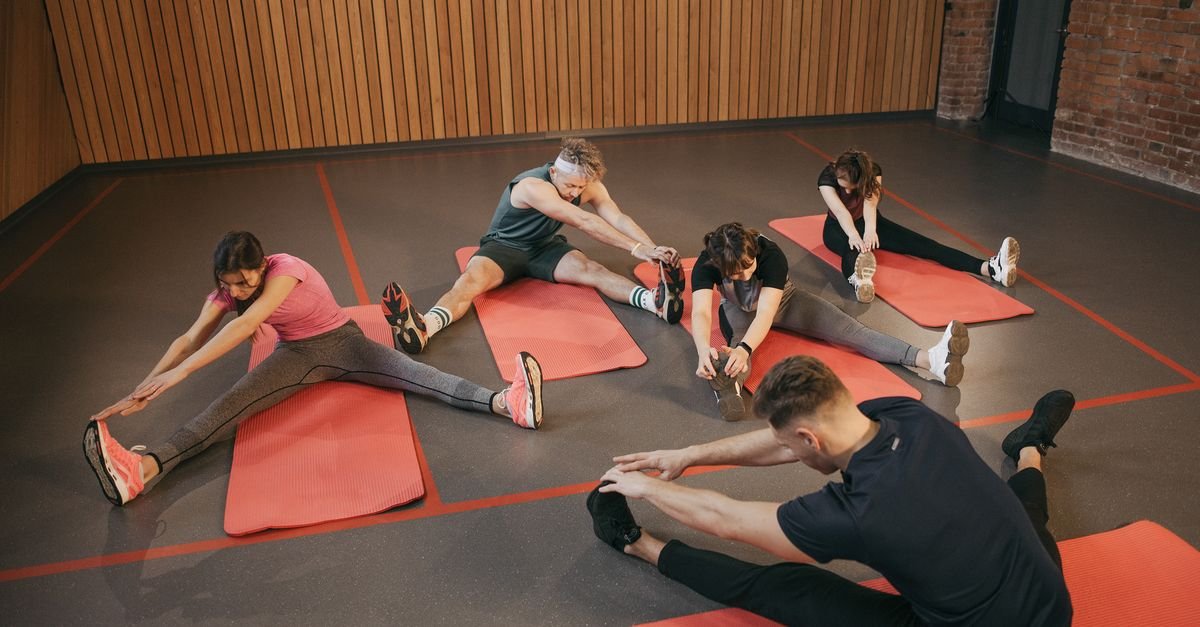
Group fitness classes have a special kind of magic. They turn exercise into an event. You show up, someone tells you what to do, music plays, people move together, and before you know it, 45 minutes have vanished. That external structure is a lifesaver when your internal motivation is running on fumes.
Accountability Turns “Maybe Later” Into “Let’s Go”
If you’ve ever skipped a solo workout because the couch looked extra comfy, you know the problem. Nobody notices. Nobody cares. But when you book a class, you’ve made a tiny commitment. You paid money or reserved a spot. A friend might be meeting you there. The instructor might notice if you’re missing. That gentle pressure is surprisingly powerful.
Accountability doesn’t have to be intense. It can be as simple as knowing the class starts at 6:15 and you already told the front desk you’d be there. Suddenly, “I’ll work out later” becomes “I’m working out now.” Later is a slippery little liar. Class puts a fence around it.
Instructors Catch What You Can’t See
One of the biggest advantages of a class is expert eyes. You can watch a thousand YouTube videos on squat form, but you can’t see your own back angle from across the room. An instructor can correct your posture, suggest a modification, and push you harder than you’d push yourself. That feedback loop is especially valuable for beginners.
Good instructors also bring energy. They know when to crank up the intensity and when to offer a breather. They can turn a workout into a coached experience instead of a guessing game. If you’ve ever finished a class feeling surprisingly strong and slightly amazed at what you just did, you know the power of a great teacher.
The Science of Motivation: Solo vs. Group Energy
Motivation isn’t some mystical force that either shows up or doesn’t. It’s influenced by environment, habits, and social cues. And guess what? Group exercise changes those cues in a big way.
External Cues vs. Internal Drive
When you exercise alone, you rely mostly on internal drive. You have to decide to start, decide how long to go, and decide when to stop. That’s a lot of decision-making. Every choice drains a little mental energy. In a class, many of those decisions are made for you. You just follow along. That reduces decision fatigue and makes it easier to stay in motion.
Internal drive is wonderful, but it’s not infinite. It fluctuates with sleep, stress, hormones, and whether Mercury is in retrograde. External cues—like a scheduled class, a coach’s voice, or a friend waiting at the park—can carry you when internal drive is napping.
Social Facilitation and the “Someone’s Watching” Effect
Ever noticed you run a little faster when someone’s watching? That’s social facilitation. The presence of other people can boost performance on tasks you’re already good at. In a class, you might push through one more rep or sprint harder during the final minute because the group energy pulls you forward.
Of course, the effect can backfire if you’re self-conscious or the class is way above your level. But in a supportive environment, being around other people who are sweating, breathing hard, and showing up can be incredibly motivating. It’s like a campfire: one log alone might flicker, but together they burn bright.
Which One Is Better for Beginners?
If you’re brand new to exercise, a class can be a fantastic starting point. You get instruction, structure, and a built-in community. You don’t have to design a workout from scratch. You just show up and learn. That lowers the barrier to entry, which is often the hardest part.
The Beginner’s Confidence Curve
Beginners often feel awkward, unsure, and afraid of doing something wrong. A beginner-friendly class normalizes that. You’ll see people of different ages and fitness levels. You’ll hear the instructor say, “If this is too much, try this option.” That reassurance can speed up your confidence curve dramatically.
Solo workouts, on the other hand, can be great for beginners who prefer privacy. You can practice basic movements at home without an audience. But you’ll need a reliable plan and maybe a few personal training sessions to learn form. Otherwise, you might spend months reinforcing bad habits.
Red Flags in Group Classes for Newbies
Not all classes are beginner-friendly. Watch out for sessions described as “advanced,” “bootcamp,” or “no modifications.” If the instructor doesn’t ask about injuries or offer options, that’s a red flag. A good class should meet you where you are, not make you feel like you accidentally wandered into an Olympic trial.
Also, avoid classes that feel like a competition. You’re there to improve your health, not to win a medal for suffering the most. If the vibe is more shame than support, run—or at least walk—to a different studio.
Which One Is Better for Weight Loss and Muscle Gain?
Both solo workouts and classes can help you lose weight and build muscle. The best choice is the one you’ll do consistently while also managing your nutrition and recovery. That said, there are some practical differences.
Calories Burned: Class vs. Solo
Group classes often burn more calories in the moment because they’re designed to keep you moving. HIIT, spin, dance, and bootcamp classes use music, timing, and instructor cues to minimize rest. If you tend to lollygag between solo sets, a class can light a fire under you.
Solo workouts can burn just as many calories if you plan them well. A focused strength session with short rest periods, a tempo run, or a circuit at home can be incredibly effective. The difference isn’t the format; it’s the effort and structure.
Progressive Overload and Strength Training
For building muscle, solo strength training often has an edge. You can track weights, reps, and rest periods precisely. You can progress at your own rate. You can spend 10 minutes on hip mobility if you need it. Classes can build strength too, especially barbell or small-group training, but they’re often limited by time and group pacing.
If your goal is to get stronger, a hybrid approach works beautifully. Take a technique-focused class once or twice a week, then lift solo on other days. You get coaching and autonomy in one package.
Cost, Time, and Convenience: The Real-World Math
Let’s talk money and minutes. A boutique fitness class can cost $20 to $40 per session. A gym membership might be $10 to $50 per month. Home workouts are nearly free after you buy a few dumbbells or resistance bands. But the cheapest option isn’t always the best if it collects dust.
The Gym Class Budget Breakdown
If you attend three classes a week at $25 each, that’s $300 a month. Ouch. But if those classes are the only reason you exercise, they might be worth every penny. Compare that to a $40 gym membership you never use. The “expensive” class is actually cheaper per workout if it gets you moving.
Time matters too. Classes have fixed schedules. You have to travel, arrive early, and sometimes wait for equipment. Solo workouts can start the second you lace up your shoes in your living room. For busy people, that convenience is priceless.
Home Workouts and Minimal Equipment
You don’t need a fancy studio to get fit. A pair of adjustable dumbbells, a resistance band, and a yoga mat can cover a surprising amount of ground. Add a jump rope or a kettlebell, and you’ve got a full gym in the corner of your bedroom.
The challenge with home workouts is distraction. Laundry, dishes, and that one drawer you haven’t organized since 2019 suddenly become urgent. A class removes those temptations by taking you out of your environment. Sometimes paying for a class is really paying for focus.
Personality Matters More Than You Think
Your personality isn’t an excuse; it’s data. Use it to choose the format that fits you instead of forcing yourself into a mold that feels terrible.
Introverts, Extroverts, and Everything In Between
Extroverts often love the social buzz of group classes. They feed off the energy, the high-fives, and the post-workout chat. Introverts may prefer solo workouts because they can recharge in silence. But introverts can also enjoy small classes with a calm instructor and no forced interaction.
If you’re an introvert who wants accountability without a crowd, try a small-group training session or a buddy workout. You get connection without the overwhelming noise.
Competitive vs. Cooperative Personalities
Competitive people may thrive in classes with leaderboards, partner drills, or timed challenges. Cooperative people may prefer classes focused on form, breath, and community. Solo exercisers often enjoy competing against their own past performance—beating last week’s time or adding five pounds to the bar.
Know thyself. If competition makes you anxious, don’t sign up for a class that feels like a tournament. If cooperation bores you, solo work might feel too quiet.
How to Get the Best of Both Worlds
You don’t have to pick a side forever. The smartest approach is often a hybrid routine. Use classes for what they do best—coaching, accountability, and fun—and use solo workouts for what they do best—flexibility, focus, and control.
Hybrid Routine: Class Twice a Week, Solo the Rest
Try this: take two group classes per week, then do two or three solo sessions on your own schedule. The classes keep you accountable and teach you new moves. The solo sessions let you target weak points, lift heavier, or go for a long walk without watching the clock.
This mix also prevents burnout. If you do only classes, you might get tired of someone else’s playlist. If you do only solo work, you might miss the energy of a group. Together, they cover each other’s weaknesses like a good sports duo.
Build a Solo Plan That Doesn’t Feel Boring
To make solo workouts stick, give them a skeleton. For example: Monday—lower body strength; Wednesday—upper body and core; Friday—interval cardio; Saturday—long walk or hike. Write it down. Track your weights and reps. Change one variable every few weeks.
You can also add novelty. Try a new route, a new podcast, or a new exercise. Boredom is the enemy of consistency, and a little variety goes a long way.
Common Myths About Exercising Alone
Let’s bust a few myths that keep people stuck.
Myth: Solo Workouts Are Always Less Effective
False. Some of the fittest people on the planet train alone most of the time. What matters is programming, progressive overload, and effort. A solo athlete with a solid plan will out-train a class-goer who coasts through every session.
Myth: Classes Are Only for People Who Hate Planning
Also false. Plenty of advanced lifters and athletes take classes for mobility, conditioning, or skill work. A class can be a strategic tool, not a crutch. It’s not either-or; it’s about using the right tool for the right job.
How to Choose Your First Class Without Dreading It
If you’re class-curious, don’t start with the hardest option. That’s like learning to swim by jumping into the ocean during a storm. Start with a beginner-friendly class in a style that sounds fun. Zumba, yoga, gentle strength, or aqua fitness are all great entry points.
Ask These Questions Before You Sign Up
- Is this class suitable for beginners?
- What should I bring?
- Can I modify exercises if I have an injury?
- How crowded does it get?
- Is there a trial pass or drop-in option?
Asking these questions saves you from signing a year-long contract for a class that makes you miserable. A good studio will welcome questions and give honest answers.
What to Bring and How to Act on Day One
Bring water, a towel, and comfortable clothes. Arrive 10 minutes early so you can find a spot and talk to the instructor. Tell them you’re new. They’ll usually keep an eye on you and offer modifications. If you feel lost, just keep moving. Nobody is judging you as harshly as you think.
Remember: everyone in that room was once a beginner. The person with perfect form probably spent months feeling awkward too. You’re not behind; you’re just starting.
When Exercising Alone Is the Smarter Choice
Solo exercise is the smarter choice when your schedule is unpredictable, you need mental quiet, or you have a specific strength plan that requires precise tracking. It’s also better if you’re recovering from an injury and need to go slow without group pressure.
If you’re self-motivated, enjoy your own company, and hate waiting for equipment, solo workouts can be a dream. You can be in and out of the gym in 45 minutes with zero small talk. For some people, that’s heaven.
When Joining a Class Is Worth Every Penny
A class is worth it when you need accountability, instruction, or a social boost. If you’ve tried solo workouts for months and keep skipping them, a class might be the missing link. If you’re bored, a class can reignite your excitement. If you’re injured or new, a class can keep you safe.
Think of it this way: you’re not paying for the workout. You’re paying for the structure, the coaching, and the likelihood that you’ll actually show up. That’s a bargain if it changes your life.
Conclusion: The Best Workout Is the One You’ll Actually Do
So, should you join a class or exercise alone? The answer lives in your calendar, your personality, and your goals. If you crave freedom and quiet, go solo. If you need structure and energy, join a class. If you want the best of both, mix them together like a perfect trail mix—some sweet, some salty, all satisfying.
Don’t overthink it. Try a class for two weeks. Try solo workouts for two weeks. Pay attention to which one makes you feel stronger, happier, and more likely to repeat it. The best routine isn’t the one that looks impressive on paper. It’s the one you’ll still be doing six months from now.
FAQs
1. Is it better to exercise alone or in a class?
Neither is universally better. Exercise alone offers flexibility and privacy, while a class provides accountability and coaching. The best choice depends on your personality, schedule, budget, and fitness goals. Many people get the best results by combining both.
2. Can I lose weight with only solo workouts?
Absolutely. Weight loss comes down to a calorie deficit, consistent movement, and sustainable habits. Solo workouts can burn plenty of calories if you structure them well and push yourself. Pair them with good nutrition and you’re on the right track.
3. What if I’m too shy for a group class?
Start with a small class, a beginner-friendly session, or a drop-in pass. Arrive early, tell the instructor you’re new, and choose a spot near the back if that feels comfortable. You can also try online classes first to build confidence before going in person.
4. How many group classes should I take per week?
Two to three classes per week is a great starting point for most people. It gives you structure and social motivation without overwhelming your schedule. Fill the rest of your week with solo workouts, walks, or rest days based on your goals.
5. Do I need a class to learn proper form?
Not necessarily, but a class or a few personal training sessions can help a lot. A qualified instructor can see what you can’t see and correct mistakes before they become injuries. If you choose solo learning, use mirrors, video yourself, and start with lighter weights.



