Table of Contents
- Partner Exercises That Make Workouts More Fun
- Why Partner Exercises Beat Solo Sweat Sessions
- What You Need Before You Start
- 1. Partner Bodyweight Burners
- 2. Resistance Band Duos
- 3. Medicine Ball Madness
- 4. Dumbbell and Kettlebell Pair Work
- 5. Cardio Games That Don’t Feel Like Cardio
- 6. Core Crushers for Two
- 7. Stretch and Recover Together
- How to Build a 30-Minute Partner Workout
- Common Mistakes to Avoid
- How to Keep the Fun Alive Long-Term
- Conclusion
- FAQs
Partner Exercises That Make Workouts More Fun
Let’s be honest: solo workouts can feel like brushing your teeth in the dark. You know it’s good for you, but the excitement level is roughly zero. You stare at the same wall, listen to the same playlist, and try to convince yourself that one more set won’t hurt. Then your brain starts bargaining. “Maybe I’ll just stretch today.” “Maybe tomorrow is better.” Sound familiar?
Now imagine a friend, partner, or favorite human standing next to you, counting reps, cracking jokes, and refusing to let you quit. Suddenly, the workout isn’t a chore. It’s a game, a challenge, a shared mission. That’s the magic of partner exercises. They turn sweat into social time, and they make fitness feel less like punishment and more like play.
In this article, I’m going to walk you through some of the best partner exercises that make workouts more fun. You’ll get bodyweight moves, resistance band drills, medicine ball chaos, core crushers, and even recovery stretches. You’ll also learn how to build a 30-minute partner workout, avoid common mistakes, and keep the fun alive for the long haul. Ready? Grab a buddy and let’s move.
Why Partner Exercises Beat Solo Sweat Sessions
Partner workouts aren’t just a cute idea for couples on Instagram. They’re a legit training tool with psychological and physical perks. When someone else is involved, your brain shifts gears. You’re no longer just exercising. You’re communicating, competing, supporting, and laughing. That combination hits different.
Accountability Turns “Later” Into “Now”
How many times have you skipped a workout because nobody was waiting for you? Be honest. When you’re solo, it’s easy to hit snooze on your own goals. But when your partner is lacing up their shoes and texting, “I’m outside,” you suddenly find motivation. Accountability is like a gentle alarm clock with legs. It shows up, and it expects you to show up too.
That doesn’t mean you need a drill sergeant. It just means having someone who notices when you’re absent. That tiny bit of social pressure can be the difference between a lazy afternoon and a sweaty, satisfying session.
Laughter Is a Legit Performance Enhancer
Have you ever tried to hold a plank while your friend makes a ridiculous face? It’s nearly impossible. And that’s a good thing. Laughter reduces stress hormones, boosts endorphins, and makes hard effort feel less heavy. When you’re laughing between sets, you’re not watching the clock. You’re enjoying the ride.
Plus, laughter improves coordination and relaxes your muscles. So if you wobble during a partner lunge, you can blame the giggles and keep going. The workout becomes a memory, not a misery.
The Science of Shared Suffering (and Joy)
Why Your Brain Loves a Training Buddy
Research shows that people who exercise with a partner often push harder and stick with their routines longer. There’s something called the “Köhler effect.” It’s a fancy way of saying you work harder when you’re paired with someone who’s slightly better than you. You don’t want to be the weak link, so you dig deeper.
But it’s not all competition. Shared joy releases oxytocin, the bonding hormone. So when you finish a tough circuit together, you feel closer. Your brain links fitness with connection. That’s a powerful habit loop. Suddenly, working out feels like hanging out, and hanging out feels like progress.
What You Need Before You Start
Before you dive into partner exercises, a little prep goes a long way. You don’t need a fancy gym or matching outfits. You need a clear space, comfortable clothes, water, and a willingness to look silly. That last one is non-negotiable.
Communication Cues That Keep Things Smooth
Partner exercises rely on timing and trust. Agree on simple cues before you start. “Ready?” “Go.” “Switch.” “Slow down.” “I’ve got you.” These tiny words prevent confusion and injuries. If you’re doing a wheelbarrow, for example, the person holding the legs should ask, “Ready?” before lifting. The person in plank should say, “Go” when their core is braced.
Don’t assume your partner knows what you’re thinking. Speak up. If something feels off, say so. A good partner workout is a conversation, not a silent competition.
Safety Rules for Two
Safety first, always. Check your surroundings. Move furniture. Keep pets out of the way. Use mats for floor work. If you’re using weights, make sure you can control them without hitting your partner. Never throw a medicine ball at someone who isn’t looking. And if you’re doing a stretch, never force your partner’s range of motion.
Also, match the intensity to the person who’s least experienced. The goal is fun, not a trip to the emergency room. You can always add difficulty later. Start where you both feel confident.
1. Partner Bodyweight Burners
No equipment? No problem. Bodyweight partner exercises are perfect for small spaces, travel, or days when you just want to move. They build strength, balance, and trust. Plus, they’re easy to modify.
Partner Squats with High Fives
Stand facing your partner, about arm’s length apart. Both of you lower into a squat at the same time. At the bottom, reach out and high-five each other. Then stand up together. That’s one rep. Do 10 to 15 reps.
Why it’s fun: The high-five forces you to sync up, and it feels ridiculous in the best way. If one person is faster, you’ll both laugh and adjust. It also improves hip mobility and leg strength. Want more challenge? Hold a light dumbbell at your chest.
Wheelbarrow Push-Ups and Planks
One person holds a high plank. The other stands behind them, grabs their ankles, and lifts their legs to hip height. The plank person walks forward on their hands while the partner walks behind holding their legs. That’s a wheelbarrow walk. For push-ups, the standing partner lowers the legs slightly while the plank person performs a push-up.
This exercise lights up your shoulders, core, and chest. It also requires serious communication. Start with short distances, like 10 to 15 feet. Switch roles after each round.
How to Scale the Wheelbarrow
If full wheelbarrows feel too intense, try a modified version. Instead of lifting the ankles, hold the knees. Or use a resistance band around the thighs for support. You can also do a “plank high-five” while both partners hold a plank facing each other. Tap right hands, then left hands, without letting your hips sag. It’s simple, safe, and surprisingly tough.
2. Resistance Band Duos
Resistance bands are portable, affordable, and perfect for partner work. They add tension without heavy weights, so you can focus on control and laughter. Just make sure the band is anchored safely or held securely.
Band Row and Reverse Fly Combo
Stand facing your partner with a resistance band between you. Each person holds one end. One partner steps back to create tension. Both perform a row, pulling the band toward their ribs. Then both reverse fly by opening their arms wide. Do 12 rows, then 12 reverse flies.
This combo works your upper back, rear shoulders, and biceps. The partner connection keeps the tension steady. If one person pulls too hard, the other will feel it. So communicate and move smoothly.
Partner Pallof Press Tug-of-War
This one is a core killer. Stand side-by-side with a band anchored between you. One person holds the band at chest height and presses it straight out, resisting the pull. The other person provides gentle tension. Hold for 10 seconds, then switch. For a tug-of-war version, both partners hold the band and alternate pressing and resisting.
It teaches anti-rotation, which protects your spine. And because you’re working together, it feels less like a boring core drill and more like a friendly duel.
3. Medicine Ball Madness
Medicine balls are made for throwing, catching, and slamming. They bring out your inner kid. Just keep the ball under control and never throw it at someone’s face.
Chest Pass Shuffle
Stand facing your partner, about 6 to 8 feet apart. Both hold a medicine ball at chest height. Pass it back and forth as you shuffle sideways. Keep your knees bent and your core tight. Do 30 seconds, then rest.
This exercise builds explosive power and cardio. The shuffle adds a lateral movement that most workouts miss. If you drop the ball, do five squats before you continue. It keeps things playful.
Overhead Slam Relay
Place a medicine ball on the floor. One partner picks it up, lifts it overhead, and slams it down. Then the other partner does the same. Continue for 20 reps total. You can also do a relay: run to the ball, slam it, run back, and tag your partner.
Slamming is incredibly satisfying. It releases tension and works your lats, shoulders, and core. It’s hard not to smile when you hear that thud.
Making the Relay Competitive
Want to spice it up? Set a timer and see how many slams you can complete as a team in 60 seconds. Or create a penalty for the slower person, like 10 jumping jacks. Keep it light. The competition should fuel fun, not frustration.
4. Dumbbell and Kettlebell Pair Work
If you have dumbbells or kettlebells, you can add load to your partner workout. The key is to choose weights you can both handle. Ego lifting ruins the fun fast.
Partner Deadlift and Row
Stand side-by-side with a dumbbell in front of each person. Both hinge at the hips, grab the weights, and stand up. Then hinge again and perform a row. That’s one rep. Do 10 reps. Keep your back flat and your core braced.
The synchronized movement creates a rhythm. You’ll naturally match each other’s pace. It’s a full-body exercise that builds posterior chain strength and grip.
Kettlebell Pass Around the World
Stand back-to-back with your partner. Hold a kettlebell at chest height. Pass it to your partner by rotating your torso to one side. They take it and pass it back on the other side. Do 10 passes each direction.
This move works your obliques, shoulders, and coordination. It’s also a great warm-up. Just make sure your hands are dry and the kettlebell handle is secure.
5. Cardio Games That Don’t Feel Like Cardio
Cardio can be dull. Treadmills are basically hamster wheels with screens. But when you turn cardio into a game, you forget you’re exercising. These partner drills get your heart pumping and your face smiling.
Mirror Drill Sprints
One partner is the leader. The other is the mirror. The leader performs a movement—high knees, butt kicks, lateral shuffles, or sprints in place. The mirror copies them exactly. After 30 seconds, switch roles.
This drill improves agility, reaction time, and cardio. It also makes you pay attention. You can’t zone out when you’re trying to copy someone’s every move.
Tag You’re It: Burpee Edition
Set up a small area, like a 10-by-10-foot square. One person is “it.” They chase the other person. When tagged, the person who is “it” must do five burpees before chasing again. The other person gets a 5-second head start.
This game is chaos in the best way. You’ll sprint, dodge, and laugh. You’ll also do more burpees than you planned. It’s a full-body workout disguised as recess.
6. Core Crushers for Two
Core work is essential, but sit-ups alone are boring. Partner core exercises add resistance, accountability, and a little friendly pressure. Your abs will thank you later.
Sit-Up Pass
Sit facing your partner with your knees bent and feet touching. One person holds a medicine ball or dumbbell. Both lie back, then sit up at the same time. The person with the ball passes it to the other at the top. Then both lie back down. Repeat for 15 passes.
This exercise targets your abs, hip flexors, and shoulders. The synchronized sitting is harder than it looks. If you want more challenge, lift your feet off the ground.
Plank Tap Challenge
Both partners hold a forearm plank facing each other, about arm’s length apart. Tap right hands, then left hands, while keeping your hips stable. Do 20 taps total. If your hips rock, slow down.
This move builds shoulder stability and anti-rotation core strength. It’s simple but sneaky. By the end, your whole midsection will be fired up.
Adding a Timer for Extra Heat
Set a timer for 45 seconds of work and 15 seconds of rest. Cycle through sit-up passes, plank taps, and Russian twists with a partner. Three rounds will leave you feeling strong and spent. Just remember to breathe.
7. Stretch and Recover Together
Cooling down together is just as important as the workout. Partner stretches help you relax, improve flexibility, and connect. Plus, they feel amazing after a tough session.
Assisted Hamstring Stretch
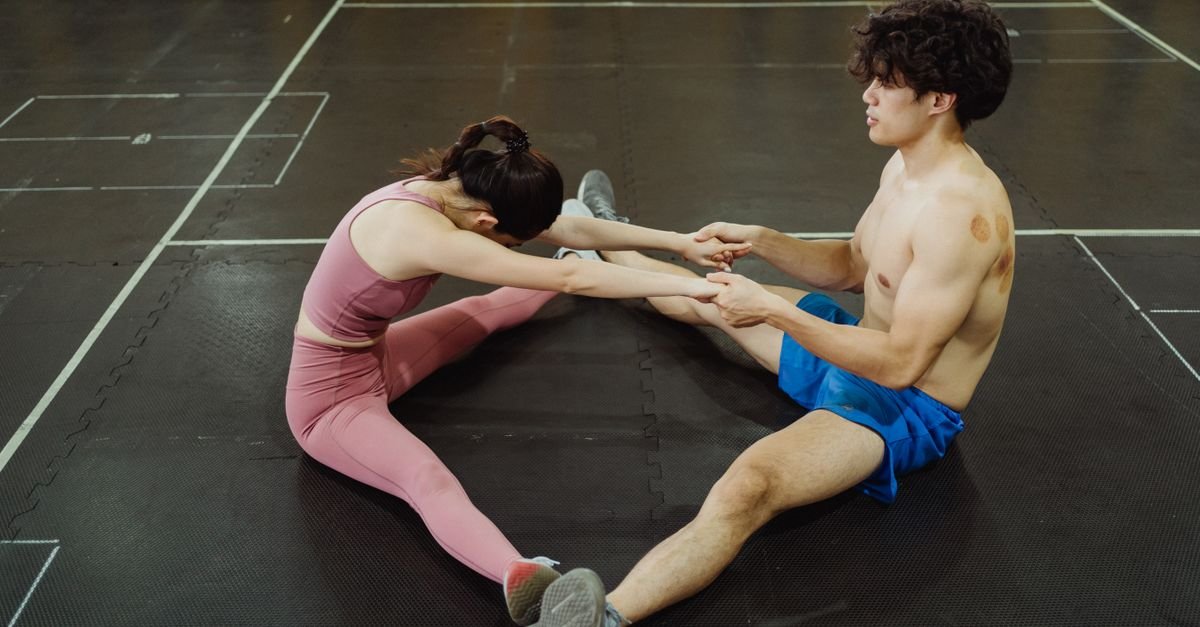
Lie on your back. Your partner kneels beside you and lifts one of your legs. They gently push your leg toward your chest while keeping it straight. Hold for 20 to 30 seconds. Switch legs, then switch roles.
This stretch targets your hamstrings and calves. Your partner can adjust the pressure based on your comfort. Never bounce or force it. Breathe deeply and let your muscles relax.
Partner Chest Opener
Stand facing away from your partner. Reach your arms back and clasp hands with them. Slowly walk forward while they gently pull your arms back. Hold for 20 seconds. This opens your chest and shoulders, which is perfect after push-ups or rows.
You can also do a seated version. Sit back-to-back, interlace arms, and gently lean forward and back. It’s a nice way to end a workout with a calm, connected moment.
How to Build a 30-Minute Partner Workout
You don’t need a complicated plan. A great partner workout follows a simple structure: warm-up, circuit, finisher, cool-down. Here are two sample circuits you can try. Adjust reps and weights to your level.
Sample Circuit: Fun-First Strength
- Warm-up: 2 minutes of partner high-fives and shuttle runs.
- Station 1: Partner squats with high fives — 15 reps.
- Station 2: Band row and reverse fly — 12 reps each.
- Station 3: Partner deadlift and row — 10 reps.
- Station 4: Plank tap challenge — 20 taps.
- Finisher: 60-second medicine ball chest pass shuffle.
- Cool-down: Assisted hamstring stretch and chest opener.
Do the circuit three times, resting 60 seconds between rounds. Keep the energy high and the encouragement higher.
Sample Circuit: Cardio and Core Chaos
- Warm-up: Mirror drill — 3 minutes.
- Station 1: Burpee tag — 2 rounds of 45 seconds.
- Station 2: Sit-up pass — 15 reps.
- Station 3: Overhead slam relay — 20 reps.
- Station 4: Plank tap challenge — 20 taps.
- Finisher: 30-second sprint in place, 30-second rest, repeat 4 times.
- Cool-down: Seated partner chest opener.
This circuit is perfect for days when you want to sweat and laugh. It’s intense, but the partner element keeps it from feeling like a grind.
Common Mistakes to Avoid
Partner workouts are fun, but they can go sideways if you ignore a few basics. Here are the mistakes I see most often.
Ego Lifting and Mismatched Levels
You and your partner might have different strength levels. That’s fine. The problem starts when one person insists on heavy weights that the other can’t handle. Don’t do it. Choose a weight that works for both of you, or use separate weights for each person.
If you’re stronger, focus on form and tempo instead of load. You can also add a pause or a slower negative. The goal is to challenge yourselves together, not to show off.
Forgetting Rest and Hydration
When you’re having fun, it’s easy to skip rest. But your muscles need recovery, especially during partner circuits. Use your partner’s turn as your rest. Take water breaks. If you’re dizzy or breathless, stop.
Hydration is also key. Keep a water bottle nearby. Drink before you’re thirsty. A dehydrated partner is a cranky partner, and cranky partners don’t high-five as enthusiastically.
How to Keep the Fun Alive Long-Term
The best workout is the one you’ll actually do again. So how do you keep partner workouts fresh? You mix things up, celebrate progress, and never take yourselves too seriously.
Theme Days, Playlists, and Silly Challenges
Create theme days. Monday is “Medicine Ball Mayhem.” Wednesday is “Wheelbarrow Wednesday.” Friday is “High-Five Finisher.” Dress up if you want. Make a playlist that you both love. Add silly challenges, like doing 10 extra squats if you curse or 5 push-ups if you check your phone.
The more playful you make it, the more you’ll look forward to it. Fitness should feel like a treat, not a tax.
Track Wins, Not Just Weights
Not every victory shows up on a scale. Track things like energy levels, mood, sleep quality, and how many push-ups you can do. Celebrate personal bests, no matter how small. Maybe your partner held a plank for 10 seconds longer. That’s a win.
Keep a shared note on your phone or a whiteboard in your workout space. Write down one win after each session. Over time, you’ll see progress you might have missed.
Conclusion
Partner exercises are a simple, powerful way to make fitness feel less like a chore and more like a highlight of your day. They build accountability, spark laughter, and push you harder than you might go alone. Whether you’re doing squats with high fives, slamming medicine balls, or stretching side by side, you’re creating memories while you build strength.
You don’t need a perfect plan or a perfect partner. You just need someone who’s willing to show up, try new things, and maybe laugh when you both fall over during a wheelbarrow. So text a friend. Call your partner. Dust off those resistance bands. Your next favorite workout might be one high-five away.
FAQs
1. Can partner exercises work if my partner is at a different fitness level?
Absolutely. The key is to adjust the intensity for each person. Use separate weights, modify the range of motion, or change the tempo. One person can do a harder variation while the other does an easier one. The partner element is about support, not sameness.
2. Do I need equipment for partner workouts?
No. Many partner exercises use only body weight. You can do squats, planks, wheelbarrows, and cardio games with zero equipment. If you have resistance bands, medicine balls, or dumbbells, you can add variety, but they’re not required.
3. Are partner exercises effective for weight loss?
Yes, if you keep the intensity up and stay consistent. Partner workouts can burn calories just like solo workouts, and the accountability factor often helps you stick with a routine longer. Combine them with balanced nutrition and you’ll see results.
4. How often should we do partner workouts?
Two to four times per week is a great target. You can alternate partner workouts with solo training, walking, or rest days. Listen to your body and adjust based on your schedule and energy levels.
5. What if my partner and I argue during workouts?
It happens. Keep the rules simple: no blaming, no criticizing, and no keeping score in a mean way. If tension rises, take a water break. Remember that the workout is supposed to be fun. If one exercise causes friction, skip it and choose something else. Your relationship matters more than any rep count.



