Table of Contents
- Introduction: The Rhythm You Never Think About
- Why Breath Timing Matters More Than You Realize
- The Basics of Breathing Mechanics During Exercise
- How the Diaphragm Works
- The Difference Between Shallow and Deep Breathing
- When to Exhale: The Golden Rule of Exercise Breathing
- Exhaling During Strength Training
- Weightlifting: Exhale on the Exertion
- Push-Ups and Bodyweight Moves
- Squats, Deadlifts, and Compound Lifts
- The Valsalva Maneuver: Handle With Care
- Exhaling During Cardio
- Running and Jogging
- Cycling
- Swimming
- HIIT and Sprint Intervals
- Exhaling in Yoga, Pilates, and Mobility Work
- How to Coordinate Breath With Movement
- Common Breathing Mistakes During Exercise
- Holding Your Breath
- Breathing Too Fast
- Forgetting to Exhale Fully
- Breathing Cues to Build Better Habits
- Nose vs. Mouth Breathing During Exercise
- Can Exhaling Wrong Cause Side Stitches?
- Special Situations: Pregnancy, Asthma, and Heart Conditions
- How to Practice Exercise Breathing
- When to Seek Professional Help
- Conclusion: Let the Exhale Lead
- FAQs
Breathing During Exercise: When to Exhale
Introduction: The Rhythm You Never Think About
You tie your shoes, queue up your playlist, and start moving. Your legs are ready. Your lungs? They are just along for the ride, right? Not exactly. Breathing during exercise is like the bass line in a song. When it is steady, you barely notice it. When it is off, the whole track falls apart.
Here is the question that trips up a lot of people: when should you exhale? Do you breathe out when you push, pull, stand, sprint, or relax? The short answer is simple: exhale on the effort. But the long answer has layers, because running, lifting, swimming, and yoga all ask different things from your breath.
Think of your breath as a metronome for your muscles. If the metronome is chaotic, your movement gets chaotic. If it is smooth, your body finds a groove. This article walks you through the when, why, and how of exhaling during exercise, so you can stop guessing and start moving with purpose.
Why Breath Timing Matters More Than You Realize
Breath timing is not just a fancy detail for elite athletes. It affects how much oxygen your muscles get, how stable your spine feels, and how quickly fatigue sneaks in. When you exhale at the right moment, you create space for the next inhale. That fresh air fuels the work ahead.
Imagine trying to blow up a balloon that is already full. You cannot add more air until you let some out. Your lungs work the same way. A full exhale clears stale air and makes room for oxygen-rich air. During exercise, that exchange needs to happen fast and often.
Good breath timing also helps regulate pressure inside your abdomen. That pressure supports your core like a built-in weight belt. When you exhale on exertion, you release pressure at the right time instead of letting it spike dangerously. It is a small habit with a big payoff.
The Basics of Breathing Mechanics During Exercise
Before we get into specific exercises, let us peek under the hood. Breathing is a team effort. Your diaphragm, intercostal muscles, abdominal muscles, and neck muscles all play a role. The diaphragm is the star of the show, a dome-shaped muscle under your lungs.
When you inhale, the diaphragm contracts and moves down. That creates more space in your chest, and air rushes in. When you exhale, the diaphragm relaxes and moves up. Air gets pushed out. During hard exercise, your abs and other muscles join in to force air out faster.
This matters because shallow chest breathing only uses the top of your lungs. Deep breathing, driven by the diaphragm, uses more of your lung capacity. More capacity means more oxygen for your working muscles. It is like filling a tall glass from the bottom instead of just splashing water near the rim.
How the Diaphragm Works
Your diaphragm is a quiet powerhouse. At rest, it does most of the breathing work without you thinking about it. During exercise, it works harder and faster. When you train your diaphragm, you improve your breathing efficiency. That can mean better endurance and less breathlessness.
The Difference Between Shallow and Deep Breathing
Shallow breathing is quick and tight. It happens in your upper chest. Deep breathing is slower and fuller. It expands your belly and lower ribs. During intense exercise, you will naturally breathe faster, but you still want each breath to have depth. Fast and shallow is a recipe for panic. Fast and full is a recipe for power.
When to Exhale: The Golden Rule of Exercise Breathing
Here is the golden rule: exhale on the exertion. In other words, breathe out when you work hardest. If you are pushing, pulling, standing up, jumping, or sprinting, that is your exhale. Inhale during the easier part, like lowering, stepping back, or recovering.
Why does this work? Exhaling during effort helps stabilize your core, regulate pressure, and prevent you from holding your breath. It also gives your movement a rhythm. You do not have to count perfectly. You just have to match the breath to the challenge.
Think of a tennis player. They exhale when they hit the ball. Think of a boxer. They exhale when they throw a punch. Your body already knows this instinct. You just need to apply it to the gym, the trail, or the pool.
Exhaling During Strength Training
Strength training is where breath timing gets the most attention. Lifters love to debate breathing patterns, and for good reason. The wrong pattern can leave you dizzy, weak, or even injured. The right pattern can make a heavy lift feel smoother.
In general, you want to inhale as you prepare and lower the weight. Then exhale as you push or pull through the hardest part. If you are doing a set of ten reps, your breath should follow each rep like a wave. Inhale down, exhale up. Inhale back, exhale forward.
Weightlifting: Exhale on the Exertion
For bicep curls, inhale as you lower the dumbbell. Exhale as you curl it up. For bench press, inhale as the bar comes toward your chest. Exhale as you press it away. For rows, inhale as you extend your arms. Exhale as you pull the weight toward you. The pattern is beautifully simple: effort equals exhale.
Push-Ups and Bodyweight Moves
Push-ups are a perfect place to practice. Inhale as you lower your chest toward the floor. Exhale as you push back up. If you are doing squats with no weight, inhale as you sit down. Exhale as you stand up. Lunges? Inhale as you step forward and lower. Exhale as you push back to standing. You get the idea.
Squats, Deadlifts, and Compound Lifts
Compound lifts are big, full-body movements. They demand more from your breathing. For a squat, take a breath at the top, brace your core, descend, and then exhale as you drive up through the sticking point. For a deadlift, take a breath, brace, pull the bar off the floor, and exhale near the top or after you lock out. Do not force a huge exhale while the bar is still heavy in your hands. Stay stable first.
The Valsalva Maneuver: Handle With Care
You may have heard of the Valsalva maneuver. That is when you take a big breath, hold it, and brace hard against a closed throat. It can increase intra-abdominal pressure and help you lift heavy loads. Powerlifters use it, but it is not for every rep or every person. Holding your breath too long can spike blood pressure and make you dizzy. If you have heart issues, high blood pressure, or you are pregnant, talk to a doctor before using it. For most everyday workouts, exhale on the effort and skip the extreme breath-holding.
Exhaling During Cardio
Cardio breathing is less about single reps and more about rhythm. You want a steady pattern that matches your pace. As intensity goes up, your breathing rate goes up. That is normal. The goal is to keep the exhale strong and the inhale relaxed.
Many people unintentionally hold their breath when they run hard or pedal fast. That creates tension. Instead, let your exhale be the anchor. A good exhale helps you avoid side stitches and keeps your nervous system from panicking.
Running and Jogging
For easy runs, try inhaling through your nose and exhaling through your mouth. You might use a 3:2 pattern: inhale for three steps, exhale for two. That gives you a steady rhythm. For faster running, you may switch to a 2:1 pattern: inhale for two steps, exhale for one. Some runners like to exhale when a specific foot hits the ground, often the left foot, to reduce side stitch risk. Experiment and see what feels smooth.
Cycling
On the bike, your legs set the tempo. Try exhaling as you push down through the pedal stroke. Inhale as the pedal comes back up. On climbs, you may need deeper, slower breaths. On sprints, your exhale might become sharp and forceful. Keep your shoulders relaxed and your jaw loose. Tension in your upper body wastes energy.
Swimming
Swimming flips the script because your face is in the water. You cannot inhale whenever you want. The rule is simple: exhale underwater, inhale when you turn your head to the side. Blow bubbles steadily. Do not hold your breath and then gasp. A smooth underwater exhale makes the next inhale quick and full.
HIIT and Sprint Intervals
HIIT is controlled chaos. Your breathing will be fast and loud. That is fine. During the work interval, focus on forceful exhales. During the rest interval, slow your breathing down with deep inhales and long exhales. This helps your heart rate recover and prepares you for the next round. Think of the exhale as a release valve. Use it.
Exhaling in Yoga, Pilates, and Mobility Work
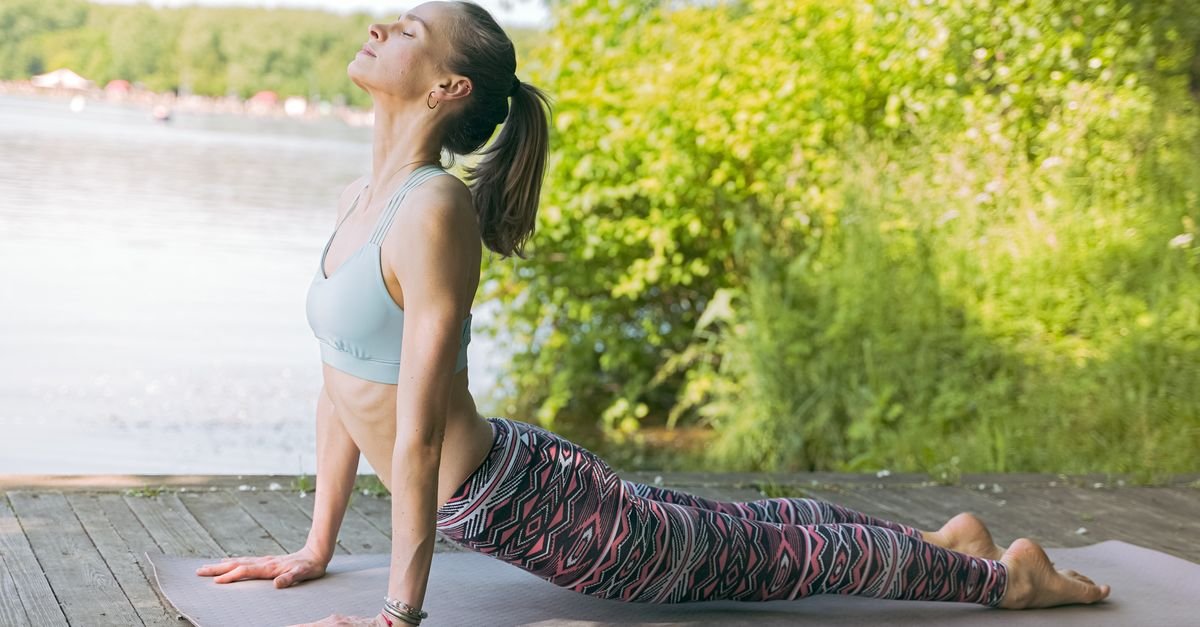
In yoga and Pilates, breath leads movement. The general rule is: inhale to lengthen, exhale to fold, twist, or contract. If you are bending forward, exhale. If you are reaching up, inhale. If you are twisting, exhale as you rotate. If you are holding a stretch, breathe slowly and deeply. Do not force anything. The breath should feel like a gentle wave, not a struggle.
Mobility work follows the same idea. When you sink into a stretch, exhale and let your muscles relax. When you back off, inhale. This can help you get a little more range without forcing it.
How to Coordinate Breath With Movement
Coordinating breath with movement takes practice. Start with slow, controlled exercises. Pair the exhale with the hardest part. Use a count in your head. For example, “inhale, two, three, lower; exhale, two, three, push.” Soon it becomes automatic.
If you lose the rhythm, do not panic. Just reset at the next rep or step. The goal is not perfection. The goal is to avoid holding your breath and to keep oxygen flowing. You can also use a simple cue: “blow out the work.” That phrase alone can fix a lot of messy breathing.
Common Breathing Mistakes During Exercise
Even experienced athletes make breathing mistakes. The good news is that most of them are easy to fix once you notice them. Here are the big three.
Holding Your Breath
Breath-holding is the most common mistake. It happens when you focus so hard on the movement that you forget to breathe. The result? Rising blood pressure, dizziness, and early fatigue. If you catch yourself holding your breath, exhale through pursed lips and reset. Make the exhale your default during effort.
Breathing Too Fast
Fast breathing is not always bad. During sprints, it is expected. But if you are breathing fast and shallow during a moderate workout, you may be over-breathing. That can make you feel lightheaded. Slow down the exhale. Make it longer than the inhale. This can calm your nervous system and improve oxygen exchange.
Forgetting to Exhale Fully
If you never empty your lungs, you never fully refill them. Stale air hangs around. Your breathing becomes shallow and inefficient. Practice a full exhale at the end of a set or during a rest period. Push all the air out, then let the inhale happen naturally. It is like emptying a glass before pouring fresh water.
Breathing Cues to Build Better Habits
Cues are little phrases that keep you on track. Try these:
- “Exhale on effort.”
- “Blow out the work.”
- “Hiss like a snake.”
- “Empty the lungs, then refill.”
- “Long exhale, calm body.”
You can also use a metronome app or count your steps. Some people write the cue on their water bottle or set a phone reminder. The more you practice, the less you need the cue.
Nose vs. Mouth Breathing During Exercise
At low to moderate intensity, nose breathing can be great. It filters, warms, and humidifies air. It also helps regulate your breathing rate. But when you exercise hard, your body needs air fast. Mouth breathing lets in more volume. Most athletes use a mix: nose for easy efforts, mouth for hard efforts.
For exhaling, mouth breathing is usually the way to go during intense exercise. It lets you push air out quickly. During yoga or easy cardio, a slow nose exhale can be calming. Listen to your body. If you feel starved for air, open your mouth.
Can Exhaling Wrong Cause Side Stitches?
Side stitches are those sharp cramps under your ribs. They are frustrating, but they are often linked to shallow breathing, poor posture, or eating too soon before exercise. Exhaling fully can help. When you breathe shallowly, your diaphragm may cramp. A strong exhale stretches and relaxes the diaphragm.
If you get a stitch, slow down, press your hand into the painful area, and focus on long exhales. Some runners also change their foot strike pattern. For example, if you always exhale when your right foot lands, try exhaling when your left foot lands instead. It sounds odd, but it can make a difference.
Special Situations: Pregnancy, Asthma, and Heart Conditions
Breathing during exercise is personal. If you are pregnant, your growing belly pushes up on your diaphragm. You may feel short of breath more quickly. Focus on slow, deep breaths and avoid breath-holding. If you have asthma, keep your inhaler nearby and warm up gradually. Cold, dry air can trigger symptoms, so breathe through your nose when you can.
If you have a heart condition or high blood pressure, avoid the Valsalva maneuver unless your doctor says it is safe. In general, exhale on effort and never hold your breath under heavy load. When in doubt, ask a medical professional who knows your history.
How to Practice Exercise Breathing
You can train your breathing just like you train your muscles. Start with diaphragmatic breathing at rest. Lie on your back, put one hand on your belly and one on your chest. Inhale so your belly rises. Exhale slowly and feel your belly fall. Do this for five minutes a day.
Next, practice with movement. Do slow bodyweight squats and match your breath. Inhale down, exhale up. Then try it during a walk or easy jog. Once it feels natural, take it to the gym or the track. You would not expect to lift a heavy weight without practice. Do not expect perfect breathing without practice either.
When to Seek Professional Help
Breathing during exercise should feel challenging, not frightening. Seek medical help if you experience chest pain, severe shortness of breath, wheezing, dizziness, fainting, or a cough that will not stop. Also get help if you cannot speak a full sentence while exercising at a moderate pace. These can be signs of a serious issue. A doctor, physical therapist, or certified trainer can help you build a safe plan.
Conclusion: Let the Exhale Lead
Breathing during exercise does not have to be complicated. When you are unsure, remember the golden rule: exhale on the effort. Inhale as you prepare or recover. Exhale as you push, pull, stand, sprint, or swim. Let the exhale lead the movement. It clears stale air, steadies your core, and gives your body a rhythm to follow.
You do not need to be perfect. You just need to be consistent. Start with one exercise or one run. Pay attention to when you hold your breath. Then fix it by breathing out. Over time, it becomes second nature. Your lungs will thank you, and your workouts will feel smoother, stronger, and a whole lot less frantic.
FAQs
Should I always exhale through my mouth during exercise?
Not always. For easy exercise, a nose exhale can work fine. For intense exercise, mouth exhaling is usually better because it moves air faster. The best approach is to use what feels natural and keeps you from holding your breath. If you feel air-hungry, open your mouth and exhale forcefully.
What if I forget to exhale while lifting?
It happens to everyone. Do not beat yourself up. Finish the rep safely, then reset. Take a breath, brace, and try again with the next rep. You can also use a simple cue like “blow out the work” to remind yourself. Practice with lighter weights until the pattern feels automatic.
Is it bad to hold my breath during a heavy lift?
Brief breath-holding with bracing can be useful for very heavy lifts, but it is not for everyone. It can spike blood pressure and cause dizziness. For most workouts, exhale on the effort. If you have high blood pressure, heart issues, or you are pregnant, talk to your doctor before using breath-holding techniques.
How do I breathe during running to avoid side stitches?
Focus on deep, full exhales. Shallow breathing can make stitches worse. Try a rhythmic pattern, like inhaling for three steps and exhaling for two. Some runners also change which foot they exhale on. If a stitch hits, slow down, press the area, and breathe out slowly and completely.
Can breathing patterns improve my performance?
Yes. Better breathing can improve oxygen delivery, core stability, and endurance. It also reduces wasted energy from tension and breath-holding. You may not become an Olympian overnight, but consistent breath practice can make your workouts feel more controlled and less exhausting.



