Table of Contents
- Exercise Tips for People Who Stand All Day
- Why Standing All Day Wears You Down
- The Golden Rule: Move More, Stand Smarter
- Warm-Up Moves You Can Do Before Work
- Desk-Side Stretches for Tired Legs and Feet
- Strength Exercises for Standing Resilience
- Cardio That Doesn’t Wreck Your Feet
- Mobility Drills to Undo the Standing Squeeze
- Recovery Routine After a Long Shift
- Shoes, Mats, and Gear That Support Your Exercise
- How to Build a Weekly Exercise Plan
- Red Flags: When to Back Off and Get Help
- Conclusion: Stand Tall, Move Often, Recover Well
- FAQs
Exercise Tips for People Who Stand All Day
Standing all day sounds simple until your feet start throbbing, your lower back tightens, and your hips feel like rusty hinges. You don’t need a full gym overhaul to feel better. You need smart exercise tips for people who stand all day—small, repeatable moves that build resilience without adding more fatigue to an already long shift. Think of your body like a bridge. A bridge that never flexes will crack under pressure. Your muscles, joints, and circulation need gentle movement to handle the load. The goal isn’t to “fix” standing with more standing. It’s to balance stillness with motion, strength with mobility, and effort with recovery.
Why Standing All Day Wears You Down
Standing is not the enemy. Static standing is. When you stay in one position for hours, your muscles switch into a low-level holding pattern. That sounds harmless, but it’s like leaving a car engine idling all day. You burn energy, create heat, and wear down parts without going anywhere. Your feet bear pressure, your calves pump less efficiently, and your hips stiffen. Over time, that can lead to soreness, swelling, and that heavy-leg feeling at the end of the day. The good news? Movement is medicine—especially when you sprinkle it in before pain builds.
The Hidden Cost of Static Posture
Static posture reduces blood flow and keeps the same joints compressed. Your body craves variety. When you lock into one stance, your tissues adapt to that exact position and forget how to move freely. You might notice you shift your weight to one hip, roll your feet outward, or hunch your shoulders. Those little compensations add up. Exercise helps break the pattern by restoring range, waking up sleepy muscles, and improving circulation.
Muscles That Take the Brunt
Your calves, feet, glutes, hip flexors, and lower back do a lot of quiet work when you stand. The calves act like a second heart, pumping blood back up from your legs. The glutes support your pelvis. The hip flexors get tight from a mostly upright position. The lower back gets cranky when your core and hips aren’t sharing the load. Exercise tips for people who stand all day should target these areas without overwhelming them. You’re not training for a marathon. You’re training for Tuesday.
The Golden Rule: Move More, Stand Smarter
If you remember one rule, make it this: change positions often. Perfect posture doesn’t exist for eight hours straight. The best posture is your next posture. Stand with soft knees, feet hip-width apart, and weight balanced. Then move. Shift, sway, roll your ankles, and take a few steps. You want to interrupt stillness before it turns into stiffness.
Microbreaks That Fit Real Jobs
Microbreaks are tiny movement snacks. They’re not long workouts, and they don’t require a mat or a change of clothes. Try these during a shift:
- Roll your ankles 10 times each direction while waiting for a task.
- Do 5 slow calf raises each time you check your phone.
- Take 20 steps every 30 to 45 minutes.
- Stand on one foot for 10 seconds, then switch, using a counter for safety.
- Reach your arms overhead and take two slow breaths.
These mini-moves keep blood moving and prevent your tissues from getting stuck in one shape.
The 20-8-2 Rhythm
Need a simple structure? Borrow the 20-8-2 rhythm. For every 20 minutes of standing, spend 8 minutes doing active work that lets you shift and step—like stocking, cleaning, or walking to a different area. Then aim for 2 minutes of deliberate reset: a stretch, a few squats, or a short walk. It doesn’t have to be exact. The point is rhythm. Your body loves a beat, and small changes keep the pressure from pooling in one spot.
Warm-Up Moves You Can Do Before Work
A warm-up for standing all day isn’t about sweating. It’s about waking up the joints and muscles you’ll rely on. Two minutes is enough. Think of it like warming up a car on a cold morning. You don’t need to race the engine—just get the fluids moving.
Ankle Pumps and Calf Raises
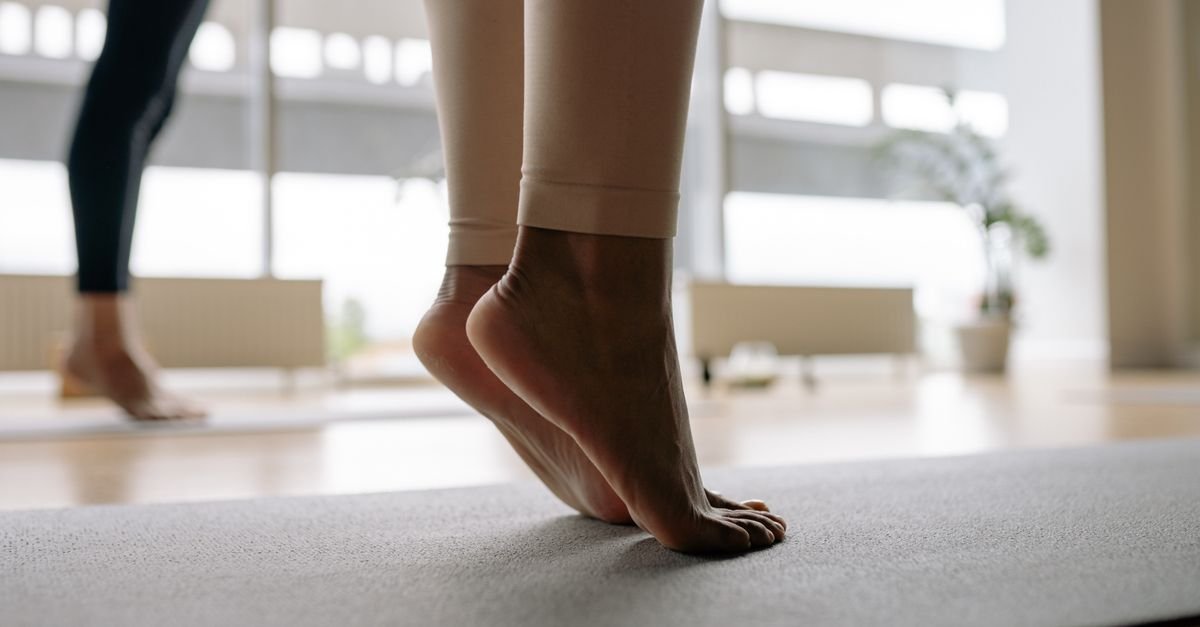
Start with ankle pumps. Sit or stand and point your toes down, then pull them up. Do 15 reps. Then do 10 slow calf raises. Rise onto your toes, pause for a second, and lower with control. These moves wake up the lower legs and support circulation before you hit the floor. If you have balance concerns, hold a counter or wall.
Hip Circles and Shoulder Rolls
Make 10 slow hip circles as if you’re drawing a circle with your pelvis. Then roll your shoulders forward 10 times and backward 10 times. Add a gentle neck turn left and right. This combo shakes off sleep stiffness and prepares your upper body to stay relaxed. Tight shoulders often start as stiff hips and ribs. Get the whole system moving.
Desk-Side Stretches for Tired Legs and Feet
You don’t need a quiet yoga studio. A wall, counter, or sturdy chair is plenty. Stretch with slow breathing. You want a gentle pull, not a sharp pinch. Hold each stretch for 20 to 30 seconds and repeat once or twice per side.
Calf Stretch at the Wall
Place your hands on a wall. Step one foot back, keep the heel down, and bend the front knee. You should feel a stretch in the back calf. Hold and breathe. This is one of the most useful exercise tips for people who stand all day because tight calves affect your knees, ankles, and feet.
Standing Figure-Four Stretch
Hold a counter for balance. Place one ankle over the opposite knee, like a figure four. Sit back slightly and lower your hips. You’ll feel a stretch in the outer hip and glute. If you’re steady, you can add a small hip hinge. This helps release the hips after hours of standing square and stiff.
Toe Spreads and Foot Rolls
Take your shoes off when you can. Spread your toes wide, hold for three seconds, then relax. Do 10 reps. Then roll the arch of your foot on a tennis ball or massage ball for 30 to 60 seconds. Keep the pressure comfortable. Your feet carry the whole show, so give them a little attention before they start yelling.
Strength Exercises for Standing Resilience
Strength training helps your body tolerate long shifts. You don’t need heavy weights. Bodyweight exercises can build the support system your feet and back need. Aim for two short sessions per week, then adjust based on energy and recovery.
Glute Bridges for Hip Support
Lie on your back with knees bent and feet flat. Press through your feet, lift your hips, and squeeze your glutes. Hold for a second, then lower. Do 8 to 12 reps. Glute bridges help counteract tight hip flexors and give your lower back more support. Think of your glutes as the base of a lamp. If the base is weak, the whole thing wobbles.
Wall Sits Without the Burnout
Lean against a wall and slide down into a gentle squat. Keep your knees over your ankles and your back supported. Hold for 15 to 30 seconds, then stand. Repeat two or three times. You’re training the legs to hold position with control, not to burn out. Stop before your form collapses.
Dead Bugs for Deep Core Stability
Lie on your back with arms up and knees bent at 90 degrees. Slowly lower one arm and the opposite leg toward the floor while keeping your lower back gently pressed down. Return and switch sides. Do 6 to 8 reps per side. This builds deep core control, which helps your back feel less like a stressed rope holding everything together.
Cardio That Doesn’t Wreck Your Feet
Cardio is still important. It supports heart health, circulation, and energy. But if your feet are sore from standing, high-impact routines can feel like punishment. Choose options that match your recovery.
Low-Impact Options That Work
Walking, cycling, swimming, rowing, and elliptical training are gentle on the feet. Even 20 minutes helps. You can also try a low-impact dance workout or a brisk walk with supportive shoes. If your feet are very sore, start with 10 minutes and build up.
Walking Meetings and Stair Snacks
Turn idle time into movement. Take a phone call while walking. Use the stairs once instead of the elevator. Park a little farther away. These “stair snacks” add up without feeling like a formal workout. The best cardio is the kind you’ll actually repeat.
Mobility Drills to Undo the Standing Squeeze
Mobility is the oil in the machine. It keeps your joints moving through their full range, so standing doesn’t lock you into one shape. Do these after work or during a lunch break.
Thoracic Rotations for Stiff Shoulders
Sit or kneel with one hand behind your head. Rotate your upper back toward that arm, then return. Move slowly. Do 8 reps per side. This helps unlock the mid-back, which often gets stiff when you stand and reach all day.
Hip Flexor Stretch for Tight Fronts
Kneel on one knee with the other foot forward. Tuck your pelvis slightly and shift forward until you feel a stretch in the front of the kneeling hip. Hold for 30 seconds. Switch sides. This is a must for people who stand tall for hours because the front of the hips can get short and tight.
Neck and Jaw Release
Gently turn your head left and right. Tilt your ear toward each shoulder. Then unclench your jaw and make a soft “ah” sound. Stress often hides in the neck and jaw, especially during busy shifts. A relaxed neck makes upright posture feel lighter.
Recovery Routine After a Long Shift
Recovery is part of the program. You can’t keep pouring water into a cup that never gets emptied. Give your legs and feet a chance to reset.
Legs-Up-the-Wall and Breathing
Lie on your back and rest your legs up a wall for 5 to 10 minutes. Breathe slowly. This simple move helps calm the nervous system and ease heavy legs. It’s not a magic cure, but it feels like hitting the reset button.
Foam Rolling Without Overdoing It
Roll your calves, quads, and outer hips for 30 to 60 seconds per area. Avoid rolling directly on bones, joints, or very painful spots. The pressure should feel like a firm massage, not a punishment. If you wince, back off.
Shoes, Mats, and Gear That Support Your Exercise
Gear won’t replace exercise, but it can make your efforts more comfortable. Supportive shoes and a good mat can reduce unnecessary stress.
What to Look For in Work Shoes
Look for a snug heel, roomy toe box, cushioning under the ball of the foot, and decent arch support. Rotate shoes if possible so they can dry out. Avoid shoes that are too flat or too tight. Your feet swell during the day, so shop later in the day when you can.
Anti-Fatigue Mats and Compression Socks
Anti-fatigue mats add a little bounce and encourage micro-movements. Compression socks can support circulation, especially during long shifts. They don’t replace exercise, but they can be a helpful teammate. Choose the right fit and ask a clinician if you have circulation concerns.
How to Build a Weekly Exercise Plan
Keep it realistic. A plan you can repeat beats a perfect plan you abandon. Aim for movement most days, strength twice a week, and mobility when you feel stiff.
Sample 7-Day Movement Menu
- Day 1: 10-minute walk and 5 minutes of calf and hip stretches.
- Day 2: Strength session: glute bridges, wall sits, dead bugs.
- Day 3: Easy cardio and 2-minute microbreaks during work.
- Day 4: Mobility day: thoracic rotations, hip flexor stretch, neck release.
- Day 5: Strength session with slow, controlled reps.
- Day 6: Low-impact cardio you enjoy, plus legs-up-the-wall recovery.
- Day 7: Rest, walk lightly, or do gentle stretching.
Progress Without Pain
Add a little at a time. If you can do 8 glute bridges comfortably, try 10 next week. If a stretch feels sharp, reduce it. Soreness after exercise is normal, but pain that lingers or worsens is a sign to back off. You’re building a body that can handle standing—not winning a competition.
Red Flags: When to Back Off and Get Help
Most standing-related aches improve with movement, rest, and better footwear. But some symptoms need professional attention. Seek medical advice if you have severe foot pain, numbness, tingling, sudden swelling, chest pain, shortness of breath, dizziness, or pain that keeps you awake at night. If a joint locks or you can’t bear weight, don’t push through it. Exercise tips for people who stand all day are meant to support you, not override warning signs.
Conclusion: Stand Tall, Move Often, Recover Well
Standing all day doesn’t have to leave you feeling beat up. The best exercise tips for people who stand all day are simple: move often, strengthen your support system, stretch what gets tight, and recover with intention. You don’t need a complicated routine. You need consistency, a little curiosity about how your body feels, and the willingness to change positions before stiffness sets in. Treat movement like brushing your teeth—small, regular, and non-negotiable. Your feet, hips, and lower back will thank you, and your long shifts will feel a lot more manageable.
FAQs
Can exercise help foot pain from standing all day?
Yes, gentle exercise can help by improving circulation, strengthening the muscles that support your feet, and reducing stiffness. Try toe spreads, foot rolls, calf raises, and calf stretches. Wear supportive shoes and avoid high-impact exercise when your feet are very sore. If pain is severe or persistent, get checked by a healthcare professional.
How often should I stretch during a standing shift?
Short stretch breaks every 30 to 60 minutes work well for many people. You don’t need a long routine. A 20-second calf stretch, a few shoulder rolls, and a brief walk can make a difference. The key is frequency, not intensity. Keep stretches gentle and stop if you feel sharp pain.
Is walking after work good or bad?
For most people, walking after work is good. It promotes circulation and helps loosen stiff muscles. Keep the pace easy if you’ve been on your feet all day. If your feet are swollen or painful, elevate your legs first, then take a short gentle walk. Choose supportive shoes and listen to your body.
What is the best strength exercise for standing all day?
There isn’t one “best” move, but glute bridges are a strong choice because they support the hips and lower back. Calf raises, wall sits, and dead bugs are also helpful. A balanced plan that strengthens your glutes, core, calves, and feet will serve you better than relying on a single exercise.
Do compression socks replace exercise?
No. Compression socks can support circulation and reduce swelling, but they don’t build strength or mobility. Use them as a helpful tool alongside movement breaks, stretching, and strengthening exercises. If you have circulation problems or medical concerns, ask your doctor before using compression socks.