Table of Contents
- Seated vs. Standing Shoulder Presses: Which One Builds Better Shoulders?
- Why the Shoulder Press Matters More Than You Think
- The Anatomy of an Overhead Press
- Seated Shoulder Press: The Stabilized Powerhouse
- How to Perform the Seated Dumbbell Press
- Benefits of Seated Shoulder Presses
- Drawbacks of Seated Shoulder Presses
- Standing Shoulder Press: The Total-Body Test
- How to Perform the Standing Barbell Press
- Benefits of Standing Shoulder Presses
- Drawbacks of Standing Shoulder Presses
- Muscle Activation: Seated vs. Standing
- Core and Stability Demands
- Shoulder Health and Injury Risk
- Strength Gains: Which Variation Wins?
- Hypertrophy and Muscle Growth
- Sport Performance and Functional Fitness
- Lower Back, Hips, and Posture Considerations
- Equipment and Gym Setup Differences
- Programming: How to Use Both in Your Routine
- For Beginners
- For Intermediate Lifters
- For Advanced Lifters
- Common Mistakes to Avoid in Both Variations
- Tips to Improve Your Shoulder Press Fast
- Seated vs. Standing Shoulder Press: Final Verdict
- Conclusion: Pick the Right Press for Your Goal
- FAQs
Seated vs. Standing Shoulder Presses: Which One Builds Better Shoulders?
Walk into any gym, and you’ll see it play out in two very different ways. One person is planted on an upright bench, dumbbells locked overhead, face focused and stable. Another is standing tall under a barbell, ribs braced, whole body fighting to stay stacked. Both are doing a shoulder press. Both want bigger, stronger shoulders. But the age-old question remains: seated vs. standing shoulder presses — which one actually deserves a spot in your program?
Here’s the truth: neither variation is “best” in a vacuum. The real answer depends on your goals, your experience, your mobility, and what your shoulders tolerate. If you want to build boulder shoulders, press heavy, and stay injury-free, you need to understand what each version brings to the table. Think of it like choosing between a sports car and a pickup truck. Both get you from point A to point B, but they shine in completely different situations.
Let’s break down seated vs. standing shoulder presses step by step. We’ll look at muscle activation, core demand, strength potential, shoulder health, programming, and more. By the end, you’ll know exactly when to sit, when to stand, and how to use both to get the shoulders you actually want.
Why the Shoulder Press Matters More Than You Think
The overhead press is one of the most fundamental upper-body movements. It builds the deltoids, triceps, upper chest, traps, and serratus anterior. It also teaches you how to control a load above your head — a skill that carries over into daily life and almost every sport. Need to put a suitcase in the overhead bin? Press a heavy box onto a shelf? Throw a punch or spike a volleyball? Your shoulders are doing the work.
But the shoulder press isn’t just about muscle. It’s a coordination test. Your shoulder blade has to rotate upward at the right time. Your rotator cuff has to keep the ball centered in the socket. Your core has to stop your ribs from flaring. Your upper back has to extend just enough without turning the movement into a weird standing bench press. When any of those pieces break down, the press becomes a shoulder-joint stress test instead of a muscle builder.
That’s why the seated vs. standing debate matters. The position you choose changes how much stability your body has to provide. And that changes everything from how much weight you can lift to how your shoulders feel the next day.
The Anatomy of an Overhead Press
Before comparing the two, let’s get clear on what’s actually moving. The prime mover is the deltoid — specifically the anterior and lateral heads. The triceps extend the elbow. The upper traps and serratus anterior help upwardly rotate the scapula. The rotator cuff stabilizes the humeral head. The core, glutes, and legs either lock you down or turn into a wobbly mess.
When you press overhead, your shoulder blade needs to rotate upward, not just shrug. If it doesn’t, the space under your acromion gets smaller. That’s when pinching, clicking, and impingement-style pain can show up. Good form isn’t about lifting the heaviest weight possible. It’s about creating a stable, stacked position so the delts can do their job without the joint paying the price.
Here’s a simple analogy: imagine trying to launch a rocket from a moving boat. The rocket might still go up, but the launch pad is unstable. That’s your shoulder on a bad press. A stable base — whether from a bench or from a braced standing position — gives the rocket a fighting chance.
Seated Shoulder Press: The Stabilized Powerhouse
The seated shoulder press is the classic gym exercise for a reason. You plant your back against an upright bench, feet flat on the floor, and press dumbbells or a barbell overhead. Because the bench supports your torso, you don’t have to fight as hard to stay upright. That lets you focus more on the delts and triceps.
Does that make it easier? In some ways, yes. But “easier” isn’t a bad word here. It means you can isolate the target muscles with less energy leaking into your lower body and core. For hypertrophy, that’s often a good thing.
How to Perform the Seated Dumbbell Press
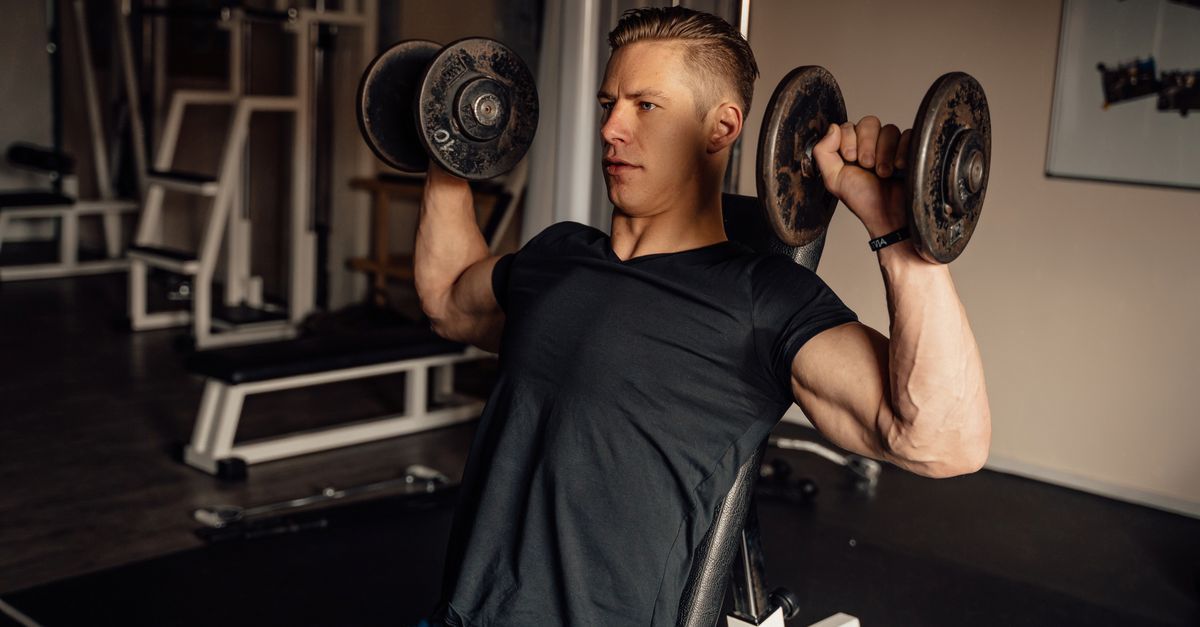
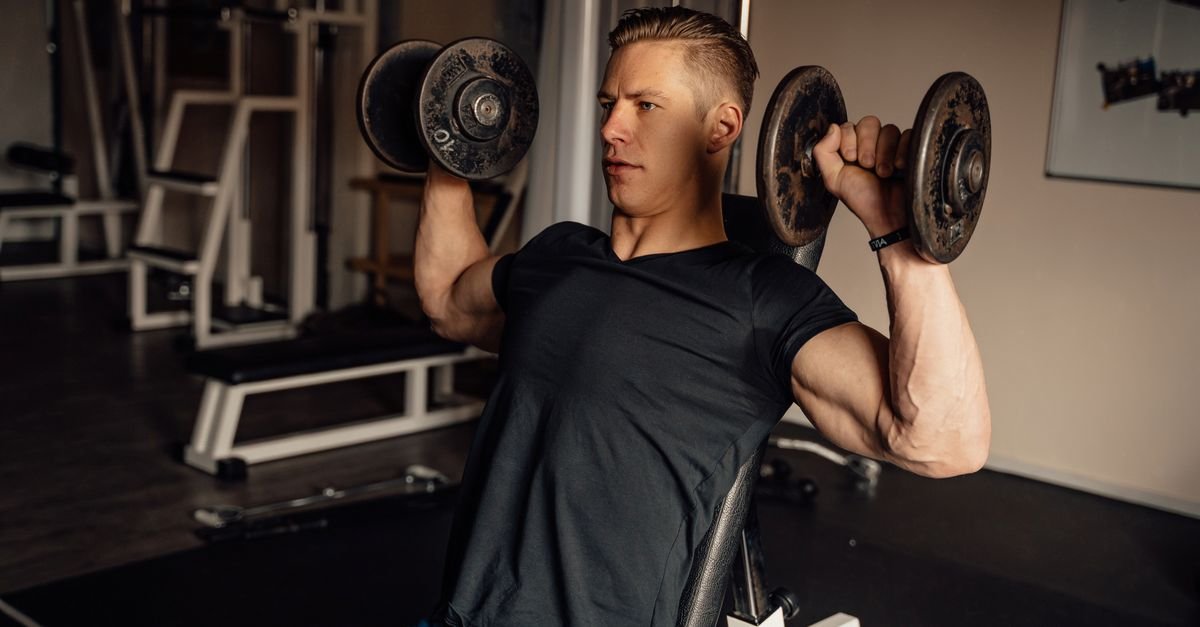
Set an adjustable bench to about 80 to 90 degrees. Sit with your feet planted, back flat against the pad, and dumbbells resting on your thighs. Kick them up one at a time to shoulder height. Your elbows should be slightly in front of your torso, not flared straight out to the sides. Brace your abs, tuck your ribs down, and press the dumbbells overhead until your arms are nearly locked out. Lower them with control until your elbows are just below shoulder level. Repeat.
Keep your wrists stacked over your elbows. Don’t let the dumbbells drift forward. And don’t slam your back into the bench to grind out extra reps. If you have to turn the press into a decline bench press, the weight is too heavy.
Benefits of Seated Shoulder Presses
- Better isolation: The bench limits cheating from the hips and legs.
- More stable pressing: Easier to learn proper bar or dumbbell path.
- Higher hypertrophy potential: You can push the delts closer to failure with less systemic fatigue.
- Shoulder-friendly setup: Good for lifters who struggle with balance or lower-back fatigue.
- Easy to load: Dumbbells and machines make progressive overload simple.
Drawbacks of Seated Shoulder Presses
The biggest downside is that the seated press can become too passive. Your core doesn’t have to work as hard. Your hips and legs are basically on vacation. That’s fine if your only goal is bigger delts, but it’s less useful if you want to improve full-body stability or transfer strength to standing athletic movements. Also, if the bench angle is too upright or your shoulders lack mobility, you may end up pressing in front of your body instead of straight overhead. That can irritate the front of the shoulder.
Standing Shoulder Press: The Total-Body Test
The standing shoulder press — often called the overhead press or military press — is the older, grittier cousin. You stand with feet hip-width apart, bar at your upper chest, and press it overhead. There’s no bench to save you. Your core, glutes, quads, and upper back all have to coordinate to keep you from tipping backward or folding forward.
This is less of a shoulder isolation exercise and more of a full-body strength movement. That’s exactly why so many strength coaches love it. It exposes weak links. It teaches tension. It builds a bulletproof upper body from the ground up.
How to Perform the Standing Barbell Press
Set the bar in a rack at upper-chest height. Grip it just outside shoulder width. Step under the bar, place it on your front delts, and squeeze your glutes. Brace your abs like someone is about to punch you. Tuck your chin slightly, then press the bar up and slightly back. Once the bar clears your forehead, move your head through so your ears end up next to your arms. Lower the bar under control to your upper chest. Reset your brace and repeat.
Don’t lean back like you’re trying to limbo under the bar. Don’t let your wrists bend backward. And don’t use your legs to bounce the weight up — that’s a push press, not a strict press. Both are useful, but they’re different exercises.
Benefits of Standing Shoulder Presses
- Greater core activation: Your abs and spinal erectors work hard to keep you upright.
- Functional strength: You train the shoulders in a standing, real-world position.
- Better carryover to athletics: Throwing, blocking, and overhead sports demand standing stability.
- Calorie burn and coordination: More muscles mean more energy used and more motor control.
- Less equipment needed: All you need is a barbell and open space.
Drawbacks of Standing Shoulder Presses
The standing press is humbling. You’ll usually lift less weight than seated variations because your core and balance limit the load. If your thoracic spine is stiff, your hips are tight, or your lower back is sensitive, the standing press can feel awkward or even painful. It also requires more technique. A small mistake in bracing or bar path can turn a shoulder builder into a lower-back arch-fest. For pure delt hypertrophy, the standing press can be less efficient because your shoulders aren’t the only thing quitting first.
Muscle Activation: Seated vs. Standing
Here’s where things get interesting. When researchers compare seated and standing shoulder presses, they often find similar activation in the deltoids when the load and range of motion are matched. Your shoulders don’t suddenly forget how to work because you’re sitting down. The difference shows up in the supporting muscles.
Standing presses crank up activity in the core, glutes, and spinal stabilizers. Seated presses with back support reduce that demand. If you’re chasing a delt pump, seated dumbbell presses might let you focus more on the target tissue. If you’re chasing total-body strength and coordination, standing presses win by a mile.
But don’t fall into the trap of thinking one is “better” for muscle activation. Both light up the delts. The real question is: which one lets you train consistently, progress safely, and recover well? That’s the one you should use more often.
Core and Stability Demands
Imagine trying to press a heavy barbell overhead while standing on a paddleboard. Your shoulders might be strong, but your core would be the limiting factor. That’s the standing press in a nutshell. Your abs, obliques, deep spinal muscles, and glutes all fire to keep your spine neutral. If they don’t, your ribs flare, your lower back arches, and the press turns into a standing incline press.
Seated presses with a back pad remove most of that demand. That’s not cheating — it’s just a different training stimulus. If your core is already strong and you want to hammer your delts, seated pressing is a smart choice. If your core needs work and you want a more athletic movement, standing pressing is the tougher teacher.
Think of it this way: seated pressing is like lifting with training wheels that let you focus on your shoulders. Standing pressing is like riding a bike with no hands — it’s harder, but it builds balance you can’t get any other way.
Shoulder Health and Injury Risk
Neither seated nor standing presses are inherently dangerous. Bad technique is dangerous. Too much weight is dangerous. Ignoring pain is dangerous. But the position can influence how your shoulder joint feels.
Standing presses allow more natural scapular upward rotation because your torso isn’t pinned against a pad. That can be a plus for people with healthy shoulders. Seated presses with a steep bench can sometimes encourage a fixed scapula, especially if you’re pressing dumbbells straight up while your back is glued to the bench. On the other hand, seated presses are easier to control, which can be safer for beginners or anyone rehabbing a minor issue.
If you have a history of shoulder impingement, rotator cuff problems, or AC joint pain, don’t guess. Work with a qualified coach or physical therapist. In general, use a neutral grip, keep your elbows slightly forward, press within a pain-free range, and avoid forcing overhead range before you’ve earned it.
Strength Gains: Which Variation Wins?
For raw overhead strength, the standing barbell press is the king. It forces your whole body to work as a unit. That means your nervous system learns to produce force in a standing position, which carries over to other lifts and real-life tasks. If you care about your one-rep max overhead press, you should be standing.
But for deltoid strength — meaning the ability of the shoulder muscles to produce force in isolation — seated pressing can be just as effective, and sometimes more so. You can overload the delts without your core failing first. That’s why bodybuilders often favor seated dumbbell presses while strength athletes live and die by the standing barbell press.
Here’s the takeaway: if you want to move heavy weight over your head while standing, train standing. If you want to build bigger, stronger delts with less distraction, train seated. Most lifters should do both.
Hypertrophy and Muscle Growth
Muscle growth comes down to three things: mechanical tension, metabolic stress, and muscle damage — all wrapped up in progressive overload. Both seated and standing presses can deliver those. The difference is how easily you can push the delts to their limit.
Seated dumbbell presses are a hypertrophy favorite because they’re stable, joint-friendly, and easy to progress. You can add reps, add weight, slow down the eccentric, or use drop sets without worrying about falling over. Standing presses, especially with a barbell, often become a core and coordination exercise before the delts are truly fatigued. That doesn’t mean they don’t build muscle — they absolutely do — but they’re not always the best tool for isolating the shoulders.
If your shoulders are lagging, start with a seated press as your main hypertrophy movement. Then use standing presses as a strength builder or finisher. That combo gives you the best of both worlds.
Sport Performance and Functional Fitness
Athletes don’t press while sitting on a bench. They press while running, jumping, throwing, and getting pushed around. That’s why standing presses are gold for sport performance. They train the shoulders and core to work together under load, which transfers to overhead sports like swimming, volleyball, baseball, tennis, and basketball.
Seated presses still have a place. They build raw shoulder strength and muscle mass, which can support performance. But if you’re an athlete, you’d be smart to make standing presses a priority. Your body needs to learn how to produce force while maintaining balance and posture. That skill doesn’t come from a bench.
Lower Back, Hips, and Posture Considerations
The standing press demands good thoracic extension, hip mobility, and lumbar stability. If your lower back arches excessively when you press overhead, you’re not just risking back pain — you’re also putting your shoulders in a bad position. Seated presses can be gentler on the lower back because the bench supports your torso. But if you slump on the bench or let your ribs flare, you can still irritate your spine.
For posture, both variations can help if done correctly. They strengthen the upper back, shoulders, and core. But they can also reinforce bad posture if you press with a forward head, rounded shoulders, or an overarched lower back. The fix is the same: brace, stack your ribs over your pelvis, and keep the bar or dumbbells over your mid-foot.
Equipment and Gym Setup Differences
Seated presses need an adjustable bench, dumbbells, a barbell, or a shoulder press machine. You can do them in a crowded gym with minimal space. Standing presses need a rack, a barbell, and enough room to step back without hitting someone. Dumbbell standing presses need even more control because you have to clean the weights into position or kick them up.
If you train at home, seated dumbbell presses may be more practical. If you have a barbell and rack, standing presses are simple and effective. Either way, don’t let equipment dictate your goals. Pick the variation you can perform consistently and safely.
Programming: How to Use Both in Your Routine
You don’t have to choose one forever. In fact, the smartest approach is to use both. Here’s how to program them based on your experience level.
For Beginners
Start with seated dumbbell presses. They’re easier to learn and less likely to turn into a lower-back arching contest. Use a neutral grip if your shoulders feel cranky. Aim for 2 to 3 sets of 8 to 12 reps. Once you can press a pair of dumbbells overhead with perfect form for 12 clean reps, add a little weight. After 4 to 6 weeks, add light standing dumbbell presses to teach core bracing.
For Intermediate Lifters
Use both variations in the same week. For example, do standing barbell presses on Monday for strength — 4 sets of 5 to 6 reps. Then do seated dumbbell presses on Thursday for hypertrophy — 3 sets of 8 to 12 reps. This gives you the core and coordination benefits of standing work plus the isolation and volume of seated work. Progress the weight slowly and keep your reps clean.
For Advanced Lifters
Periodize your pressing. During a strength block, make standing barbell presses your main lift. During a hypertrophy block, switch to seated dumbbell presses or machine presses. You can also use standing presses as a warm-up or finisher after seated presses. Advanced lifters can handle more volume, but recovery still matters. Don’t press heavy overhead more than 2 to 3 times per week unless your shoulders and recovery are elite.
Common Mistakes to Avoid in Both Variations
- Excessive lower-back arch: If your ribs flare, you’re no longer pressing overhead — you’re doing a standing bench press.
- Flaring elbows too wide: This can pinch the shoulder. Keep elbows slightly forward.
- Half reps: Partial range of motion limits growth and can create strength imbalances.
- Ego lifting: Heavy weight with bad form builds injuries, not shoulders.
- Forgetting to brace: Your core is the foundation. Without it, the press collapses.
- Using a bench angle that’s too steep: A 90-degree bench isn’t always best. Try 80 degrees if your shoulders feel pinched.
- Bouncing the bar: Control the eccentric. That’s where growth happens.
Tips to Improve Your Shoulder Press Fast
First, warm up your rotator cuff and upper back before every pressing session. Band pull-aparts, face pulls, and scapular wall slides take five minutes and can save months of shoulder pain. Second, grip the bar or dumbbells hard. A firm grip creates irradiation, which helps stabilize the whole arm. Third, brace your core before every rep. Think about bracing as if you’re about to take a punch. Fourth, press with a slight backward bar path, not straight up. The bar should travel around your face, not through it. Fifth, use tempo. Lower the weight for three seconds on the eccentric. That builds control and muscle. Sixth, track your workouts. Progressive overload doesn’t happen by accident. Add reps or weight each week. Finally, sleep and eat enough protein. You can’t out-train a bad recovery plan.
Seated vs. Standing Shoulder Press: Final Verdict
So, which one wins? Neither — and both. If your goal is maximum deltoid hypertrophy, the seated press is usually the more efficient tool. It lets you isolate the shoulders, push close to failure, and avoid lower-back fatigue. If your goal is total-body strength, core stability, and athletic performance, the standing press takes the crown. It’s harder, more demanding, and more transferable to real life.
But the best program uses both. Think of seated presses as your scalpel — precise, controlled, and great for building muscle. Think of standing presses as your sledgehammer — raw, full-body, and great for building strength and resilience. Use the scalpel for detail. Use the sledgehammer for power. Together, they build shoulders that look good and perform even better.
Conclusion: Pick the Right Press for Your Goal
Seated vs. standing shoulder presses isn’t a battle with one clear winner. It’s a choice about stimulus. Seated presses give you stability, isolation, and hypertrophy-friendly overload. Standing presses give you core demand, athletic carryover, and full-body strength. If you’re a beginner, start seated and earn your standing press. If you’re an intermediate or advanced lifter, rotate both based on your training block. And if your shoulders hurt, don’t push through it — adjust your grip, range of motion, and load. Your shoulders are too important to train carelessly. Pick the variation that matches your goal, perform it with intent, and progress slowly. Do that, and you’ll build shoulders that are strong, stable, and ready for anything.
FAQs
Is seated shoulder press better than standing?
It depends on your goal. Seated presses are better for isolating the deltoids and building muscle because the bench provides stability. Standing presses are better for total-body strength, core stability, and athletic performance. Most lifters should use both.
Can I build big shoulders with only seated presses?
Yes, you can build impressive shoulder muscle with seated presses alone, especially with dumbbells or machines. However, adding standing presses will improve core strength and overhead stability, which can help you press more weight over time.
Should I do standing presses if I have lower back pain?
Not necessarily. Standing presses demand more lumbar stability and can aggravate a sensitive lower back if your form breaks down. Seated presses with back support may be a safer starting point. If pain persists, consult a medical professional.
How often should I train shoulder presses?
Most people do well with 2 to 3 shoulder pressing sessions per week. Beginners may start with once or twice per week. Advanced lifters can press more often if they manage volume, intensity, and recovery carefully.
Which press is safer for shoulders?
Neither is automatically safer. Proper form, appropriate load, and pain-free range of motion matter more than the variation. Seated presses may feel safer for beginners, while standing presses allow more natural scapular movement for some lifters. When in doubt, use a neutral grip and keep elbows slightly forward.