Glute Exercises That Don’t Require Squats: Build a Stronger Butt Without Ever Squatting
Table of Contents
- Why You Don’t Need Squats to Train Your Glutes
- The Glutes Are More Than One Muscle
- Squats Are Great, But They’re Not the Only Tool
- What Makes an Exercise “Glute-Dominant”?
- Hip Extension: The Main Glute Builder
- Hip Abduction: The Side-Glute Specialist
- Hip External Rotation: The Stability Secret
- The Best Glute Exercises That Don’t Require Squats
- 1. Glute Bridges: The Classic Floor Burner
- How to Do Glute Bridges
- Why It Works
- 2. Hip Thrusts: The King of Glute Loading
- How to Do Hip Thrusts
- Why It Works
- 3. Single-Leg Glute Bridges: Double the Challenge
- 4. Frog Pumps: The Booty Pump You’ll Feel Everywhere
- 5. Romanian Deadlifts: A Hip Hinge Hero
- 6. Good Mornings: The Underrated Glute Activator
- 7. Cable Kickbacks: Isolation With Attitude
- 8. Fire Hydrants: Side-Glute Sculptor
- 9. Lateral Band Walks: The Burn That Builds Stability
- 10. Clamshells: Small Move, Big Side-Glute Payoff
- 11. Step-Ups: A No-Squat Staple
- 12. Reverse Hypers or Back Extensions: Lower-Body Support
- How to Build a No-Squat Glute Workout
- Choose 4–6 Exercises
- Set Reps and Intensity
- Progressive Overload Without Squats
- Common Mistakes to Avoid When Training Glutes Without Squats
- Mistake 1: Using Momentum Instead of Muscle
- Mistake 2: Skipping Warm-Ups and Activation
- Mistake 3: Never Changing Your Resistance
- Mistake 4: Ignoring Recovery
- Sample 4-Week No-Squat Glute Plan
- Week 1–2: Foundation
- Week 3–4: Build and Burn
- Can You Grow Glutes Without Squats?
- Conclusion
- FAQs
- 1. Can I build glutes without squats at home?
- 2. How often should I train glutes without squats?
- 3. Are hip thrusts better than squats for glutes?
- 4. What if I only feel these exercises in my hamstrings or lower back?
- 5. Do I need weights to grow glutes without squats?
Why You Don’t Need Squats to Train Your Glutes
Let’s get one thing straight: squats are fantastic. They build strength, confidence, and a rock-solid lower body. But if you hate squats, can’t do them comfortably, or simply want a different path to stronger glutes, you’re not out of luck. Your glutes don’t care whether you’re standing under a barbell or lying on a mat. They care about tension, resistance, and the right movement patterns.
Think of your glutes like a powerful engine. Squats are one road to the destination, but there are plenty of other routes. Hip hinges, bridges, thrusts, kickbacks, and band work can all hit the same muscles from different angles. In fact, some people feel their glutes working better when they skip squats entirely and focus on exercises that isolate or emphasize hip extension.
The Glutes Are More Than One Muscle
Your glutes are actually a trio: the gluteus maximus, gluteus medius, and gluteus minimus. The maximus is the big show-off—the muscle responsible for powerful hip extension. The medius and minimus sit higher and more to the side, and they handle hip abduction and rotation. If you only squat, you’re mostly training the maximus. That’s great, but it leaves other important areas on the table.
No-squat glute exercises can target all three. Bridges and thrusts hammer the maximus. Clamshells and lateral band walks light up the medius. Fire hydrants and cable kickbacks add external rotation and isolation. So, you’re not just avoiding squats—you’re actually covering more ground.
Squats Are Great, But They’re Not the Only Tool
Here’s a little analogy: imagine you want to paint a room. A roller is efficient for big walls, but a brush is better for edges and corners. Squats are the roller. They cover a lot of muscle at once. But glute bridges, kickbacks, and band walks are the brush. They get into the corners that squats might miss.
Plus, not everyone can squat heavy without knee, hip, or back issues. If your body says “no thanks” to deep squats, you can still build a strong, shapely backside with smart alternatives.
What Makes an Exercise “Glute-Dominant”?
A glute-dominant exercise puts most of the work on your glutes rather than your quads, hamstrings, or lower back. You’ll know you’ve found one when you feel a deep burn in your butt, not just your thighs. The best no-squat glute exercises usually fall into three categories: hip extension, hip abduction, and hip external rotation.
Hip Extension: The Main Glute Builder
Hip extension is when your thigh moves backward behind your body, or when your hips push forward while your torso stays still. Glute bridges, hip thrusts, and kickbacks are classic examples. Your gluteus maximus is the star here. If you want to grow your glutes, you need some form of hip extension. It’s the meat and potatoes of booty training.
Hip Abduction: The Side-Glute Specialist
Hip abduction is when your leg moves away from the midline of your body. Think of a clamshell or a lateral band walk. This pattern targets your gluteus medius and minimus. Strong side glutes help stabilize your hips, improve your balance, and give your backside a rounder shape from behind.
Hip External Rotation: The Stability Secret
External rotation is when your thigh rotates outward. Fire hydrants and clamshells include this movement. It’s not the flashiest pattern, but it’s crucial for hip health and athletic performance. Plus, it helps your glutes look full and defined.
The Best Glute Exercises That Don’t Require Squats
Now for the good stuff. Here are twelve effective glute exercises that never ask you to squat. You can do many of them at home, at the gym, or even in a hotel room. Mix and match based on your equipment and experience level.
1. Glute Bridges: The Classic Floor Burner
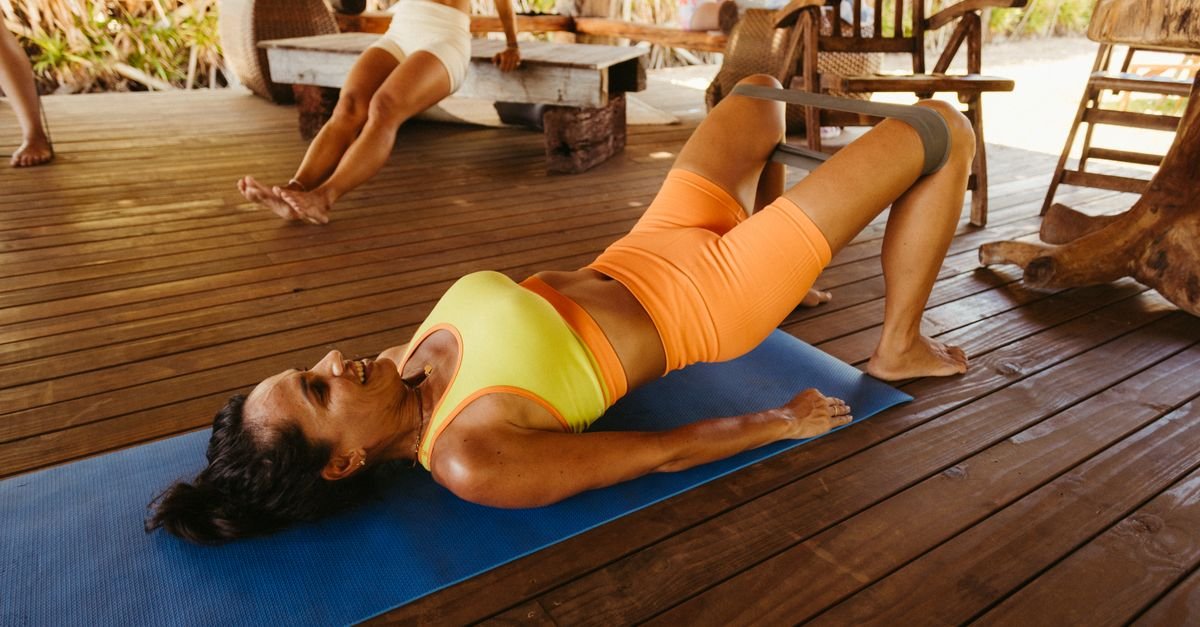
If you’re new to glute training, start here. Glute bridges are simple, joint-friendly, and surprisingly effective. You lie on your back, bend your knees, and drive your hips toward the ceiling. The movement is small, but the burn is real.
How to Do Glute Bridges
- Lie on your back with your knees bent and feet flat on the floor, hip-width apart.
- Place your arms by your sides, palms down.
- Press through your heels and squeeze your glutes to lift your hips.
- Pause at the top for one or two seconds. Your body should form a straight line from shoulders to knees.
- Lower slowly without letting your hips touch the floor if you want constant tension.
Why It Works
Glute bridges teach you how to use your glutes without relying on your lower back. They’re perfect for activation before a workout or as a high-rep finisher. Add a resistance band above your knees to make your side glutes join the party.
2. Hip Thrusts: The King of Glute Loading
Hip thrusts are like glute bridges with a promotion. By elevating your upper back on a bench or couch, you get a bigger range of motion and can load heavier weight. If you want to grow your glutes without squats, hip thrusts should be your best friend.
How to Do Hip Thrusts
- Sit on the floor with your upper back against a bench. Bend your knees and place your feet flat, shoulder-width apart.
- Roll a barbell or dumbbell over your hips (use a pad for comfort).
- Drive through your heels and lift your hips until your torso is parallel to the floor.
- Squeeze your glutes hard at the top. Don’t hyperextend your lower back.
- Lower with control and repeat.
Why It Works
Hip thrusts put your glutes in a mechanically strong position. You can add weight progressively, which is key for muscle growth. They also minimize quad involvement, so your glutes do most of the heavy lifting.
3. Single-Leg Glute Bridges: Double the Challenge
Take a regular glute bridge and lift one foot off the floor. Suddenly, your working glute has to do all the work. Single-leg bridges expose strength imbalances and build serious stability. If you feel one side lagging, this is your fix. Keep your hips level and avoid twisting.
4. Frog Pumps: The Booty Pump You’ll Feel Everywhere
Frog pumps look a little silly, but they’re a hidden gem. You lie on your back, bring the soles of your feet together, let your knees fall out, and then thrust your hips up. The external rotation angle lights up your glutes from a fresh direction. It’s a fantastic finisher when you want a deep burn without any equipment.
5. Romanian Deadlifts: A Hip Hinge Hero
Romanian deadlifts (RDLs) are not squats. They’re hip hinges. You push your hips back, keep a slight bend in your knees, and lower the weight down your legs. Your glutes and hamstrings control the movement. RDLs teach you to load your posterior chain, which translates to stronger glutes and a more powerful backside.
Start with light dumbbells or just your bodyweight. Focus on pushing your hips back, not bending your knees. You should feel a stretch in your hamstrings and a strong squeeze in your glutes as you stand up.
6. Good Mornings: The Underrated Glute Activator
Good mornings are another hip hinge. You place a barbell or band across your upper back, soften your knees, and hinge forward. They look simple, but they demand control. If you do them with light weight and perfect form, your glutes and hamstrings will feel it. They’re a great no-squat alternative for building posterior chain strength.
7. Cable Kickbacks: Isolation With Attitude
Cable kickbacks isolate your glutes one leg at a time. You attach an ankle strap to a low cable, hinge forward slightly, and kick your leg back. The key is to squeeze your glute at the end range, not swing your leg with momentum. If you don’t have a cable machine, use a resistance band anchored to a door.
8. Fire Hydrants: Side-Glute Sculptor
Fire hydrants are a quadruped exercise where you lift one leg out to the side, like a dog at a fire hydrant. They target your gluteus medius and improve hip stability. Keep your core tight and avoid rotating your torso. Slow and controlled reps beat fast and sloppy every time.
9. Lateral Band Walks: The Burn That Builds Stability
Place a resistance band just above your knees or around your ankles. Get into a quarter-squat stance—wait, don’t panic. It’s not a full squat. Just a slight bend in your knees and hips. Then step sideways, keeping tension on the band. Your side glutes will start screaming after a few steps. This exercise is gold for hip stability and shape.
10. Clamshells: Small Move, Big Side-Glute Payoff
Lie on your side with your knees bent and feet together. Keep your feet touching as you open your top knee like a clamshell. You’ll feel it in your upper glute. Add a band above your knees for extra resistance. Clamshells are low-impact, travel-friendly, and perfect for warming up your hips.
11. Step-Ups: A No-Squat Staple
Step-ups are exactly what they sound like: you step onto a sturdy box or bench, then step down. They train your glutes, quads, and balance. Unlike squats, you’re working one leg at a time, which can be more glute-dominant if you drive through your heel and avoid pushing off your back foot. Choose a height that lets you maintain control.
12. Reverse Hypers or Back Extensions: Lower-Body Support
If you have access to a reverse hyper machine or a back extension bench, use it. Reverse hypers involve swinging your legs backward while your torso stays supported. They strengthen your glutes, hamstrings, and lower back. Back extensions are similar but focus more on the spinal erectors and glutes. Both are excellent no-squat options for posterior chain development.
How to Build a No-Squat Glute Workout
You don’t need a complicated plan. A solid no-squat glute workout follows the same principles as any good training program: progressive overload, variety, and consistency. Here’s how to put it together.
Choose 4–6 Exercises
Pick one or two hip extension exercises, one or two abduction exercises, and one external rotation or stability exercise. For example: hip thrusts, Romanian deadlifts, lateral band walks, and clamshells. That covers all the major glute functions.
Set Reps and Intensity
For muscle growth, aim for 3–4 sets of 8–15 reps on heavier exercises like hip thrusts and RDLs. For isolation moves like kickbacks and clamshells, go higher—15–25 reps. Use a resistance that makes the last few reps challenging but not impossible. If you can do 20 reps without feeling anything, add weight or bands.
Progressive Overload Without Squats
Progressive overload means gradually making your workouts harder. You can add weight, add reps, slow down the tempo, or reduce rest time. With no-squat glute exercises, the easiest way to progress is to add resistance. A resistance band, dumbbell, or barbell can turn a simple bridge into a serious strength builder.
Common Mistakes to Avoid When Training Glutes Without Squats
Even the best exercise can fail if you make these common mistakes. Avoid them and your glutes will thank you.
Mistake 1: Using Momentum Instead of Muscle
If you’re swinging your leg, bouncing off the floor, or arching your back to lift your hips, you’re cheating your glutes. Slow down. Squeeze at the top. Feel the muscle work. Momentum is the enemy of muscle growth.
Mistake 2: Skipping Warm-Ups and Activation
Your glutes need a wake-up call before heavy work. Spend five minutes doing bodyweight glute bridges, clamshells, and band walks. This increases blood flow and helps you feel the right muscles during your workout.
Mistake 3: Never Changing Your Resistance
Doing the same bodyweight bridge for months won’t build much muscle after a while. Your glutes adapt quickly. Add bands, dumbbells, or a barbell. Challenge them consistently.
Mistake 4: Ignoring Recovery
Glutes grow when you rest, not just when you train. Give yourself at least one full rest day between intense glute sessions. Sleep, protein, and hydration matter just as much as hip thrusts.
Sample 4-Week No-Squat Glute Plan
Here’s a simple progression you can follow. Train glutes two to three times per week on non-consecutive days.
Week 1–2: Foundation
- Glute bridges: 3 sets x 12–15 reps
- Romanian deadlifts (light): 3 sets x 10 reps
- Lateral band walks: 3 sets x 12 steps each way
- Clamshells: 3 sets x 15 reps per side
Week 3–4: Build and Burn
- Hip thrusts: 4 sets x 8–12 reps
- Single-leg glute bridges: 3 sets x 10 reps per side
- Cable kickbacks or band kickbacks: 3 sets x 15 reps per side
- Fire hydrants: 3 sets x 15 reps per side
- Frog pumps: 2 sets x 20 reps as a finisher
Can You Grow Glutes Without Squats?
Absolutely. Muscle growth comes from mechanical tension, metabolic stress, and muscle damage—not from one specific exercise. Hip thrusts, RDLs, and other no-squat movements can provide all three. In fact, many people find they can isolate their glutes better and recover faster when they drop squats for a while. The best exercise is the one you’ll do consistently and progress over time.
Conclusion
Squats are not the gatekeeper to great glutes. You can build strength, shape, and power with bridges, thrusts, hinges, kickbacks, and band work. The key is to train all three glute muscles, use progressive overload, and stay consistent. Whether you’re working out at home with bands or in a gym with a barbell, there’s a no-squat exercise that fits your body and goals. So, next time someone tells you to squat for a better butt, smile and hand them a resistance band. Your glutes have plenty of other ways to shine.
FAQs
1. Can I build glutes without squats at home?
Yes. Bodyweight glute bridges, single-leg bridges, frog pumps, fire hydrants, clamshells, and band walks can all be done at home. If you want more growth, add resistance bands or dumbbells.
2. How often should I train glutes without squats?
Two to three times per week is ideal for most people. Make sure you have at least one rest day between intense sessions so your muscles can recover.
3. Are hip thrusts better than squats for glutes?
Not necessarily better, but they’re more glute-dominant. Hip thrusts isolate the glutes with less quad involvement, while squats work more of the lower body as a whole. Both are effective.
4. What if I only feel these exercises in my hamstrings or lower back?
You’re probably using too much momentum or not bracing your core. Reduce the range of motion, lighten the load, and focus on squeezing your glutes at the top. A quick glute activation warm-up can also help.
5. Do I need weights to grow glutes without squats?
Not at first. Bodyweight exercises can build strength and endurance. However, for long-term muscle growth, progressive resistance—like dumbbells, barbells, or bands—will help you keep challenging your glutes.



